Smart Technologies

What Is RAG and Why It Is a Major Trend in AI
Education and training Smart Technologies AI in Media Production

What Is RAG and Why It Is a Major Trend in AI

As artificial intelligence systems become more capable, one of the key challenges remains reliability and accuracy of information. Large language models (LLMs) are powerful, but they have a well-known limitation: they generate responses based on patterns learned during training, not from real-time or verified data sources. This can lead to outdated information or so-called “hallucinations.” To address this, a new architectural approach has gained rapid popularity: Retrieval-Augmented Generation (RAG). It is now considered one of the most important trends in modern AI, especially for enterprise applications.

Vector Databases and Semantic Search: How AI Finds Meaning, Not Just Words
Applications Smart Technologies Automation

Vector Databases and Semantic Search: How AI Finds Meaning, Not Just Words

Traditional search systems are built on keyword matching — they look for exact words or phrases in text. However, human language is far more complex: the same idea can be expressed in many different ways. This limitation led to the development of semantic search, a technology that allows AI to understand the meaning behind queries rather than just matching words. At the core of this approach are vector databases, specialized systems designed to store and search high-dimensional data representations known as vectors. Together, they form the backbone of modern AI-powered search, recommendation systems, and intelligent assistants.

Quantization of AI Models: How to Make Large Models Faster and Lighter
Education and training Applications Smart Technologies

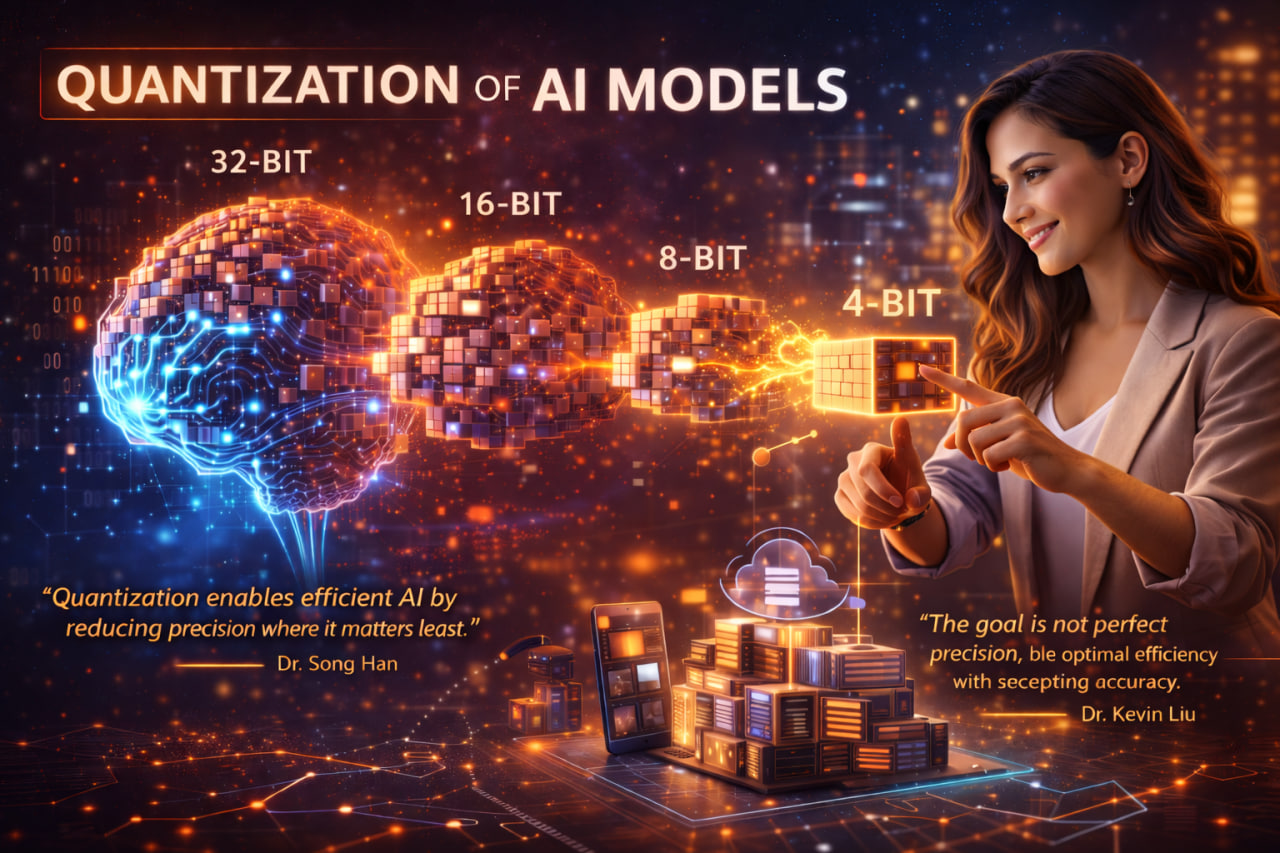
Quantization of AI Models: How to Make Large Models Faster and Lighter

As artificial intelligence models grow in size and complexity, they become more powerful—but also more demanding in terms of memory, computation, and energy consumption. Large language models, computer vision systems, and multimodal AI often require massive hardware resources to run efficiently. This creates a challenge: how can we make these models faster, cheaper, and more accessible without sacrificing too much performance? One of the most effective solutions is quantization — a technique that reduces the precision of model parameters to improve efficiency.

Multimodal AI: Models That Understand Text, Images, and Sound Together
Smart Technologies Creative Arts AI in Media Production

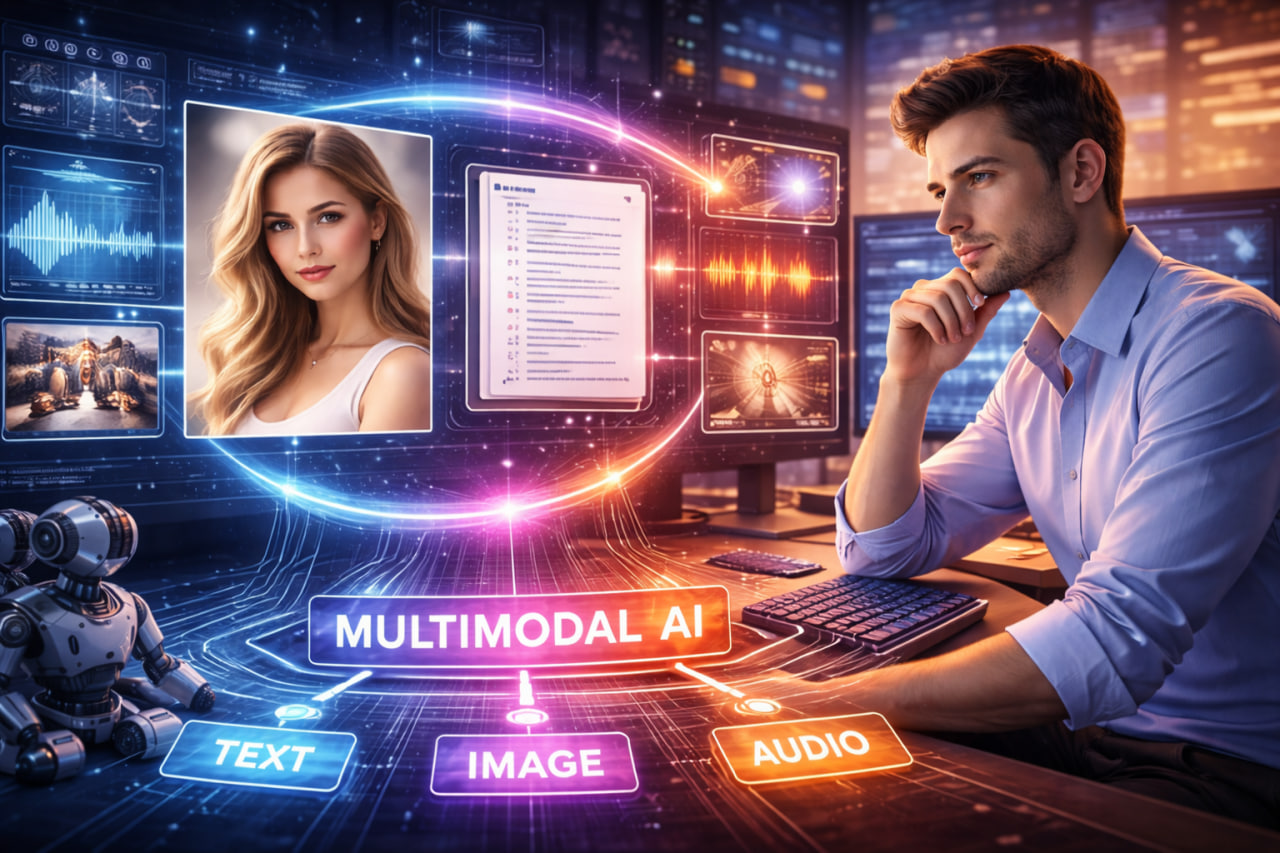
Multimodal AI: Models That Understand Text, Images, and Sound Together

Artificial intelligence is evolving beyond systems that process a single type of data. Today, one of the most important breakthroughs is multimodal AI — models capable of understanding and generating information across multiple data types simultaneously, such as text, images, and audio. This shift represents a major step toward more human-like intelligence, as people naturally interpret the world through multiple senses at once. Multimodal systems enable richer interactions, deeper understanding, and more powerful applications across industries.

Transformers: The Architecture That Revolutionized NLP
Skills and development Applications Smart Technologies

Transformers: The Architecture That Revolutionized NLP

The field of natural language processing (NLP) has undergone a dramatic transformation over the past decade, driven largely by one breakthrough: the Transformer architecture. Introduced in 2017, Transformers fundamentally changed how machines process language, enabling unprecedented improvements in translation, text generation, question answering, and conversational AI. Unlike earlier models that relied on sequential processing, Transformers introduced a new paradigm based on parallel computation and attention mechanisms. Today, this architecture underpins most modern AI systems, making it one of the most important innovations in the history of artificial intelligence.

AI Regulation Around the World: What Laws Are Being Adopted
Applications Smart Technologies Ethics

AI Regulation Around the World: What Laws Are Being Adopted

Artificial intelligence is developing faster than most legal systems can adapt, forcing governments worldwide to introduce new regulatory frameworks. These laws aim to balance innovation with safety, ensuring that AI technologies remain beneficial while minimizing risks related to privacy, bias, and misuse. Different regions approach AI regulation in unique ways, reflecting their political systems, economic priorities, and cultural values. Understanding these global efforts helps clarify how AI will be governed in the coming years.

Deepfake Technology: How It Changes Reality and How to Fight It
Skills and development Smart Technologies Customer Experience

Deepfake Technology: How It Changes Reality and How to Fight It

The rapid development of artificial intelligence has introduced powerful tools capable of generating highly realistic digital content. Among the most controversial of these technologies is deepfake, a technique that uses artificial intelligence to create synthetic images, videos, or audio that convincingly imitate real people. Deepfakes can replace a person’s face in a video, replicate their voice, or generate entirely fabricated scenes that appear authentic. While the technology has legitimate applications in entertainment, education, and digital media, it also raises serious concerns about misinformation, identity manipulation, and trust in digital information.

The AI Black Box Problem: Why Explainability Matters
Smart Technologies Ethics Customer Experience

The AI Black Box Problem: Why Explainability Matters

Artificial intelligence systems are increasingly responsible for decisions that affect finance, healthcare, transportation, and public safety. While these systems often achieve impressive accuracy, they can also operate in ways that are difficult for humans to understand. This challenge is known as the “AI black box problem.” The term refers to situations where an algorithm produces a decision or prediction without clearly explaining how that result was reached. As AI becomes more integrated into critical systems, understanding and interpreting these decisions has become one of the most important challenges in modern technology.

Smart Cities: How AI Manages Traffic, Energy Consumption, and Urban Safety
Applications Smart Technologies Automation

Smart Cities: How AI Manages Traffic, Energy Consumption, and Urban Safety

Urbanization is accelerating worldwide, placing increasing pressure on transportation systems, energy grids, and public safety infrastructure. Traditional city management models, which rely heavily on manual oversight and reactive decision-making, struggle to keep pace with growing population density and infrastructure complexity. In response, municipalities are integrating artificial intelligence (AI) into urban systems to create what is known as a smart city — an interconnected environment where data-driven technologies optimize daily operations. AI does not simply automate tasks; it analyzes massive real-time data streams to predict congestion, balance electricity demand, and enhance public safety. As cities evolve, AI is becoming a foundational technology that reshapes how urban environments function.

Robotics and AI in Manufacturing: The Transformation of Modern Industry
Applications Smart Technologies Innovations

Robotics and AI in Manufacturing: The Transformation of Modern Industry

Industrial production has undergone several technological revolutions, from mechanization and electrification to automation and digitalization. Today, the integration of robotics and artificial intelligence (AI) marks the next major shift, often referred to as Industry 4.0. Unlike traditional automation, which follows fixed programmed instructions, AI-powered systems can analyze data, learn from patterns, and adapt to changing conditions. This combination of intelligent software and advanced robotics is redefining efficiency, safety, and productivity across global manufacturing sectors.