Smart Technologies

Fabric of the Future: How GPT Is Reweaving Fashion—from Textiles to Trend Forecasting
Applications Smart Technologies Creative Arts

Fabric of the Future: How GPT Is Reweaving Fashion—from Textiles to Trend Forecasting

Fashion has always been a conversation between culture, craft, and commerce. GPT-class models add a new voice to that dialogue: a fast, collaborative partner that can sketch ideas in words, patterns, palettes, and plans—then translate them into production briefs. From generative textile concepts and style forecasting to supply-chain orchestration and sustainability audits, here’s how AI is already reshaping the runway and the factory floor—and how to use it without losing the human touch.

Guardians of the Wild: How GPT Can Supercharge Conservation—Without Replacing Rangers
Education and training Applications Smart Technologies

Guardians of the Wild: How GPT Can Supercharge Conservation—Without Replacing Rangers

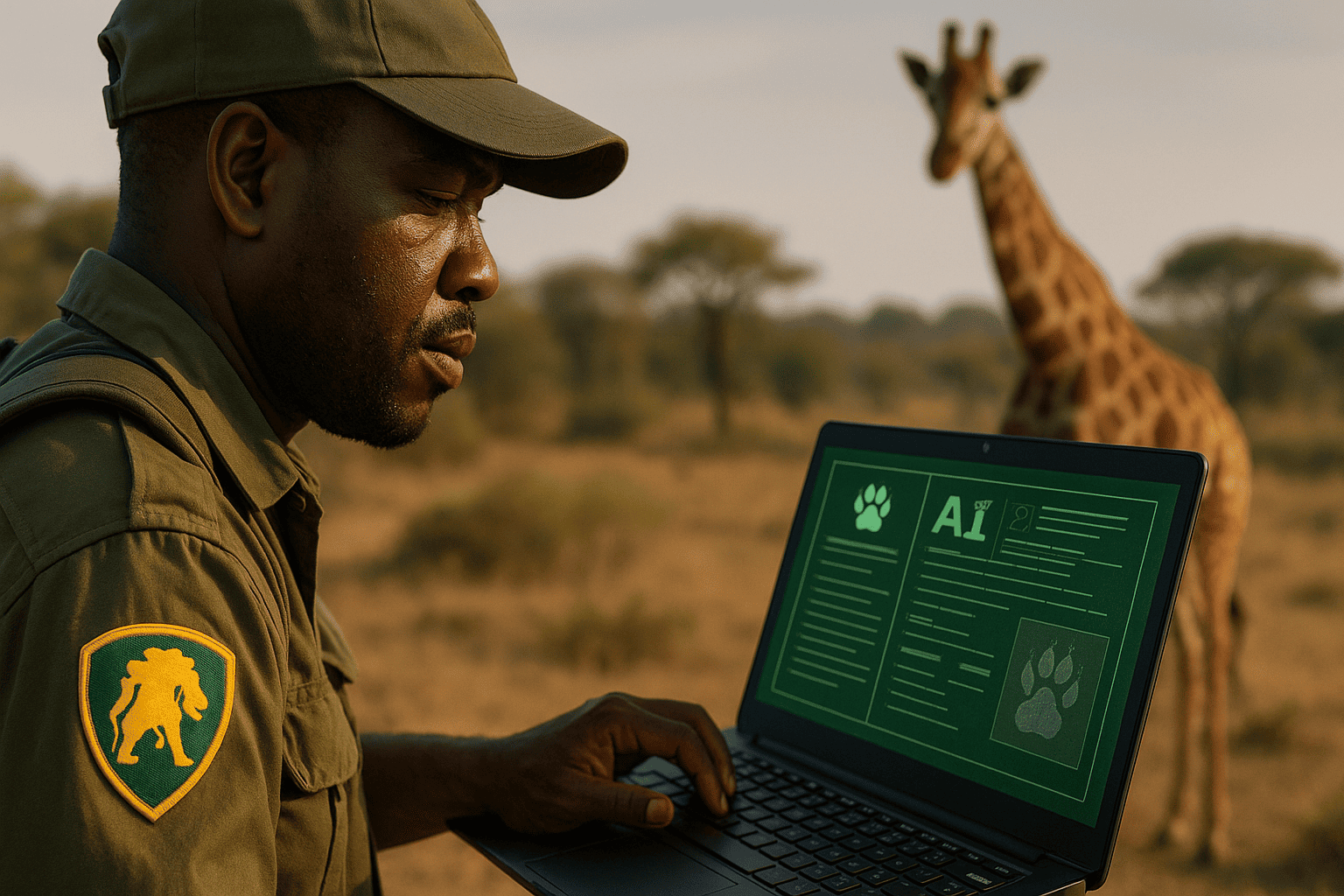
Artificial intelligence is edging into rainforests, savannas, and coastal waters—not as a sci-fi savior, but as a force multiplier for the people already protecting life on Earth. This article explores how GPT-class models and allied AI tools can monitor wildlife, deter poaching, and safeguard biodiversity, while staying grounded in ethics, local knowledge, and ecological reality. The promise is huge; the pitfalls are real. Used well, AI helps rangers act earlier, scientists learn faster, and communities lead the work. 🐾

GPT and Accessibility: Making Digital Spaces Inclusive for All
Education and training Applications Smart Technologies

GPT and Accessibility: Making Digital Spaces Inclusive for All

Accessibility is not a niche feature—it’s table stakes for a humane internet. GPT-class models can transform how people with disabilities access information, communicate, learn, and work. But to make digital spaces truly inclusive, we need to combine AI’s speed with thoughtful design, strong guardrails, and accountability. This playbook explains where GPT helps, where it must be handled carefully, and how to ship experiences that broaden participation instead of erecting new barriers.

The Intersection of AI and Quantum Computing: What’s Next for GPT?
Education and training Applications Smart Technologies

The Intersection of AI and Quantum Computing: What’s Next for GPT?

Quantum computing and large language models (LLMs) like GPT are on converging trajectories. One promises exponential state spaces and new algorithmic primitives; the other devours compute to learn structure from oceans of data. This article maps where quantum could realistically accelerate GPT training and inference, where today’s limits bite, and how hybrid “quantum-classical” workflows might reshape the next decade of intelligent systems.

From Patterns to Principles: Can GPT Help Us Discover New Laws of Nature?
Education and training Applications Smart Technologies

From Patterns to Principles: Can GPT Help Us Discover New Laws of Nature?

Science advances when patterns become principles—when messy observations crystallize into equations, models, and mechanisms. GPT-class systems are astonishing at finding and articulating patterns across oceans of text and data. But can a language model really help uncover new laws of nature? This article explores where GPT meaningfully accelerates discovery, where it hits hard limits, and how human curiosity and judgment remain indispensable—even in an age of smart machines.

Human Taste, AI Speed: Designing Interiors Without Losing Your Signature
Applications Smart Technologies Creative Arts

Human Taste, AI Speed: Designing Interiors Without Losing Your Signature

Artificial intelligence can accelerate interior design from weeks to days, but speed without taste produces sterile rooms. The goal is not to let AI decide, but to direct it with a designer’s judgment so outputs reflect a coherent aesthetic, authentic materials, and the client’s lived reality. This playbook shows how to use AI as a precision power tool while protecting style, authorship, and design ethics.

GPT in the Classroom: Supercharging Learning Without Undermining Teaching
Education and training Skills and development Applications

GPT in the Classroom: Supercharging Learning Without Undermining Teaching

Schools and universities are living through a real-time experiment: large language models enter lesson plans, grading flows, and students’ pockets. For some, GPT looks like a tireless tutor and teaching assistant; for others, it’s a plagiarism machine that hollows out critical thinking. The truth sits between extremes. Used with clarity and guardrails, GPT can amplify teachers and personalize learning. Used carelessly, it can flatten rigor and mask gaps. This article maps practical uses, risks, and concrete norms so classrooms gain leverage—not shortcuts.

Electric Sage or Clever Mirror? Can GPT Reason About the Meaning of Life?
Education and training Smart Technologies Ethics

Electric Sage or Clever Mirror? Can GPT Reason About the Meaning of Life?

When people ask GPT about the “meaning of life,” they’re testing more than curiosity. They are probing whether a statistical machine can speak to what matters, weigh values, or offer the sort of grounded wisdom we expect from philosophers. This article unpacks how GPT actually works, why it can sound profound, where its limits show, and how to use it productively as a thinking partner without mistaking fluency for understanding.

Next-Gen Translators: Can GPT Save Dying Languages?
Education and training Applications Smart Technologies

Next-Gen Translators: Can GPT Save Dying Languages?

Thousands of the world’s languages are slipping toward silence as communities urbanize, migrate, and shift to majority tongues. GPT-class systems promise a different future: machine partners that translate, document, and teach at human speed. But can a neural model really help revive languages with little data, complex morphology, or fragile cultural contexts? This article examines where GPT helps, where it harms, and how to design community-first workflows that preserve both words and the worlds inside them.

Virtual Doctor or Second Opinion? When (and When Not) to Trust GPT with Your Health
Education and training Applications Smart Technologies

Virtual Doctor or Second Opinion? When (and When Not) to Trust GPT with Your Health

Large language models like GPT can read guidelines, summarize clinical papers, and turn symptom lists into plausible differentials in seconds. That can feel like magic—especially at 2 a.m., when you’re worried and searching for answers. But medicine isn’t just pattern matching; it’s responsibility, uncertainty, and consequences. This article lays out what GPT can do well in healthcare, where it fails, and how to use it safely as a supporting tool—never a substitute for a qualified clinician.