The basic idea sounds simple. A person searches for something, a search engine examines billions of pages, and the most useful results appear near the top. For website owners, the challenge is making sure their content is technically accessible, relevant to the query, trustworthy, useful, and easy to navigate.
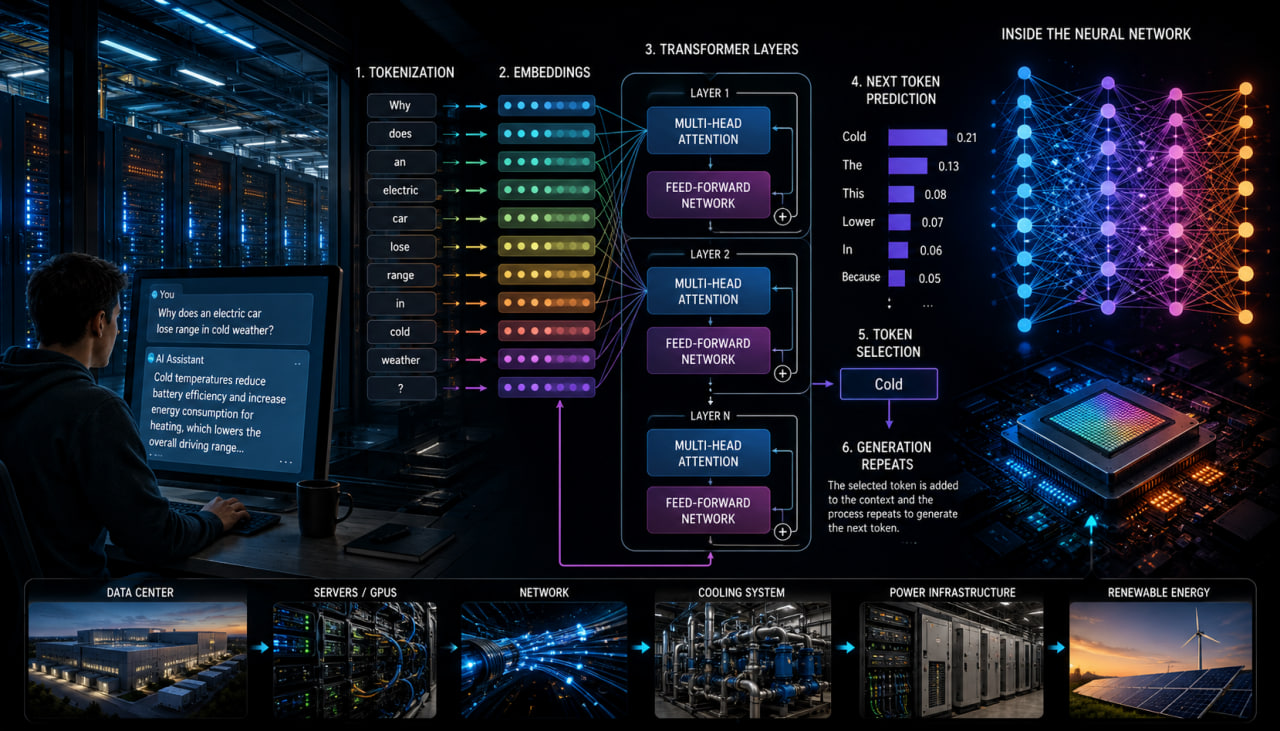
When you type a question into an AI chatbot and receive a detailed answer seconds later, the process can look almost magical. The system appears to read your sentence, understand what you mean, remember earlier parts of the conversation, reason about the subject, and formulate a response.
Artificial intelligence can write an email, analyze a document, compare products, create a travel plan, explain a technical problem, generate code, prepare a report, or help develop a business strategy. Yet two people using the same AI model can receive dramatically different results.
A power outage does not always cause an immediate internet outage. Fiber, cable, fixed wireless, cellular, and satellite connections may continue operating if both the provider’s infrastructure and the equipment inside your home have backup power.
Modern antivirus protection is no longer limited to searching for traditional computer viruses. It is designed to identify a much wider range of threats, including ransomware, spyware, password stealers, banking Trojans, malicious scripts, rootkits, worms, and potentially unwanted applications.
Artificial intelligence services have become an essential part of everyday life, helping users write documents, generate images, analyze data, create software, and automate business processes. However, every interaction with an AI platform may involve processing personal information, uploaded files, and conversation history. While leading AI companies have significantly improved privacy controls, many users remain unaware of the settings available to protect their data. Understanding how to configure these options is becoming increasingly important for individuals, businesses, and organizations that handle sensitive information. Proper privacy settings can reduce data exposure, improve account security, and give users greater control over how their information is stored and used.
Artificial intelligence has become one of the most important technologies for modern businesses. Organizations across industries are integrating AI into customer service, marketing, analytics, automation, software development, and decision-making processes. As AI adoption accelerates, companies often face a critical strategic question: Should we build our own AI system or use existing AI APIs? At first glance, creating a proprietary AI solution may seem attractive. It offers greater control, customization, and potential competitive advantages. However, developing AI from scratch requires significant investments in talent, infrastructure, data, and ongoing maintenance. On the other hand, AI APIs provide immediate access to powerful capabilities with minimal development effort, but they may introduce limitations related to cost, customization, and vendor dependence. Choosing the right approach depends on business objectives, resources, technical requirements, and long-term strategy.
Artificial intelligence is often perceived as objective because it relies on mathematics, statistics, and data-driven decision-making. However, AI systems are not inherently neutral. They learn from historical data, human-designed models, and real-world environments that may contain structural inequalities. When these biases are reflected in training data or algorithmic design, the resulting systems can unintentionally produce discriminatory outcomes. Understanding algorithmic bias is essential for ensuring that AI technologies are deployed responsibly across industries such as finance, healthcare, hiring, and law enforcement.
Fashion has always been a conversation between culture, craft, and commerce. GPT-class models add a new voice to that dialogue: a fast, collaborative partner that can sketch ideas in words, patterns, palettes, and plans—then translate them into production briefs. From generative textile concepts and style forecasting to supply-chain orchestration and sustainability audits, here’s how AI is already reshaping the runway and the factory floor—and how to use it without losing the human touch.
Artificial intelligence is edging into rainforests, savannas, and coastal waters—not as a sci-fi savior, but as a force multiplier for the people already protecting life on Earth. This article explores how GPT-class models and allied AI tools can monitor wildlife, deter poaching, and safeguard biodiversity, while staying grounded in ethics, local knowledge, and ecological reality. The promise is huge; the pitfalls are real. Used well, AI helps rangers act earlier, scientists learn faster, and communities lead the work. 🐾