Innovations

Best All-in-One AI Platforms: Top Runable Alternatives for Work and Automation
News Applications Innovations

Best All-in-One AI Platforms: Top Runable Alternatives for Work and Automation

Artificial intelligence is moving beyond individual chatbots toward integrated platforms capable of handling complete projects. Instead of switching between separate applications for writing, research, image generation, presentations, data analysis, and automation, users can increasingly manage these activities through a single AI workspace. Services such as Runable, Manus, Genspark, and ChatGPT Work are helping redefine how businesses and individuals interact with artificial intelligence. Their main attraction is not simply access to powerful neural networks, but the ability to transform instructions into practical results.

Internet of Things: How IoT Is Changing Everyday Life and What to Expect in the Near Future
Everyday Life Applications Smart Technologies

Internet of Things: How IoT Is Changing Everyday Life and What to Expect in the Near Future

The Internet of Things is transforming the relationship between physical objects and digital technology. Cars exchange information with connected services, home appliances respond to energy consumption patterns, industrial machines report operating conditions, and agricultural sensors help farmers manage irrigation. These systems collect information from their surroundings and use networks to communicate with software that can analyze conditions or trigger actions. Although many people associate the Internet of Things with smart home gadgets, its applications extend across transportation, manufacturing, healthcare, energy, and public infrastructure.

What AI Learned in 2026 and What to Expect in 2027: The Next Stage of Artificial Intelligence
News Smart Technologies Innovations

What AI Learned in 2026 and What to Expect in 2027: The Next Stage of Artificial Intelligence

Artificial intelligence has experienced another remarkable year of technological progress. Throughout 2026, AI systems have become more capable of writing software, analyzing complicated documents, generating realistic images and videos, conducting research, and operating digital tools with less direct human involvement. Technologies that recently seemed experimental are increasingly appearing in professional software, industrial operations, education, and everyday consumer applications. The biggest change is that artificial intelligence is evolving from a system that primarily answers questions into technology that can help complete substantial amounts of work.

Did GPT-6 Astra Solve a Millennium Prize Problem? The Navier–Stokes Breakthrough Explained
Applications Smart Technologies Innovations

Did GPT-6 Astra Solve a Millennium Prize Problem? The Navier–Stokes Breakthrough Explained

One of the most remarkable artificial-intelligence stories of 2026 arrived not from robotics, autonomous cars, or consumer electronics, but from pure mathematics. On September 8, OpenAI announced that an AI system had produced what the company describes as a solution to the Navier–Stokes existence and smoothness problem, one of the seven Millennium Prize Problems created by the Clay Mathematics Institute.

GPT-6 Astra Explained: What OpenAI’s New AI Model Can Do and Why It Matters
News Smart Technologies Innovations

GPT-6 Astra Explained: What OpenAI’s New AI Model Can Do and Why It Matters

GPT-6 Astra represents one of the most significant changes in OpenAI’s model strategy in years. Introduced in September 2026, Astra is designed not merely to answer questions or generate text, but to complete complex professional tasks that can involve reasoning, web research, software development, documents, files, and direct computer interaction. OpenAI describes it as its most capable broadly deployed model to date.

Recurrent Neural Networks: How RNNs Work, Why They Matter, and Where They Are Used Today
Smart Technologies Innovations AI for Content Creators

Recurrent Neural Networks: How RNNs Work, Why They Matter, and Where They Are Used Today

Recurrent neural networks, usually called RNNs, are one of the foundational architectures in modern artificial intelligence. Before transformers became dominant in language models, RNNs were among the most important tools for processing text, speech, sensor streams, financial data, vehicle telemetry, and other information where the order of events matters.

Robotics and AI in Manufacturing: The Transformation of Modern Industry
Applications Smart Technologies Innovations

Robotics and AI in Manufacturing: The Transformation of Modern Industry

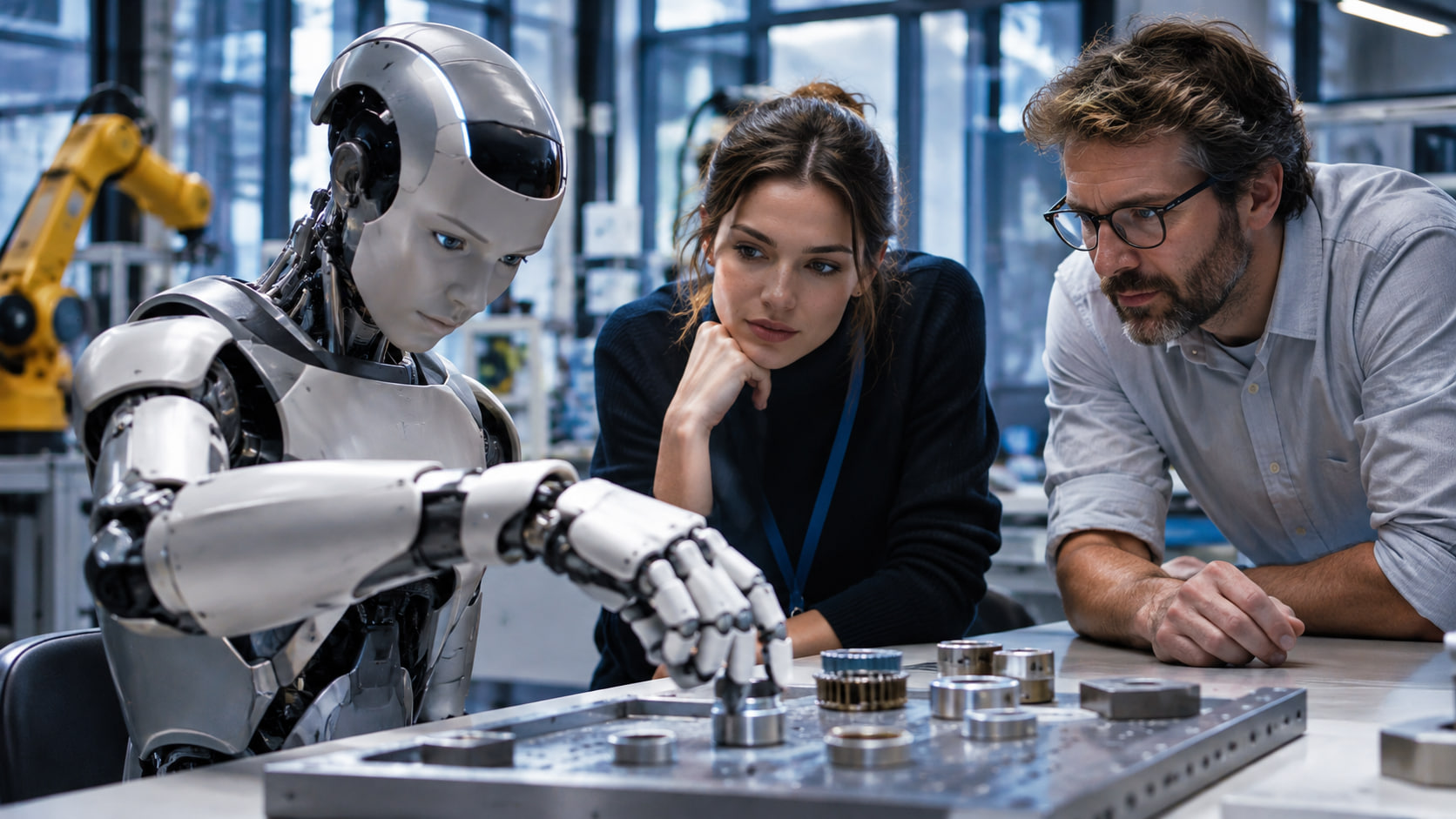
Industrial production has undergone several technological revolutions, from mechanization and electrification to automation and digitalization. Today, the integration of robotics and artificial intelligence (AI) marks the next major shift, often referred to as Industry 4.0. Unlike traditional automation, which follows fixed programmed instructions, AI-powered systems can analyze data, learn from patterns, and adapt to changing conditions. This combination of intelligent software and advanced robotics is redefining efficiency, safety, and productivity across global manufacturing sectors.