Artificial intelligence is becoming one of the most important technologies shaping modern business. From small online stores to global automotive manufacturers, companies are using AI to automate repetitive processes, improve customer service, analyze information, optimize operations, and develop new products.
Artificial intelligence has become one of the most powerful brainstorming tools available today. Instead of replacing human creativity, AI expands it by generating fresh perspectives, uncovering overlooked opportunities, and accelerating the early stages of idea development. Whether you want to start a new hobby, launch a business, grow a YouTube channel, or create engaging social media content, AI can help transform vague inspiration into structured, actionable concepts.
Over the past decade, Data Science and Machine Learning have become two of the most sought-after fields in the global technology industry. As organizations increasingly rely on data-driven decision-making and artificial intelligence, the demand for professionals capable of analyzing data, building predictive models, and developing AI systems continues to grow. From startups and e-commerce companies to banks, healthcare providers, and technology giants, businesses are competing aggressively for skilled talent. This strong demand has made Data Scientists and Machine Learning Engineers some of the highest-paid professionals in the modern labor market. However, salaries vary significantly depending on experience, location, industry, education, and specialization. Understanding the compensation landscape can help aspiring professionals make informed career decisions and identify the skills most valued by employers. The combination of data expertise, programming skills, and AI knowledge has created one of the most lucrative career paths in technology.
Artificial intelligence has dramatically lowered the barrier to launching new products and businesses. Just a few years ago, building an AI-powered application required large engineering teams, expensive infrastructure, and significant funding. Today, entrepreneurs can create functional AI-powered MVPs (Minimum Viable Products) in weeks—or even days—using existing AI platforms and no-code tools. This shift has fundamentally changed startup development. Instead of spending months or years building a complete product, founders can now test demand quickly, collect user feedback, and validate business ideas before making major investments. The most successful AI startups increasingly follow a simple principle: validate first, scale later. For entrepreneurs, understanding how to build an AI MVP efficiently may be one of the most valuable skills in the modern innovation economy.
Artificial intelligence is rapidly reshaping the global labor market, influencing how businesses operate, how employees perform their tasks, and which skills are most valuable in the modern economy. Throughout history, technological revolutions—from the steam engine to the internet—have transformed employment patterns. AI represents the next major shift, automating routine processes while simultaneously creating entirely new professional fields. While concerns about job displacement are widespread, economists and technology experts emphasize that the true impact of AI lies not only in job elimination but also in job transformation and the emergence of new roles.
Artificial intelligence has become a transformative force in modern marketing, reshaping how brands communicate, predict behavior, and build long-term customer relationships. Traditional marketing relied heavily on demographic segmentation and broad messaging strategies, often resulting in inefficient campaigns and wasted budgets. Today, AI enables real-time analysis of user behavior, allowing companies to deliver highly targeted and personalized experiences. From predicting which advertisement a customer is likely to click to automating customer support through intelligent chatbots, AI is redefining digital engagement at scale.
AI supercharges average output, which means average is no longer a strategy. The people who thrive build career moats—hard-to-copy capabilities that compound with each project, tool, and connection. This playbook shows which skills actually compound in an AI-saturated market, how to cultivate them deliberately, and how to weave AI into your processes without becoming interchangeable with it.
Artificial Intelligence has progressed from code-completion novelty to a development ally that can elevate every stage of software creation. Yet most developers still use AI in predictable ways — autocompleting boilerplate or explaining snippets. To truly level up, you need off-beat tactics that exploit AI’s capacity for pattern discovery, meta-analysis, and creative exploration. This guide showcases less-obvious techniques that turn AI from a helpful assistant into a relentless programming mentor.
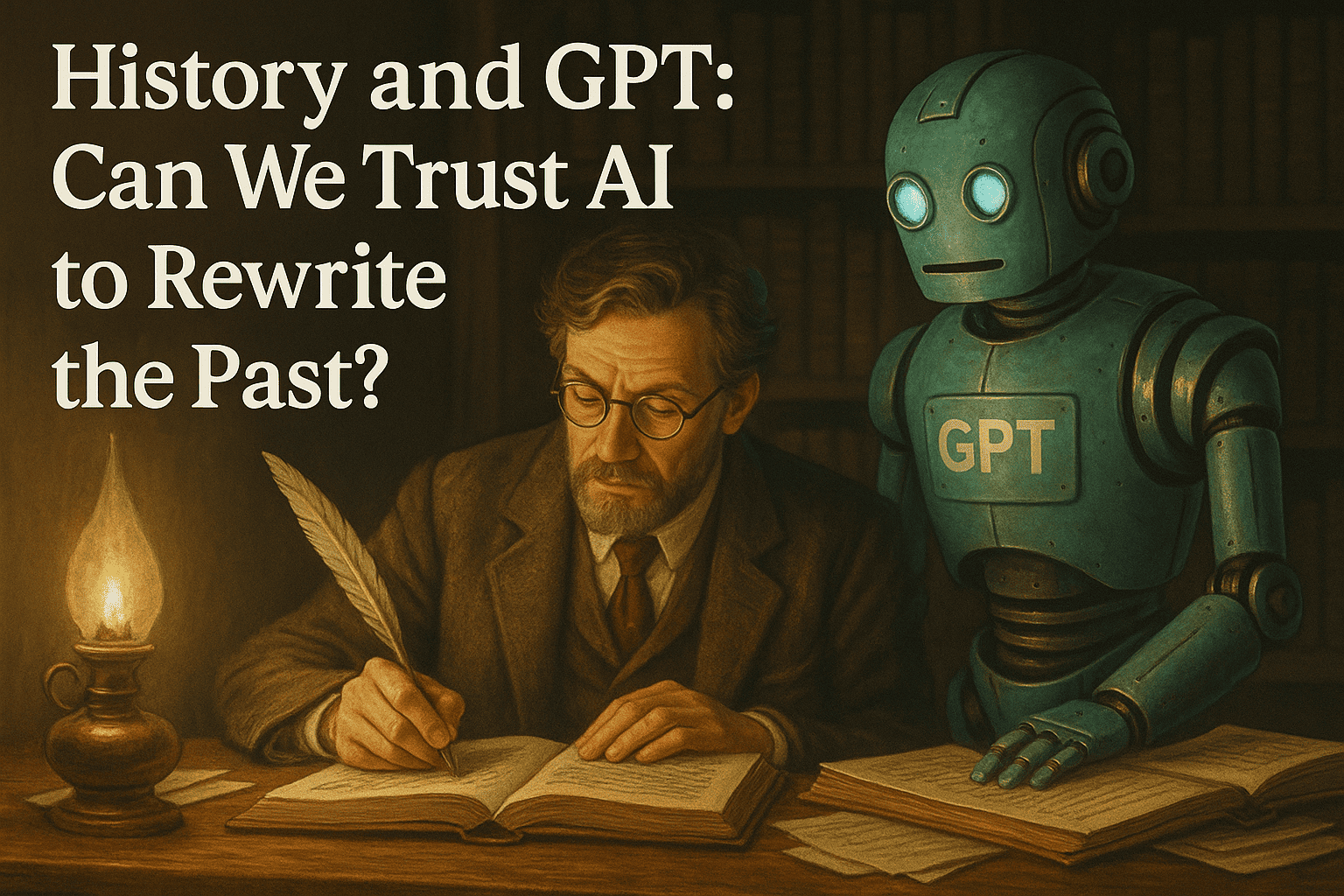
Artificial intelligence has become a powerful tool in nearly every academic field, and history is no exception. Large language models such as GPT can rapidly summarize primary sources, translate ancient documents, and even generate engaging narratives that bring historical periods to life. Yet with this new capability comes an important question: can we trust AI to “rewrite” or reinterpret the past without distorting it?
Artificial Intelligence (AI), especially large language models like GPT, is playing an increasingly vital role in preserving and revitalizing the world’s cultural heritage. Through digitization, reconstruction, and immersive storytelling, GPT offers tools for historians, museums, educators, and communities to protect and reimagine traditions, artifacts, and histories that might otherwise be lost.