Everyday Life

Internet of Things: How IoT Is Changing Everyday Life and What to Expect in the Near Future
Everyday Life Applications Smart Technologies

Internet of Things: How IoT Is Changing Everyday Life and What to Expect in the Near Future

The Internet of Things is transforming the relationship between physical objects and digital technology. Cars exchange information with connected services, home appliances respond to energy consumption patterns, industrial machines report operating conditions, and agricultural sensors help farmers manage irrigation. These systems collect information from their surroundings and use networks to communicate with software that can analyze conditions or trigger actions. Although many people associate the Internet of Things with smart home gadgets, its applications extend across transportation, manufacturing, healthcare, energy, and public infrastructure.

How AI Can Help Plan Trips and Create Smarter Travel Itineraries
Everyday Life Applications Customer Experience

How AI Can Help Plan Trips and Create Smarter Travel Itineraries

Planning a trip has become significantly easier with the help of artificial intelligence. What once required hours of researching destinations, comparing transportation options, reading reviews, and organizing schedules can now be accomplished in a fraction of the time. AI-powered travel assistants can analyze preferences, optimize routes, suggest attractions, estimate travel times, and even adapt itineraries when unexpected changes occur.

How to Configure Privacy in Popular AI Services: A Complete Guide to Protecting Your Data
Everyday Life Sustainability Customer Experience

How to Configure Privacy in Popular AI Services: A Complete Guide to Protecting Your Data

Artificial intelligence services have become an essential part of everyday life, helping users write documents, generate images, analyze data, create software, and automate business processes. However, every interaction with an AI platform may involve processing personal information, uploaded files, and conversation history. While leading AI companies have significantly improved privacy controls, many users remain unaware of the settings available to protect their data. Understanding how to configure these options is becoming increasingly important for individuals, businesses, and organizations that handle sensitive information. Proper privacy settings can reduce data exposure, improve account security, and give users greater control over how their information is stored and used.

Virtual Content on Social Media: The Growing Scale of the AI Content Crisis
Everyday Life Applications Smart Technologies

Virtual Content on Social Media: The Growing Scale of the AI Content Crisis

Artificial intelligence has fundamentally transformed social media. Today, AI can generate realistic images, videos, voices, articles, influencers, and even entire online personalities within minutes. While these technologies unlock exciting creative opportunities, they also introduce one of the biggest challenges the digital world has ever faced: the explosion of synthetic content. Every day, millions of AI-generated posts are uploaded to platforms such as Instagram, TikTok, Facebook, X, and YouTube. In many cases, users cannot distinguish between authentic human-created content and material produced entirely by artificial intelligence. As generative AI becomes more accessible, the internet is entering an era where authenticity is increasingly difficult to verify.

When Should You Trust AI — and When Should You Not?
Everyday Life Applications Ethics

When Should You Trust AI — and When Should You Not?

Artificial intelligence has rapidly become part of everyday life. Millions of people use AI-powered tools to write emails, generate images, analyze data, answer questions, assist with coding, translate languages, and even support business decisions. As AI capabilities continue to improve, a new challenge is emerging: understanding when these systems can be trusted and when human judgment remains essential. The reality is that artificial intelligence is neither infallible nor useless. It is a powerful tool with specific strengths and limitations. People who understand both sides are often able to gain the greatest benefits while avoiding costly mistakes. In the coming years, the ability to work effectively with AI may become as important as computer literacy is today. The smartest approach is not blindly trusting AI or completely rejecting it—it is knowing where its strengths and weaknesses lie.

Prompt Engineering: The Art of Talking to AI for Perfect Results
Everyday Life Automation AI in Media Production

Prompt Engineering: The Art of Talking to AI for Perfect Results

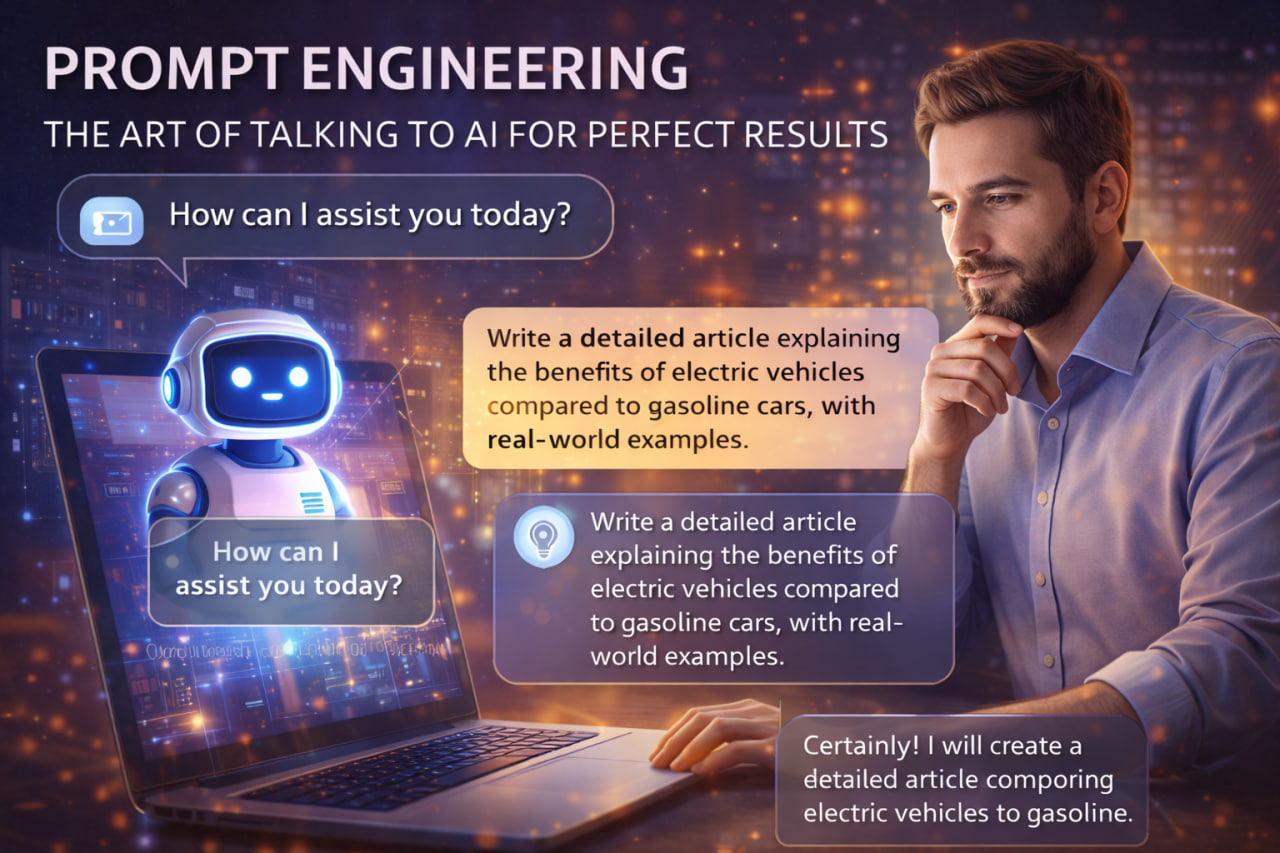
As artificial intelligence becomes more powerful, a new skill is emerging as essential: prompt engineering. It is the ability to communicate effectively with AI systems—especially large language models—to get accurate, useful, and high-quality results. While AI models are trained on massive datasets, the quality of the output often depends directly on how the request is formulated. In simple terms: better prompts lead to better answers.

AI in Education: Adaptive Learning, Intelligent Assessment, and Digital Tutors Transforming Modern Learning
Education and training Skills and development Everyday Life

AI in Education: Adaptive Learning, Intelligent Assessment, and Digital Tutors Transforming Modern Learning

Artificial intelligence is fundamentally reshaping the global education system by introducing personalized instruction models, automated performance evaluation, and intelligent digital support tools. Traditional education has long relied on standardized curricula, fixed pacing, and classroom-wide instruction, which often fail to accommodate individual learning differences. Today, artificial intelligence (AI) enables adaptive systems that respond dynamically to each learner’s progress, strengths, and weaknesses. Rather than replacing teachers, AI enhances their effectiveness by providing data-driven insights and scalable support mechanisms. As educational institutions increasingly adopt digital infrastructure, AI is becoming a strategic pillar in improving engagement, performance, and long-term academic outcomes.