Smart Technologies

AI in Education: Adaptive Learning, Intelligent Assessment, and Digital Tutors Transforming Modern Learning
Education and training Skills and development Everyday Life

AI in Education: Adaptive Learning, Intelligent Assessment, and Digital Tutors Transforming Modern Learning

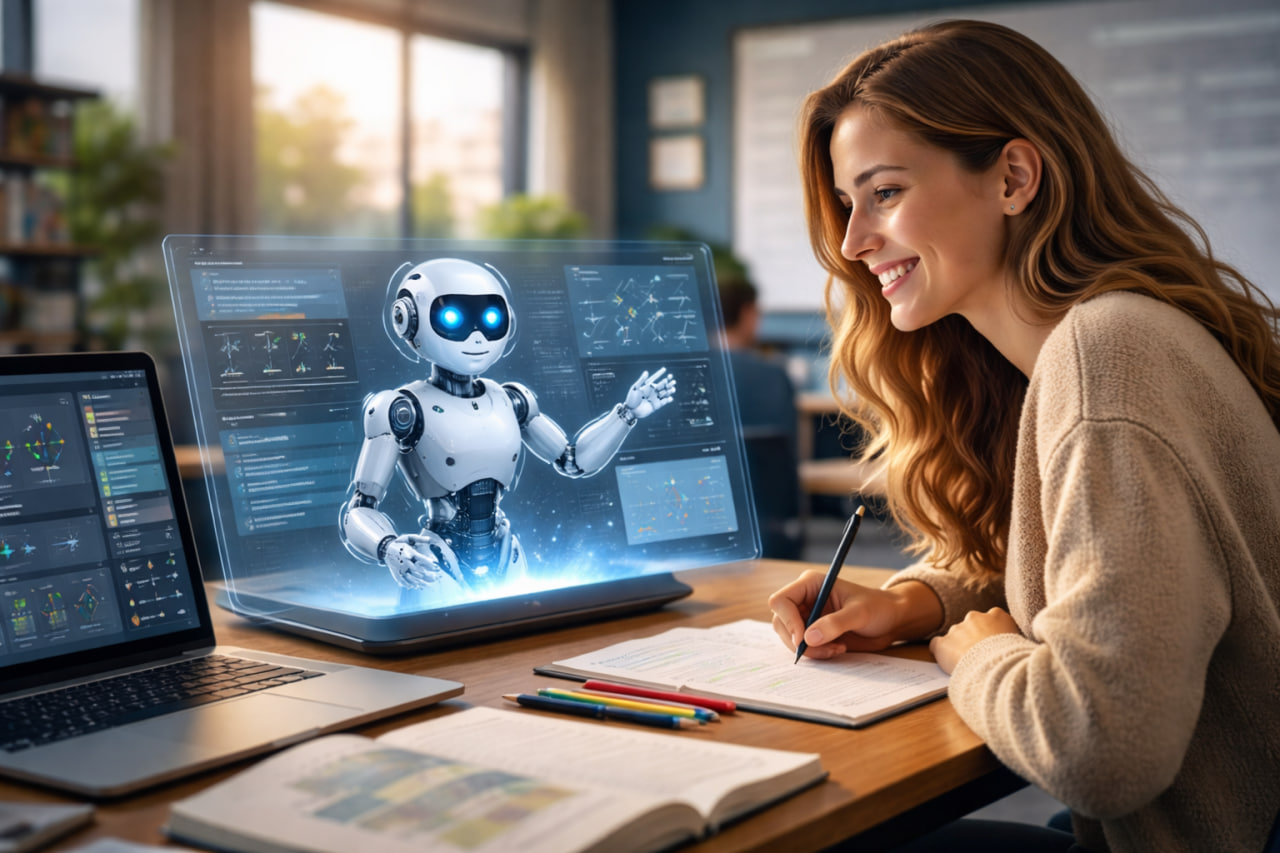
Artificial intelligence is fundamentally reshaping the global education system by introducing personalized instruction models, automated performance evaluation, and intelligent digital support tools. Traditional education has long relied on standardized curricula, fixed pacing, and classroom-wide instruction, which often fail to accommodate individual learning differences. Today, artificial intelligence (AI) enables adaptive systems that respond dynamically to each learner’s progress, strengths, and weaknesses. Rather than replacing teachers, AI enhances their effectiveness by providing data-driven insights and scalable support mechanisms. As educational institutions increasingly adopt digital infrastructure, AI is becoming a strategic pillar in improving engagement, performance, and long-term academic outcomes.


How AI Is Transforming Medicine: Diagnostics, Drug Development, and Personalized Care
Smart Technologies Emergency Management AI for Everyday Life

How AI Is Transforming Medicine: Diagnostics, Drug Development, and Personalized Care

Artificial intelligence is rapidly reshaping modern medicine, fundamentally changing how diseases are detected, treated, and managed. What once relied heavily on manual analysis and generalized treatment protocols is now increasingly supported by data-driven algorithms capable of learning from millions of medical cases. AI does not replace doctors, but it significantly enhances their ability to make accurate decisions, reduce risks, and deliver more personalized care. The integration of AI into healthcare marks one of the most profound technological shifts in medical history.

FinTech and AI: Fighting Fraud, Algorithmic Trading, and Intelligent Scoring
Smart Technologies Business Growth AI for Content Creators

FinTech and AI: Fighting Fraud, Algorithmic Trading, and Intelligent Scoring

The financial technology sector has been transformed by artificial intelligence, reshaping how money is moved, protected, and invested. FinTech companies operate in an environment where speed, accuracy, and trust are critical, and traditional manual processes are no longer sufficient. AI enables financial systems to analyze massive volumes of data in real time, detect anomalies, and make complex decisions with minimal delay. As a result, artificial intelligence has become a core engine behind fraud prevention, algorithmic trading, and modern credit scoring.

Could the Scenario from The Matrix Ever Happen in Reality?
Everyday Life Smart Technologies AI and Culture

Could the Scenario from The Matrix Ever Happen in Reality?

The film The Matrix presents a powerful and unsettling vision of the future, where artificial intelligence enslaves humanity by trapping human minds inside a simulated reality. This idea has shaped public fears about technology, consciousness, and control for decades. But when examined through the lens of modern science, neuroscience, and artificial intelligence research, the scenario becomes far more complex and far less likely than fiction suggests. To understand whether such a future is possible, we must separate cinematic metaphor from technological reality.

What Is Python and What Is It Used For?
Smart Technologies AI for Content Creators AI for Everyday Life

What Is Python and What Is It Used For?

Python is one of the most popular programming languages in the world, yet it is often misunderstood as either “too simple” or “only for beginners.” In reality, Python is a powerful, versatile, and mature language used in everything from web applications and automation to artificial intelligence and scientific research. Its strength lies not in complexity, but in clarity: Python is designed to be readable, expressive, and efficient for humans, not just machines. Understanding what Python is “eaten with” means understanding how it fits into real-world technology stacks and why it has become a foundational tool across industries.

Computer Vision: How AI Understands and Analyzes Images
Education and training Skills and development Smart Technologies

Computer Vision: How AI Understands and Analyzes Images

Computer vision is one of the most powerful and fast-evolving branches of artificial intelligence, enabling machines to extract meaning from images and video. At its core, computer vision allows AI systems to transform raw pixels into structured information that can be interpreted, classified, and acted upon. This capability underpins technologies such as facial recognition, medical imaging, autonomous driving, quality control in manufacturing, and visual search. While humans perceive images almost instantly, AI must learn to see through layers of mathematical abstraction, data representation, and probabilistic reasoning.

Generative Models: How AI Creates Text, Images, and Music
Education and training Smart Technologies Automation

Generative Models: How AI Creates Text, Images, and Music

Generative models represent one of the most transformative developments in artificial intelligence, shifting AI from systems that only analyze or classify data to systems that can create entirely new content. Text written by AI, images generated from prompts, and music composed by algorithms are no longer experimental curiosities—they are practical tools used in media, design, software, science, and entertainment. At a technical level, generative AI does not “imagine” in a human sense; instead, it learns the statistical structure of existing data and produces new outputs that follow those learned patterns. Understanding how generative models work requires examining how they learn representations, model probability, and transform randomness into coherent results.

How AI Understands Natural Language: NLP Explained
Education and training Everyday Life Smart Technologies

How AI Understands Natural Language: NLP Explained

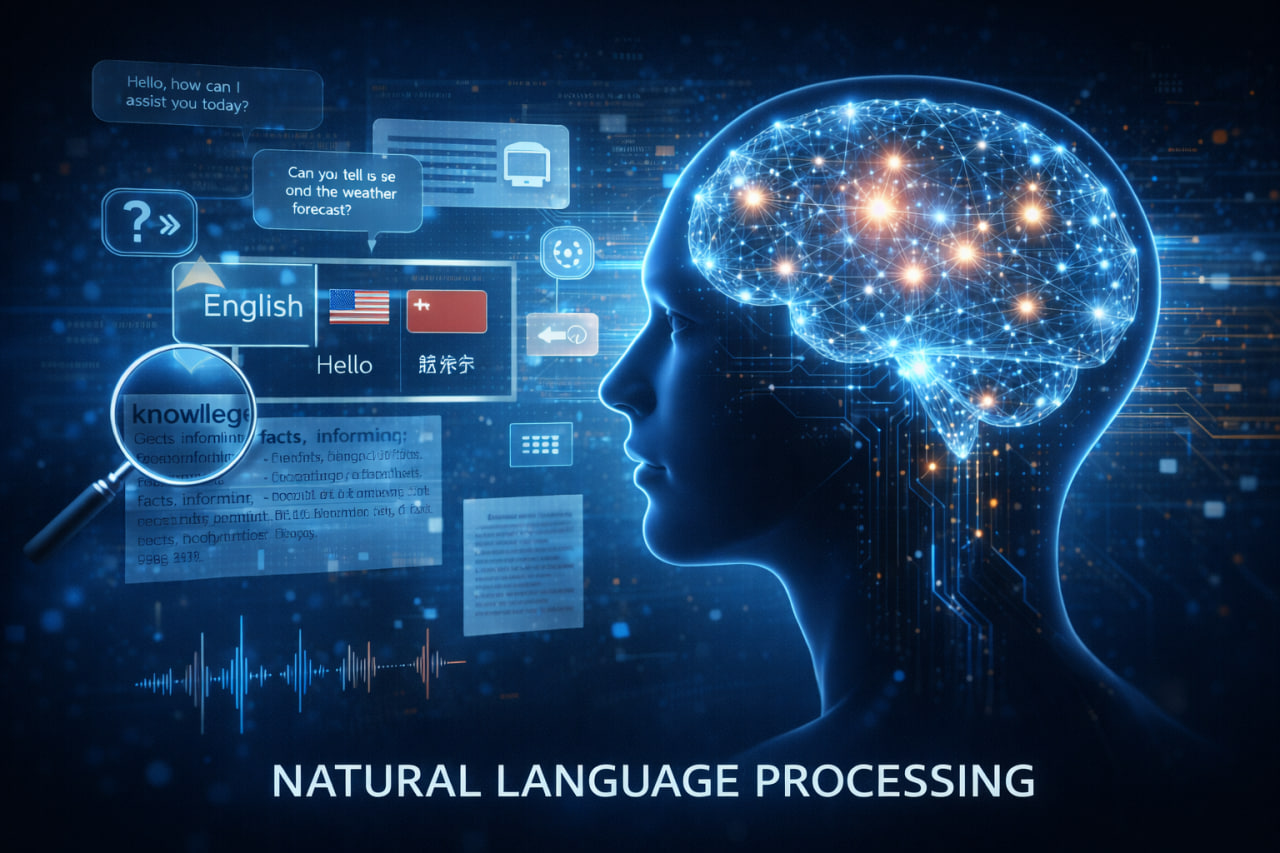
Natural language is messy, ambiguous, and deeply dependent on context, which is exactly why teaching machines to work with human language is one of the hardest problems in artificial intelligence. Natural Language Processing (NLP) is the field that enables computers to analyze, interpret, and generate human language in ways that feel useful in real life—whether that means translating text, answering questions, summarizing documents, or detecting sentiment. When people say “AI understands language,” they usually mean it can map words and sentences to patterns it has learned from data, then produce outputs that match those patterns. This is not the same as human understanding, because today’s AI does not experience meaning the way people do, but it can still perform remarkably well on many language tasks. To see why, you need to understand how modern NLP represents words, handles context, and learns from large-scale text.

Neural Networks Explained: How the Digital Brain Works
Smart Technologies Automation AI for Everyday Life

Neural Networks Explained: How the Digital Brain Works

Neural networks are one of the most influential technologies behind modern artificial intelligence, often described as a digital brain because of how they process information. While this comparison is metaphorical rather than literal, it helps explain why neural networks are so effective at recognizing patterns, learning from experience, and making predictions. From image recognition and speech processing to recommendation systems and autonomous vehicles, neural networks form the backbone of many AI applications. Understanding how they work demystifies AI and reveals why data, computation, and structure matter so much.

What Is AI for Beginners: A Simple Explanation
Everyday Life Smart Technologies AI for Everyday Life

What Is AI for Beginners: A Simple Explanation

Artificial Intelligence, often called AI, may sound complex and intimidating, but at its core it is simply a set of technologies designed to help machines perform tasks that normally require human intelligence. AI systems are already part of everyday life, even if people do not always notice them. From smartphone assistants and navigation apps to online recommendations and spam filters, AI works quietly in the background to analyze information and make decisions. Understanding AI at a basic level helps reduce fear and builds awareness of how modern technology actually functions.