Smart Technologies

Open AI vs Closed AI: The Debate Shaping the Future of Artificial Intelligence
Skills and development Smart Technologies AI in Media Production

Open AI vs Closed AI: The Debate Shaping the Future of Artificial Intelligence

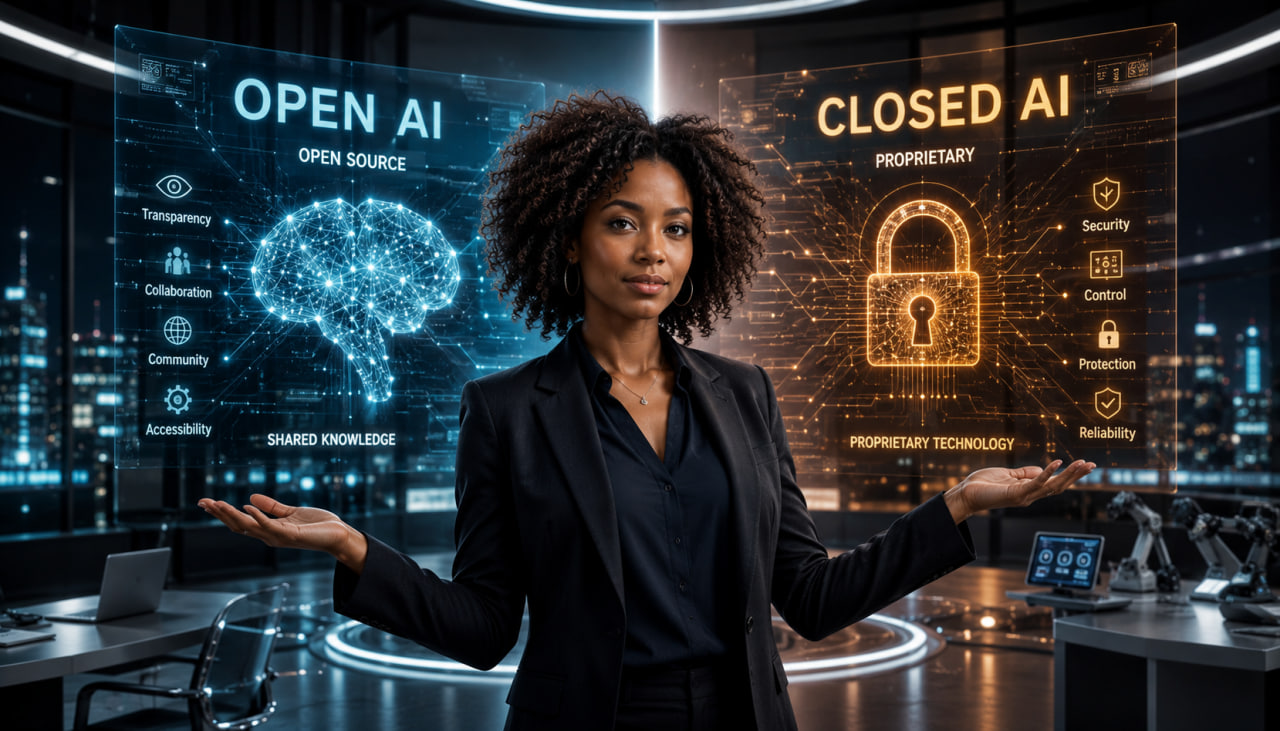
Artificial intelligence is advancing at an extraordinary pace, becoming one of the most influential technologies of the 21st century. As AI systems grow more powerful, a major debate has emerged within the technology industry: should artificial intelligence be open or closed? The discussion affects everything from innovation and competition to safety, security, regulation, and the future structure of the global digital economy. Supporters of open AI argue that transparency and accessibility accelerate innovation and democratize technology. Advocates of closed AI believe that powerful models require controlled deployment to prevent misuse and ensure safety. Today, some of the world's largest technology companies are pursuing different approaches, creating one of the most important strategic discussions in modern technology. The outcome of this debate may determine how artificial intelligence develops over the coming decades.
The Race of Technology Giants: Who Is Leading the Future?
Skills and development Smart Technologies Creative Arts

The Race of Technology Giants: Who Is Leading the Future?

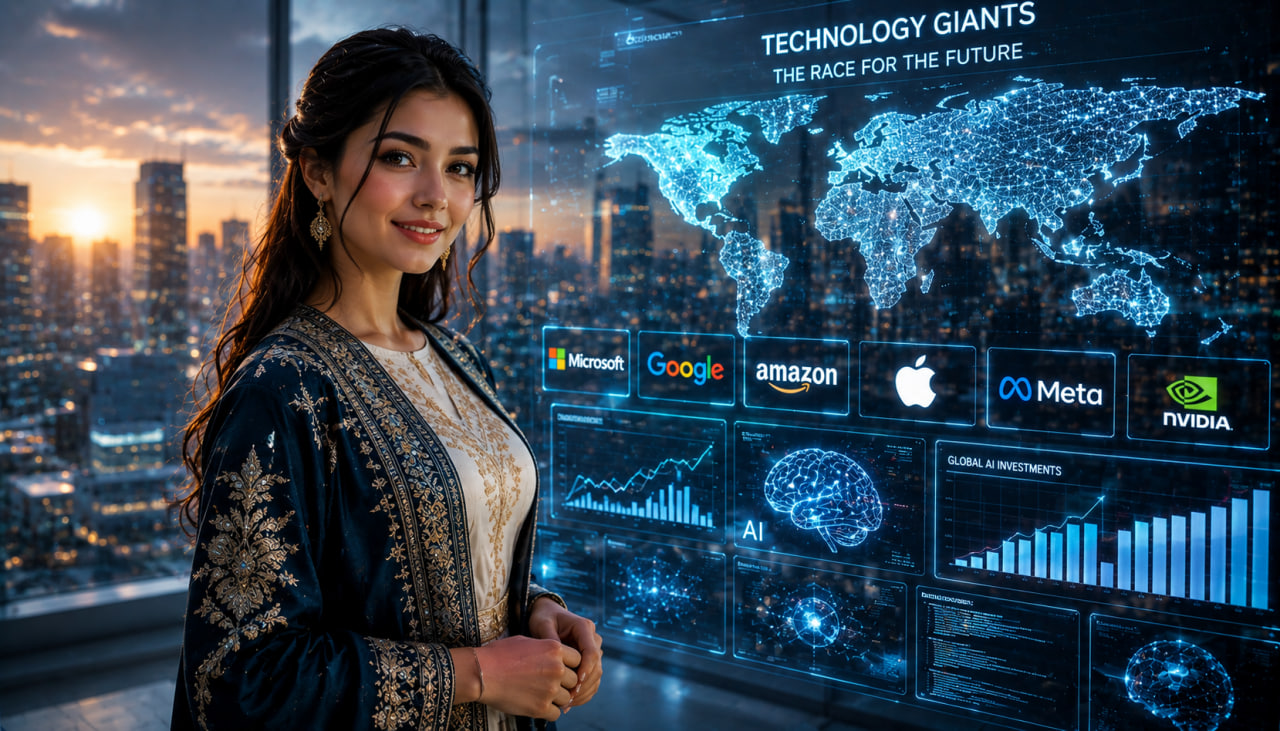
The global technology industry is entering one of the most competitive periods in modern history. Artificial intelligence, cloud computing, semiconductors, robotics, quantum research, and digital infrastructure are now driving a massive race between the world’s largest technology companies. What makes this competition unique is scale. The leading corporations are investing hundreds of billions of dollars into AI systems, cloud platforms, chips, autonomous technologies, and next-generation digital ecosystems. The outcome of this technological race may shape the global economy for decades. Today, the biggest competitors include: Microsoft OpenAI Google NVIDIA Amazon Apple Meta Tesla AMD Chinese technology giants such as Tencent, Alibaba, Huawei, and Baidu Each company dominates different areas of innovation, but artificial intelligence has become the central battlefield.

AI and Web3: Where the Technologies Intersect
Skills and development Applications Smart Technologies

AI and Web3: Where the Technologies Intersect

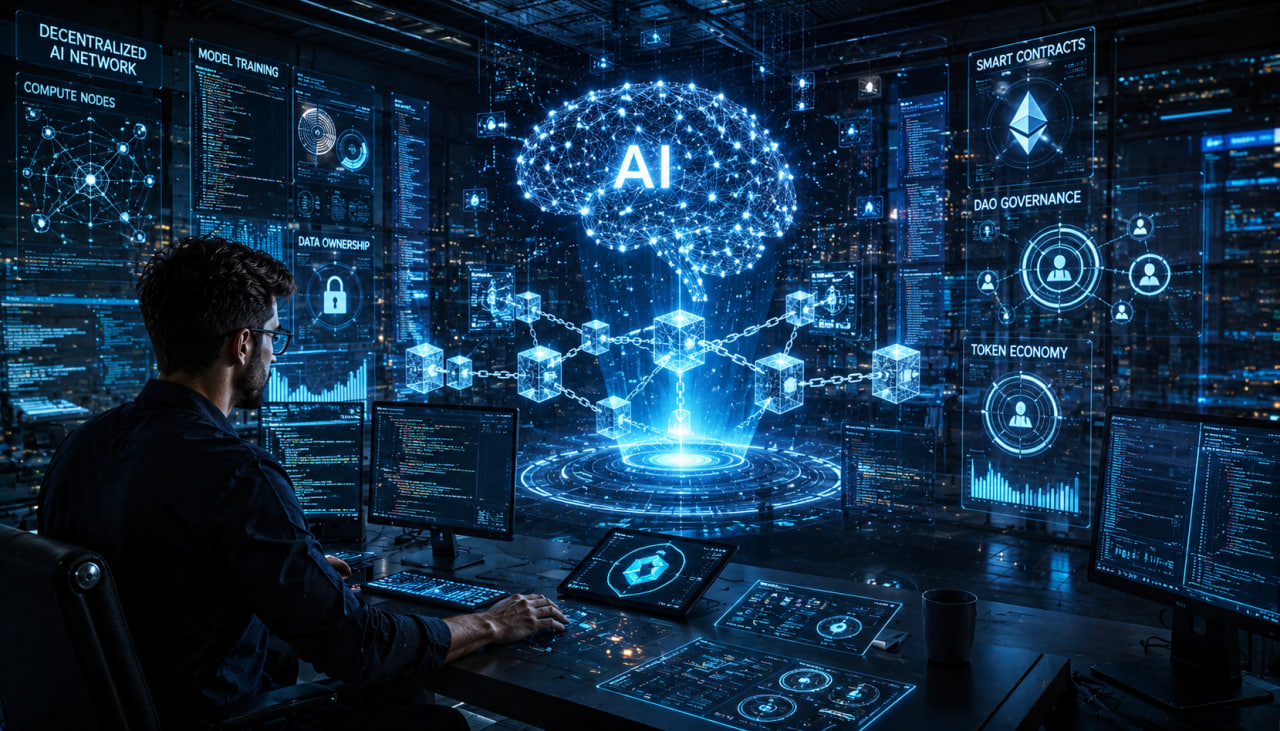
Artificial intelligence and Web3 are two of the most transformative technologies of the modern digital era. Individually, both industries are already reshaping business, finance, software development, content creation, and online infrastructure. Together, they could fundamentally change how digital systems operate over the next decade. AI focuses on automation, reasoning, data analysis, and intelligent decision-making. Web3 focuses on decentralization, blockchain infrastructure, digital ownership, and trustless systems. At first glance, the technologies may appear unrelated. In reality, they are increasingly converging in areas such as decentralized AI marketplaces, autonomous agents, blockchain automation, tokenized computing, data ownership, and AI-powered smart contracts. This intersection is creating an entirely new ecosystem where intelligence and decentralization merge into one digital infrastructure layer.

AI Meta-Trends: What Will Define Artificial Intelligence in the Next 3–4 Years?
Smart Technologies Creative Arts AI in Media Production

AI Meta-Trends: What Will Define Artificial Intelligence in the Next 3–4 Years?

Artificial intelligence is entering a new phase of development. The first wave of AI adoption focused mainly on chatbots, image generation, and productivity tools. But over the next three to four years, the industry is expected to evolve far beyond simple assistants and content generation. The biggest changes will come from large-scale structural trends — or meta-trends — that reshape how AI interacts with business, infrastructure, software, governments, and daily human life. These trends are already forming today, but by the end of the decade they may fundamentally transform the global economy. The future of AI is no longer only about smarter models. It is increasingly about autonomy, integration, physical-world interaction, energy efficiency, regulation, and the merging of AI into every digital system.

AI Innovations in 2026: The Technologies Reshaping the Future
Smart Technologies AI in Media Production AI for Content Creators

AI Innovations in 2026: The Technologies Reshaping the Future

Artificial intelligence is evolving faster than any previous digital technology revolution. By 2026, AI is no longer limited to chatbots and image generators. The industry is rapidly moving toward autonomous agents, advanced reasoning systems, multimodal intelligence, robotics integration, and AI-powered infrastructure capable of transforming entire sectors of the global economy. What makes 2026 especially important is that AI has moved beyond experimentation. Companies are now deploying AI at scale in business operations, healthcare, transportation, software development, manufacturing, cybersecurity, and scientific research. The current wave of innovation is not simply about smarter algorithms. It is about creating AI systems capable of understanding, reasoning, planning, and interacting with the physical and digital world more efficiently than ever before.

The Best AI Startups of the Last Year
Skills and development Applications Smart Technologies

The Best AI Startups of the Last Year

Artificial intelligence startups experienced explosive growth over the last year. While large companies like OpenAI, Google, Microsoft, and Anthropic continued dominating headlines, a new generation of AI startups rapidly emerged across sectors such as automation, coding, video generation, enterprise AI, robotics, healthcare, cybersecurity, and creative tools. What makes the current AI startup wave different is speed. Many young companies reached billion-dollar valuations in record time thanks to growing demand for AI-powered productivity, automation, and content generation. Investors are no longer funding AI startups based only on ideas. The strongest companies are building real products with paying users, enterprise integrations, and scalable infrastructure. Below are some of the most important and influential AI startups that gained attention over the last year and why they matter.

ChatGPT: What Changed Over the Last Year?
Smart Technologies Creative Arts Customer Experience

ChatGPT: What Changed Over the Last Year?

Over the last year, ChatGPT changed from a conversational AI tool into a broader AI productivity platform. The biggest updates were not limited to one model upgrade. ChatGPT gained stronger reasoning, better personalization, deeper coding abilities, more connected apps, browser integration, improved memory, and more specialized experiences for work, research, and everyday tasks. For users, the practical difference is clear: ChatGPT is no longer only a place to ask questions. It is increasingly becoming a workspace where people can write, research, code, analyze files, summarize information, browse the web, use connected tools, and complete multi-step tasks.

Hyperparameter Optimization in Neural Networks: How to Get the Best Performance
Applications Smart Technologies AI in Media Production

Hyperparameter Optimization in Neural Networks: How to Get the Best Performance

Training a neural network is not just about feeding data into a model—it is about making hundreds of critical decisions that affect how the model learns. Among these decisions, hyperparameters play a central role. Unlike model weights, which are learned during training, hyperparameters are set before training begins and directly influence performance, speed, and accuracy. Hyperparameter optimization is the process of systematically finding the best combination of these settings to achieve optimal results. In modern AI, this process is often the difference between an average model and a state-of-the-art system.

Latest Developments in the World of AI
Applications Smart Technologies AI in Media Production

Latest Developments in the World of AI

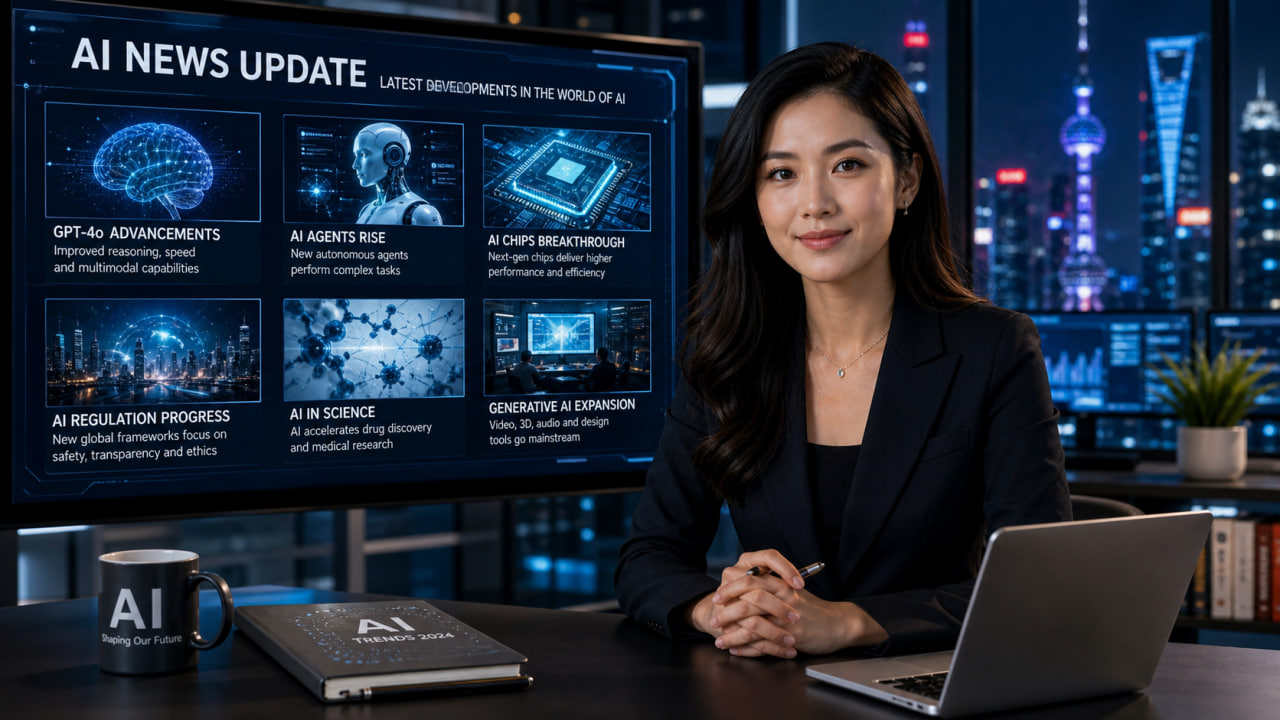
Artificial intelligence continues to evolve at an extraordinary pace, reshaping industries, economies, and everyday life. The past year has been especially dynamic, with breakthroughs in large language models, multimodal systems, enterprise adoption, and regulation. Rather than a single trend, the AI landscape is now defined by convergence—models, data, and real-world applications coming together at scale. Below is a clear overview of the most important recent developments in AI.

Artificial Intelligence: What Awaits Us in the Near Future
Skills and development Smart Technologies Creative Arts

Artificial Intelligence: What Awaits Us in the Near Future

Artificial intelligence is no longer a distant concept confined to research labs—it is rapidly becoming a core part of everyday life. From recommendation systems and voice assistants to autonomous vehicles and medical diagnostics, AI is already transforming how we live and work. The key question now is not whether AI will shape the future, but how quickly and in what ways it will do so. In the coming years, AI is expected to move from a powerful tool to an invisible infrastructure layer embedded in nearly every industry. Understanding these changes is essential for individuals, businesses, and governments alike.