Applications

AI and Web3: Where the Technologies Intersect
Skills and development Applications Smart Technologies

AI and Web3: Where the Technologies Intersect

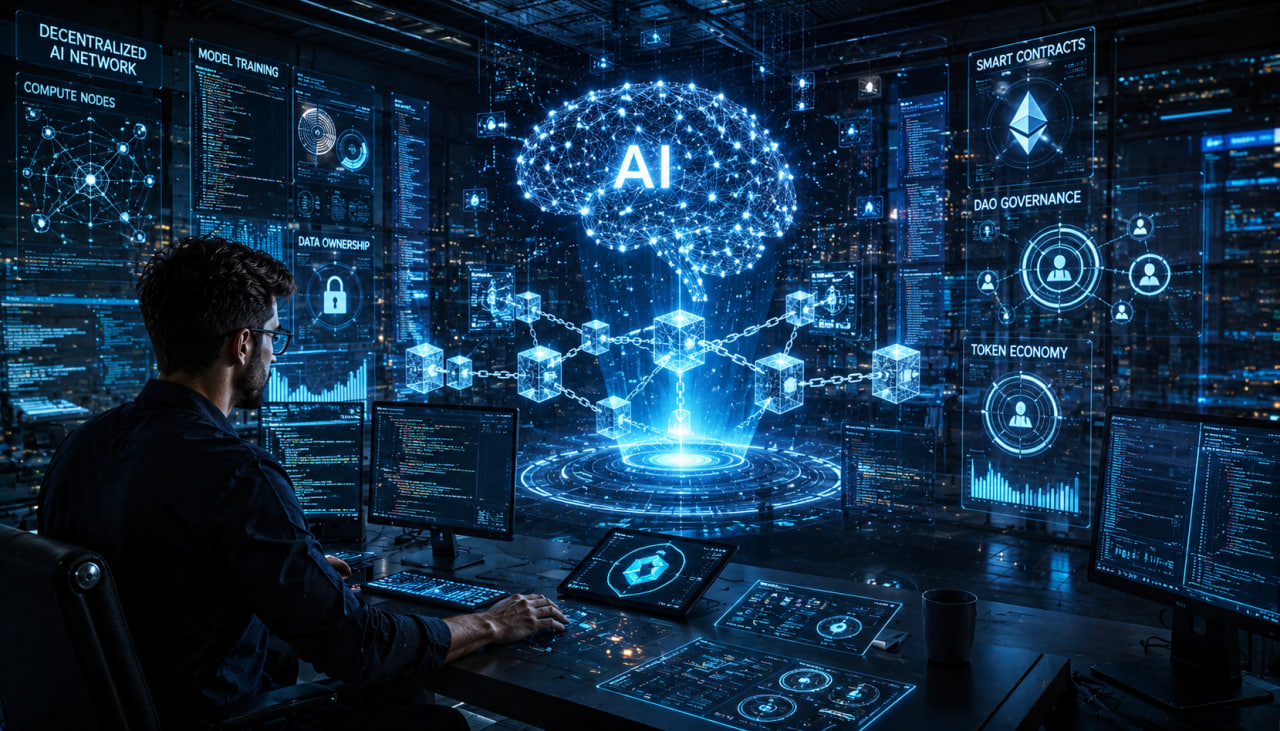
Artificial intelligence and Web3 are two of the most transformative technologies of the modern digital era. Individually, both industries are already reshaping business, finance, software development, content creation, and online infrastructure. Together, they could fundamentally change how digital systems operate over the next decade. AI focuses on automation, reasoning, data analysis, and intelligent decision-making. Web3 focuses on decentralization, blockchain infrastructure, digital ownership, and trustless systems. At first glance, the technologies may appear unrelated. In reality, they are increasingly converging in areas such as decentralized AI marketplaces, autonomous agents, blockchain automation, tokenized computing, data ownership, and AI-powered smart contracts. This intersection is creating an entirely new ecosystem where intelligence and decentralization merge into one digital infrastructure layer.


The Best AI Startups of the Last Year
Skills and development Applications Smart Technologies

The Best AI Startups of the Last Year

Artificial intelligence startups experienced explosive growth over the last year. While large companies like OpenAI, Google, Microsoft, and Anthropic continued dominating headlines, a new generation of AI startups rapidly emerged across sectors such as automation, coding, video generation, enterprise AI, robotics, healthcare, cybersecurity, and creative tools. What makes the current AI startup wave different is speed. Many young companies reached billion-dollar valuations in record time thanks to growing demand for AI-powered productivity, automation, and content generation. Investors are no longer funding AI startups based only on ideas. The strongest companies are building real products with paying users, enterprise integrations, and scalable infrastructure. Below are some of the most important and influential AI startups that gained attention over the last year and why they matter.

Hyperparameter Optimization in Neural Networks: How to Get the Best Performance
Applications Smart Technologies AI in Media Production

Hyperparameter Optimization in Neural Networks: How to Get the Best Performance

Training a neural network is not just about feeding data into a model—it is about making hundreds of critical decisions that affect how the model learns. Among these decisions, hyperparameters play a central role. Unlike model weights, which are learned during training, hyperparameters are set before training begins and directly influence performance, speed, and accuracy. Hyperparameter optimization is the process of systematically finding the best combination of these settings to achieve optimal results. In modern AI, this process is often the difference between an average model and a state-of-the-art system.

Latest Developments in the World of AI
Applications Smart Technologies AI in Media Production

Latest Developments in the World of AI

Artificial intelligence continues to evolve at an extraordinary pace, reshaping industries, economies, and everyday life. The past year has been especially dynamic, with breakthroughs in large language models, multimodal systems, enterprise adoption, and regulation. Rather than a single trend, the AI landscape is now defined by convergence—models, data, and real-world applications coming together at scale. Below is a clear overview of the most important recent developments in AI.

How AI Can Help Build Global Peace
Applications AI & Politics AI for Everyday Life

How AI Can Help Build Global Peace

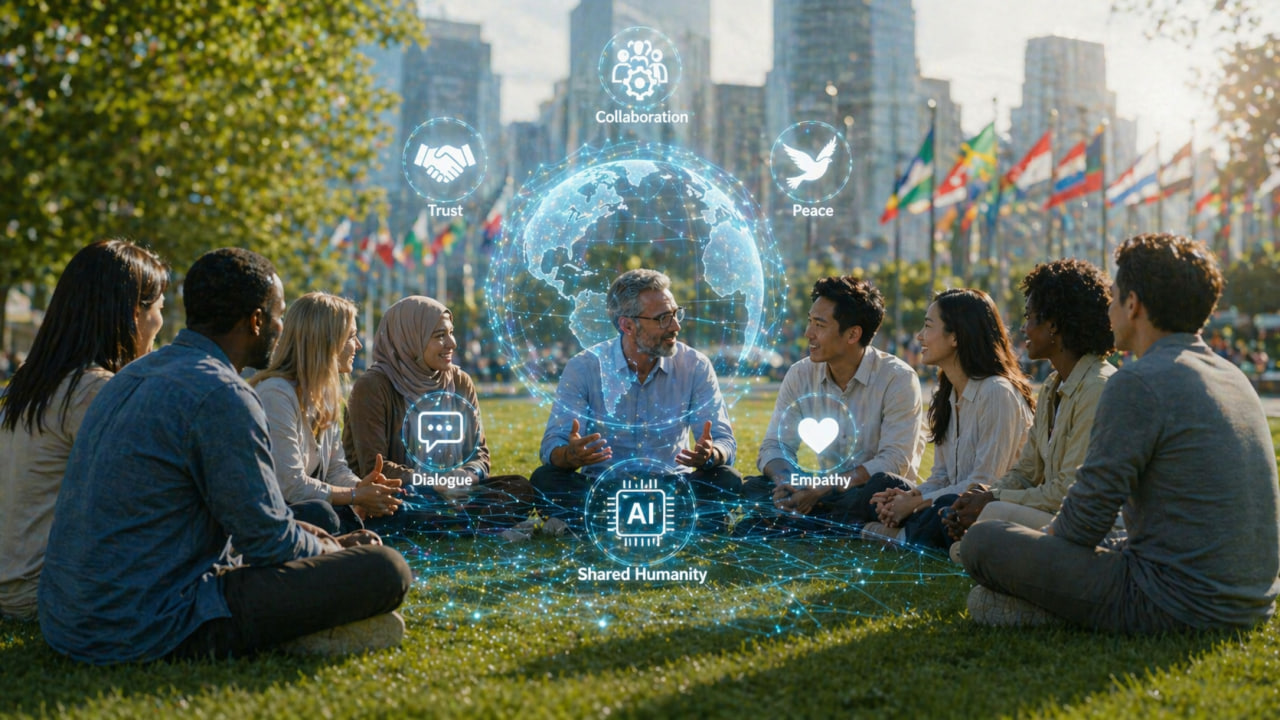
Artificial intelligence is often associated with automation, business efficiency, and technological disruption. However, one of its most profound and less discussed potentials lies in its ability to contribute to global peace. While AI itself is a tool—neither inherently good nor bad—its applications can influence diplomacy, conflict prevention, economic stability, and international cooperation. In a world facing geopolitical tensions, inequality, and resource competition, AI has the potential to become a stabilizing force, if used responsibly.

Vector Databases and Semantic Search: How AI Finds Meaning, Not Just Words
Applications Smart Technologies Automation

Vector Databases and Semantic Search: How AI Finds Meaning, Not Just Words

Traditional search systems are built on keyword matching — they look for exact words or phrases in text. However, human language is far more complex: the same idea can be expressed in many different ways. This limitation led to the development of semantic search, a technology that allows AI to understand the meaning behind queries rather than just matching words. At the core of this approach are vector databases, specialized systems designed to store and search high-dimensional data representations known as vectors. Together, they form the backbone of modern AI-powered search, recommendation systems, and intelligent assistants.

Quantization of AI Models: How to Make Large Models Faster and Lighter
Education and training Applications Smart Technologies

Quantization of AI Models: How to Make Large Models Faster and Lighter

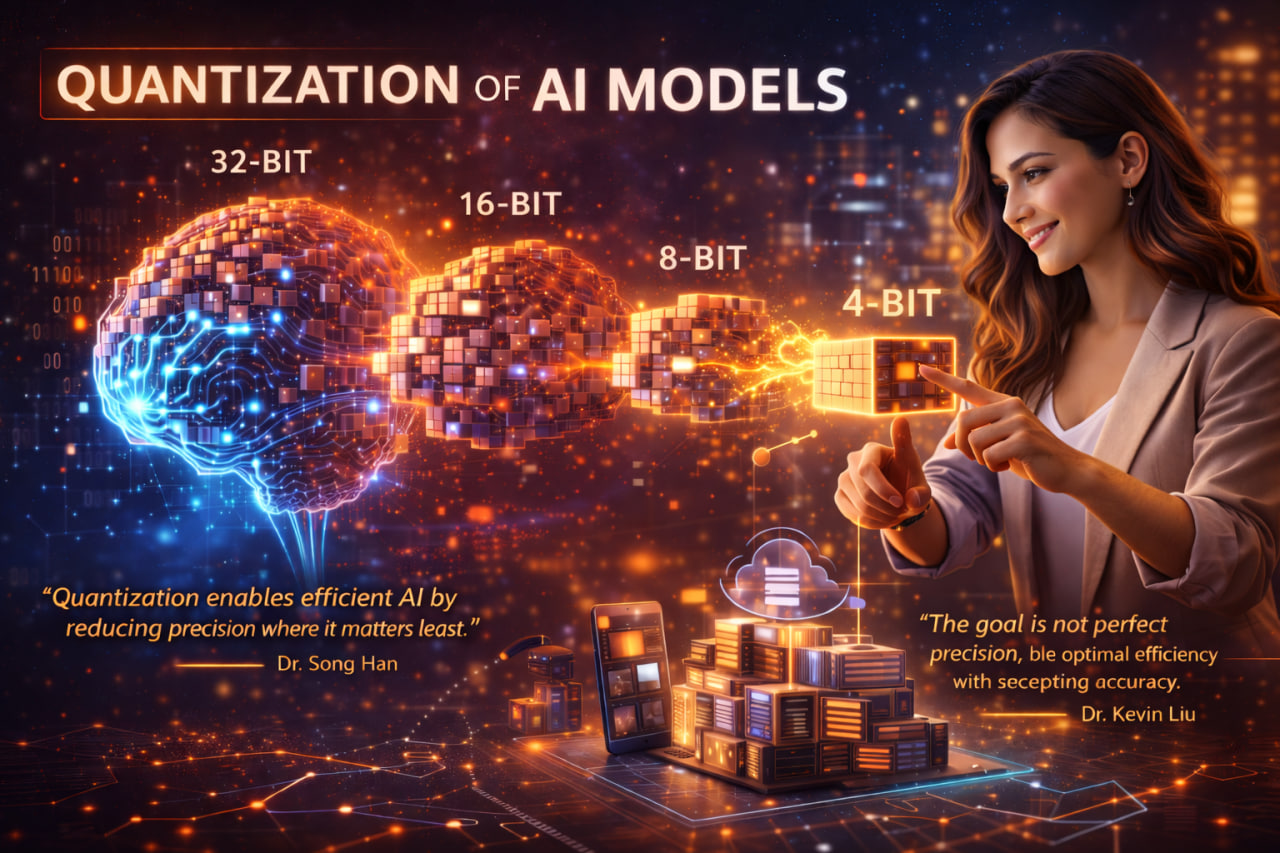
As artificial intelligence models grow in size and complexity, they become more powerful—but also more demanding in terms of memory, computation, and energy consumption. Large language models, computer vision systems, and multimodal AI often require massive hardware resources to run efficiently. This creates a challenge: how can we make these models faster, cheaper, and more accessible without sacrificing too much performance? One of the most effective solutions is quantization — a technique that reduces the precision of model parameters to improve efficiency.

Reinforcement Learning: How AI Learns from Mistakes
Skills and development Applications Creative Arts

Reinforcement Learning: How AI Learns from Mistakes

Artificial intelligence does not always learn by simply analyzing labeled data. In many real-world scenarios, systems must make decisions, evaluate outcomes, and improve over time through trial and error. This approach is known as reinforcement learning (RL) — one of the most powerful and conceptually fascinating areas of modern AI. Reinforcement learning enables machines to learn optimal behavior by interacting with an environment, receiving feedback, and adjusting actions based on experience. It is the foundation behind breakthroughs in robotics, game-playing AI, autonomous driving, and decision-making systems.

Transformers: The Architecture That Revolutionized NLP
Skills and development Applications Smart Technologies

Transformers: The Architecture That Revolutionized NLP

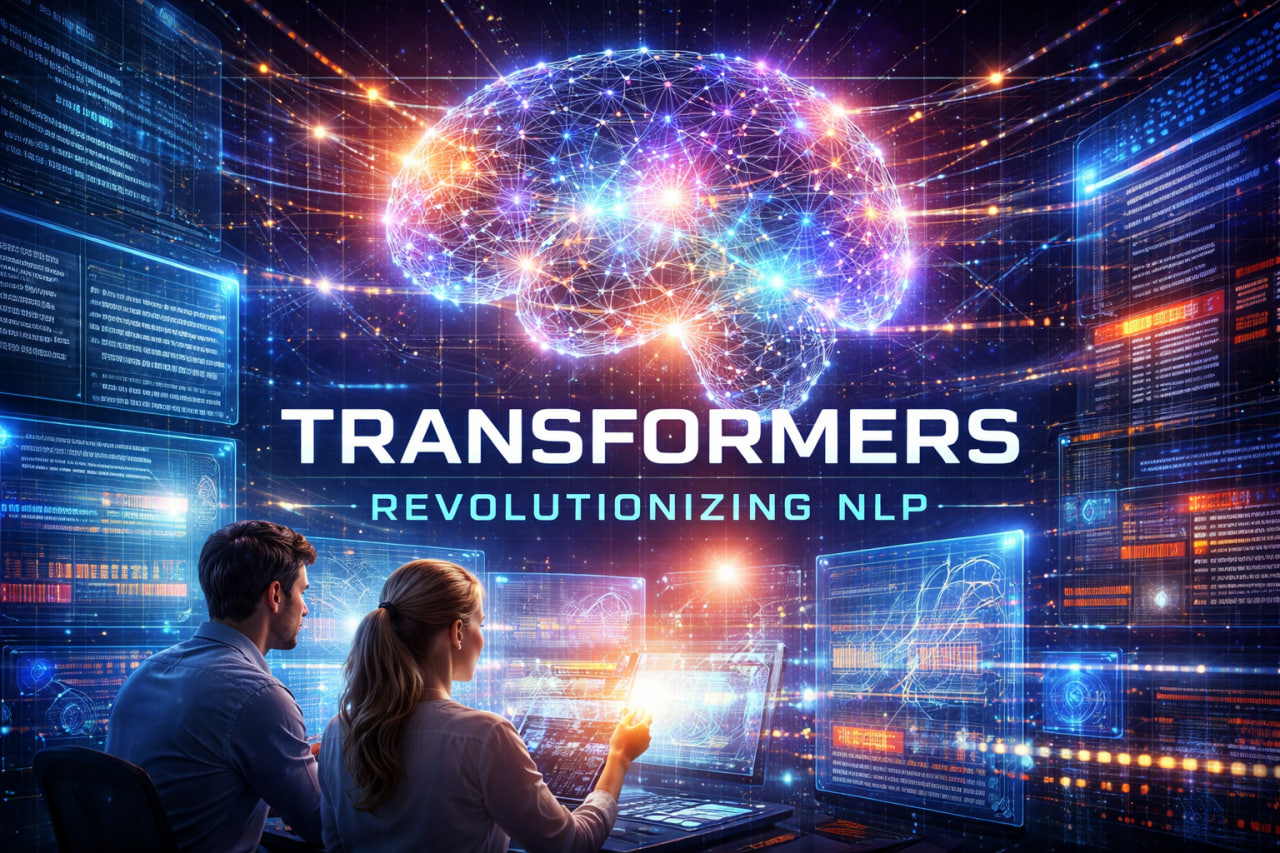
The field of natural language processing (NLP) has undergone a dramatic transformation over the past decade, driven largely by one breakthrough: the Transformer architecture. Introduced in 2017, Transformers fundamentally changed how machines process language, enabling unprecedented improvements in translation, text generation, question answering, and conversational AI. Unlike earlier models that relied on sequential processing, Transformers introduced a new paradigm based on parallel computation and attention mechanisms. Today, this architecture underpins most modern AI systems, making it one of the most important innovations in the history of artificial intelligence.

Fine-Tuning: How to Adapt Pretrained Models to Your Tasks
Applications AI in Media Production AI for Content Creators

Fine-Tuning: How to Adapt Pretrained Models to Your Tasks

Modern artificial intelligence systems are rarely built from scratch. Instead, most high-performing models are first trained on massive datasets and then adapted to specific tasks using a process known as fine-tuning. This approach has become a cornerstone of modern machine learning, especially in fields such as natural language processing (NLP), computer vision, and speech recognition. Fine-tuning allows developers to take powerful pretrained models and specialize them for real-world applications with significantly less data, time, and computational cost.