GPT & AI tips — Page 8

Tips and news about GPT and AI

Hyperparameter Optimization in Neural Networks: How to Get the Best Performance
Applications Smart Technologies AI in Media Production

Hyperparameter Optimization in Neural Networks: How to Get the Best Performance

Training a neural network is not just about feeding data into a model—it is about making hundreds of critical decisions that affect how the model learns. Among these decisions, hyperparameters play a central role. Unlike model weights, which are learned during training, hyperparameters are set before training begins and directly influence performance, speed, and accuracy. Hyperparameter optimization is the process of systematically finding the best combination of these settings to achieve optimal results. In modern AI, this process is often the difference between an average model and a state-of-the-art system.


Latest Developments in the World of AI
Applications Smart Technologies AI in Media Production

Latest Developments in the World of AI

Artificial intelligence continues to evolve at an extraordinary pace, reshaping industries, economies, and everyday life. The past year has been especially dynamic, with breakthroughs in large language models, multimodal systems, enterprise adoption, and regulation. Rather than a single trend, the AI landscape is now defined by convergence—models, data, and real-world applications coming together at scale. Below is a clear overview of the most important recent developments in AI.

Artificial Intelligence: What Awaits Us in the Near Future
Skills and development Smart Technologies Creative Arts

Artificial Intelligence: What Awaits Us in the Near Future

Artificial intelligence is no longer a distant concept confined to research labs—it is rapidly becoming a core part of everyday life. From recommendation systems and voice assistants to autonomous vehicles and medical diagnostics, AI is already transforming how we live and work. The key question now is not whether AI will shape the future, but how quickly and in what ways it will do so. In the coming years, AI is expected to move from a powerful tool to an invisible infrastructure layer embedded in nearly every industry. Understanding these changes is essential for individuals, businesses, and governments alike.

How AI Can Help Build Global Peace
Applications AI & Politics AI for Everyday Life

How AI Can Help Build Global Peace

Artificial intelligence is often associated with automation, business efficiency, and technological disruption. However, one of its most profound and less discussed potentials lies in its ability to contribute to global peace. While AI itself is a tool—neither inherently good nor bad—its applications can influence diplomacy, conflict prevention, economic stability, and international cooperation. In a world facing geopolitical tensions, inequality, and resource competition, AI has the potential to become a stabilizing force, if used responsibly.

What Is RAG and Why It Is a Major Trend in AI
Education and training Smart Technologies AI in Media Production

What Is RAG and Why It Is a Major Trend in AI

As artificial intelligence systems become more capable, one of the key challenges remains reliability and accuracy of information. Large language models (LLMs) are powerful, but they have a well-known limitation: they generate responses based on patterns learned during training, not from real-time or verified data sources. This can lead to outdated information or so-called “hallucinations.” To address this, a new architectural approach has gained rapid popularity: Retrieval-Augmented Generation (RAG). It is now considered one of the most important trends in modern AI, especially for enterprise applications.

Prompt Engineering: The Art of Talking to AI for Perfect Results
Everyday Life Automation AI in Media Production

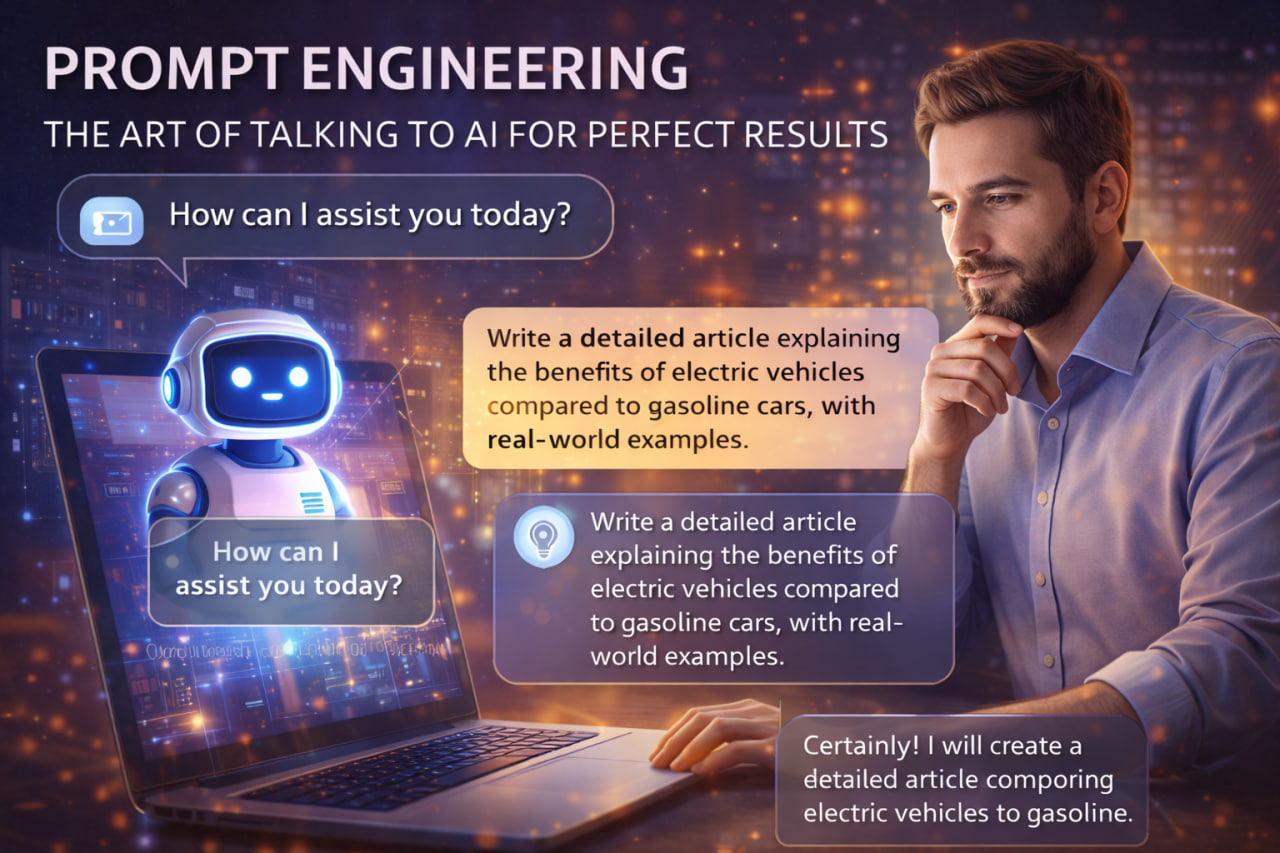
Prompt Engineering: The Art of Talking to AI for Perfect Results

As artificial intelligence becomes more powerful, a new skill is emerging as essential: prompt engineering. It is the ability to communicate effectively with AI systems—especially large language models—to get accurate, useful, and high-quality results. While AI models are trained on massive datasets, the quality of the output often depends directly on how the request is formulated. In simple terms: better prompts lead to better answers.

Vector Databases and Semantic Search: How AI Finds Meaning, Not Just Words
Applications Smart Technologies Automation

Vector Databases and Semantic Search: How AI Finds Meaning, Not Just Words

Traditional search systems are built on keyword matching — they look for exact words or phrases in text. However, human language is far more complex: the same idea can be expressed in many different ways. This limitation led to the development of semantic search, a technology that allows AI to understand the meaning behind queries rather than just matching words. At the core of this approach are vector databases, specialized systems designed to store and search high-dimensional data representations known as vectors. Together, they form the backbone of modern AI-powered search, recommendation systems, and intelligent assistants.

Quantization of AI Models: How to Make Large Models Faster and Lighter
Education and training Applications Smart Technologies

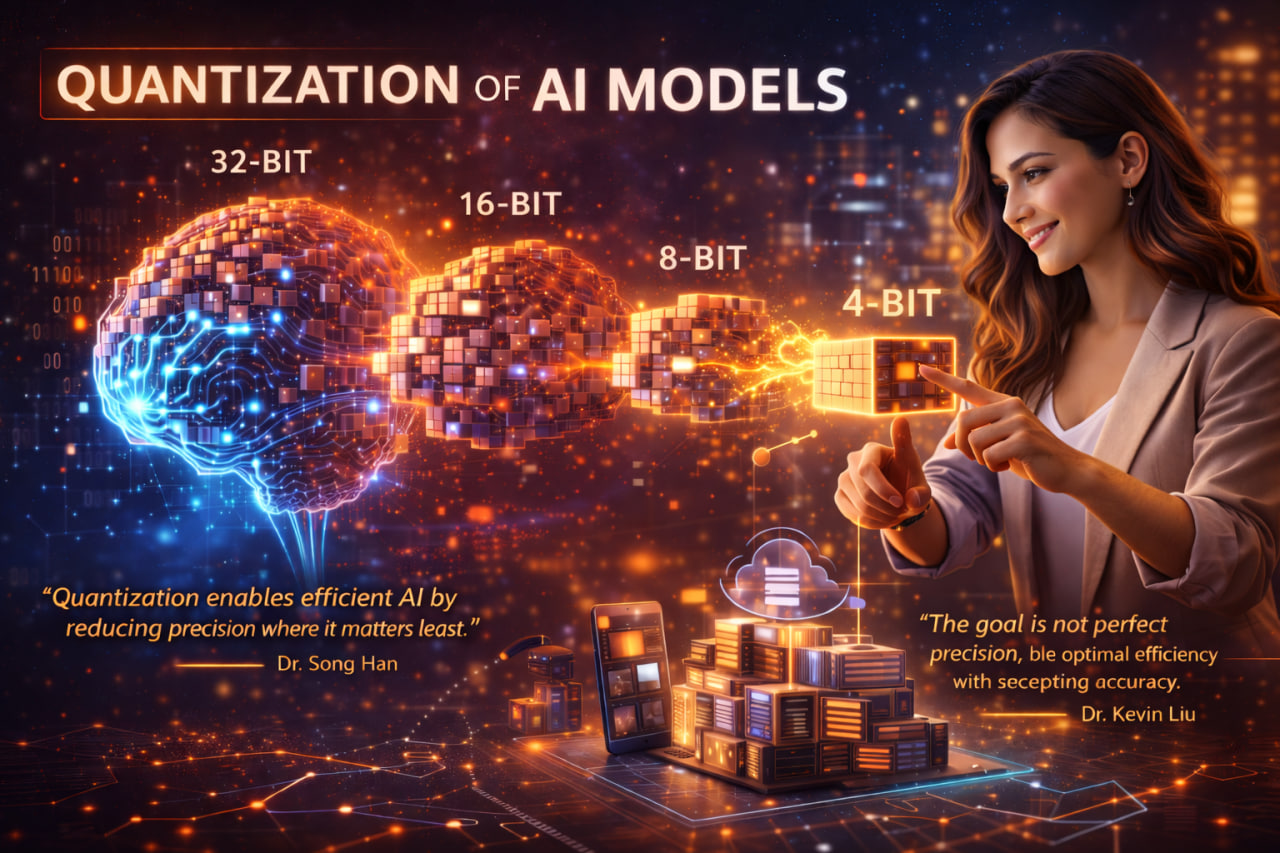
Quantization of AI Models: How to Make Large Models Faster and Lighter

As artificial intelligence models grow in size and complexity, they become more powerful—but also more demanding in terms of memory, computation, and energy consumption. Large language models, computer vision systems, and multimodal AI often require massive hardware resources to run efficiently. This creates a challenge: how can we make these models faster, cheaper, and more accessible without sacrificing too much performance? One of the most effective solutions is quantization — a technique that reduces the precision of model parameters to improve efficiency.

Reinforcement Learning: How AI Learns from Mistakes
Skills and development Applications Creative Arts

Reinforcement Learning: How AI Learns from Mistakes

Artificial intelligence does not always learn by simply analyzing labeled data. In many real-world scenarios, systems must make decisions, evaluate outcomes, and improve over time through trial and error. This approach is known as reinforcement learning (RL) — one of the most powerful and conceptually fascinating areas of modern AI. Reinforcement learning enables machines to learn optimal behavior by interacting with an environment, receiving feedback, and adjusting actions based on experience. It is the foundation behind breakthroughs in robotics, game-playing AI, autonomous driving, and decision-making systems.

GAN: How Two Neural Networks Compete to Create Photorealistic Images
Creative Arts AI in Media Production AI for Content Creators

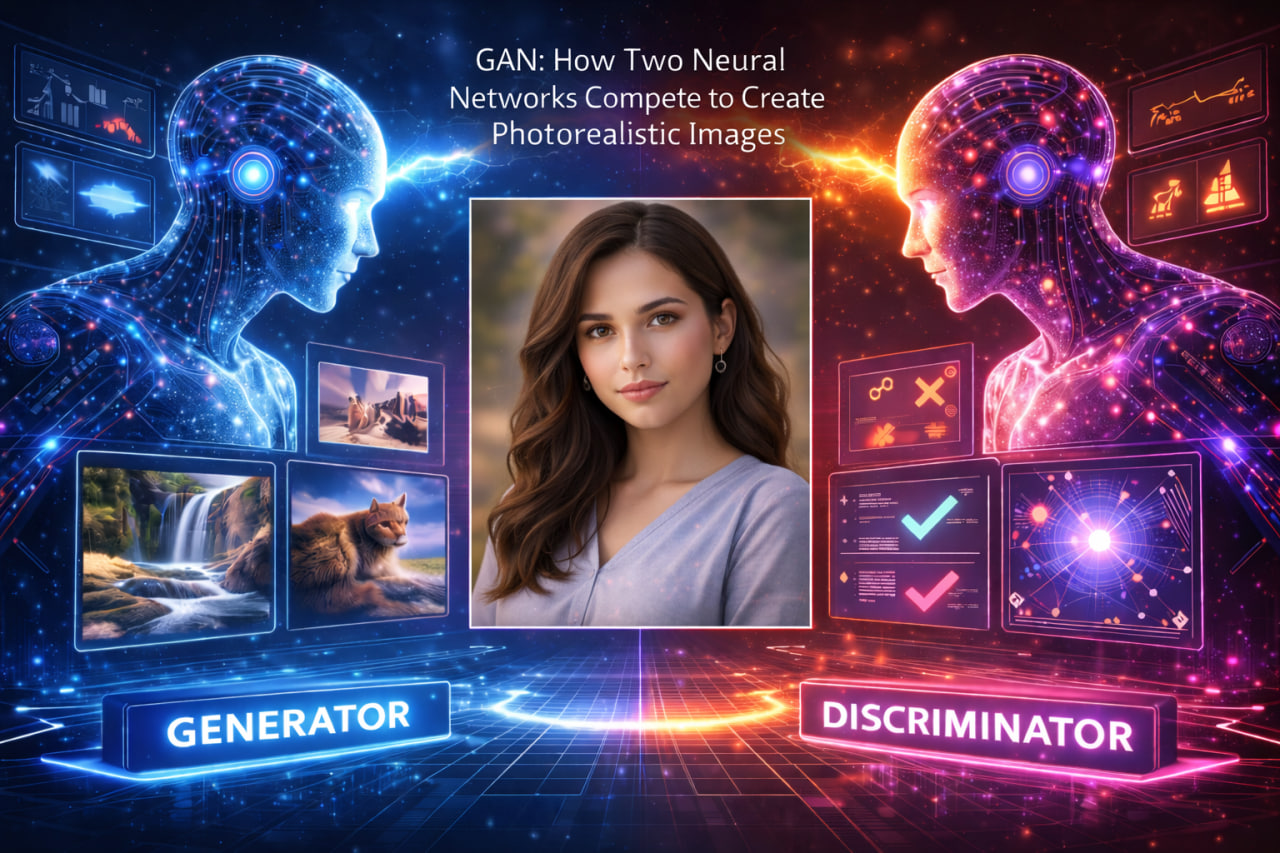
GAN: How Two Neural Networks Compete to Create Photorealistic Images

Artificial intelligence has reached a point where machines can generate images that are nearly indistinguishable from real photographs. One of the key technologies behind this breakthrough is Generative Adversarial Networks (GANs) — a powerful framework in machine learning where two neural networks compete against each other to improve results. This adversarial process allows AI to learn how to generate highly realistic images, videos, and even synthetic human faces. GANs have revolutionized fields such as digital art, media production, gaming, and data simulation.