A power outage does not always cause an immediate internet outage. Fiber, cable, fixed wireless, cellular, and satellite connections may continue operating if both the provider’s infrastructure and the equipment inside your home have backup power.
Artificial intelligence has become an essential tool in modern software development. AI coding assistants can generate code, explain complex algorithms, detect bugs, write documentation, create tests, and even suggest architectural improvements. As these tools continue to evolve, developers are discovering that AI is most effective not as a replacement for programming skills but as a powerful productivity partner. From individual developers to enterprise engineering teams, AI coding assistants are helping accelerate development cycles while improving code quality. However, achieving the best results requires understanding how to collaborate effectively with AI rather than relying on it blindly. The most successful developers use AI to enhance their expertise, automate repetitive work, and focus on solving complex engineering problems.
Artificial intelligence has become one of the most powerful tools for automating repetitive tasks in both business and personal life. From managing emails and scheduling meetings to generating reports and analyzing data, AI allows individuals and organizations to reduce manual work while improving efficiency and accuracy. As AI technologies continue to evolve, automation is no longer limited to large enterprises. Small businesses, freelancers, entrepreneurs, and individual users can now leverage AI-powered tools to streamline workflows, reduce operational costs, and focus on higher-value activities. The true value of AI automation lies not in replacing people, but in eliminating repetitive work so humans can concentrate on creativity, strategy, and decision-making.
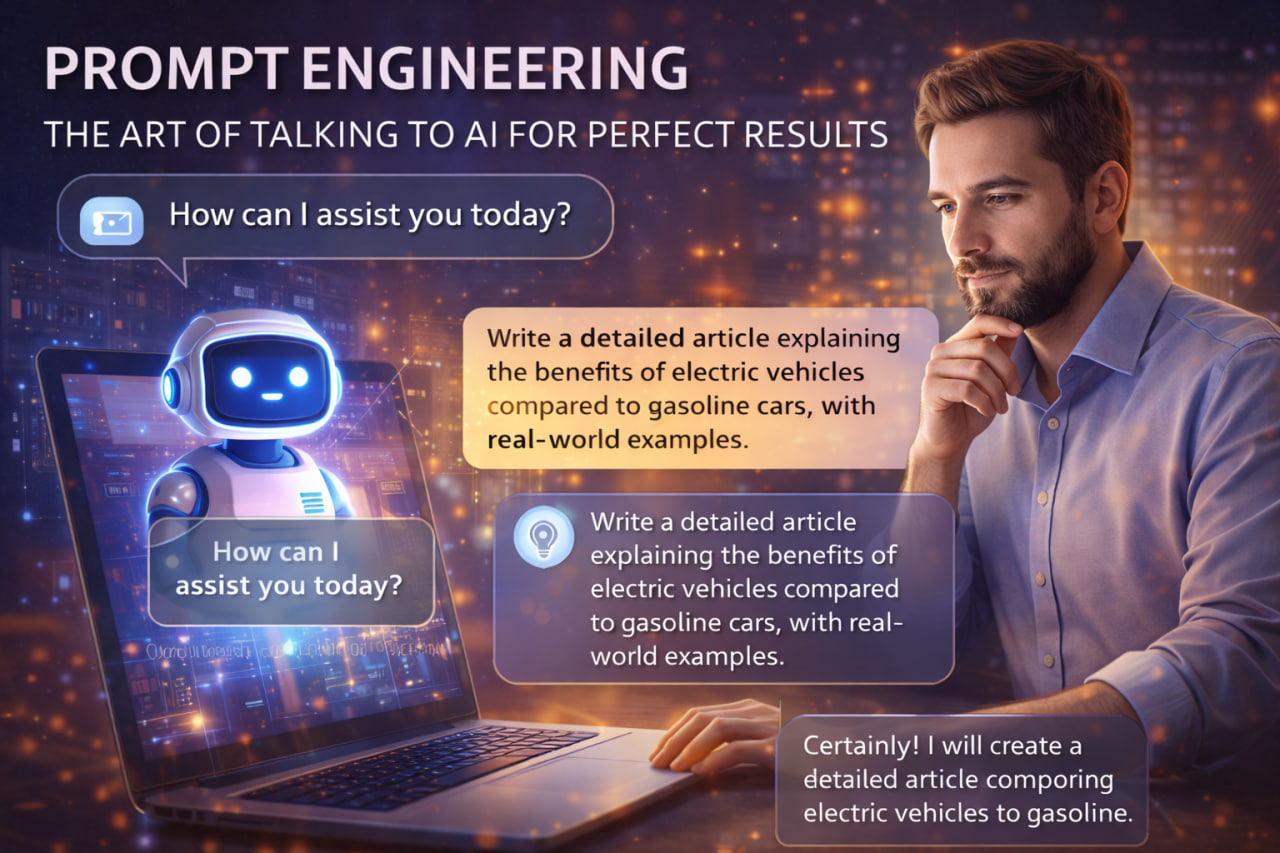
As artificial intelligence becomes more powerful, a new skill is emerging as essential: prompt engineering. It is the ability to communicate effectively with AI systems—especially large language models—to get accurate, useful, and high-quality results. While AI models are trained on massive datasets, the quality of the output often depends directly on how the request is formulated. In simple terms: better prompts lead to better answers.
Traditional search systems are built on keyword matching — they look for exact words or phrases in text. However, human language is far more complex: the same idea can be expressed in many different ways. This limitation led to the development of semantic search, a technology that allows AI to understand the meaning behind queries rather than just matching words. At the core of this approach are vector databases, specialized systems designed to store and search high-dimensional data representations known as vectors. Together, they form the backbone of modern AI-powered search, recommendation systems, and intelligent assistants.
The idea of artificial intelligence has long fascinated writers and filmmakers, serving as both a symbol of human progress and a warning about its consequences. Across decades, cinema and literature have explored two dominant visions of AI-driven futures: utopias, where technology enhances human life, and dystopias, where it leads to control, inequality, or even existential threat. These narratives are not merely entertainment; they reflect societal hopes, fears, and philosophical questions about intelligence, autonomy, and what it means to be human. By examining these contrasting visions, we can better understand how culture interprets the rise of AI and what lessons it offers for the real world.
Artificial intelligence is rapidly reshaping the global labor market, influencing how businesses operate, how employees perform their tasks, and which skills are most valuable in the modern economy. Throughout history, technological revolutions—from the steam engine to the internet—have transformed employment patterns. AI represents the next major shift, automating routine processes while simultaneously creating entirely new professional fields. While concerns about job displacement are widespread, economists and technology experts emphasize that the true impact of AI lies not only in job elimination but also in job transformation and the emergence of new roles.
Urbanization is accelerating worldwide, placing increasing pressure on transportation systems, energy grids, and public safety infrastructure. Traditional city management models, which rely heavily on manual oversight and reactive decision-making, struggle to keep pace with growing population density and infrastructure complexity. In response, municipalities are integrating artificial intelligence (AI) into urban systems to create what is known as a smart city — an interconnected environment where data-driven technologies optimize daily operations. AI does not simply automate tasks; it analyzes massive real-time data streams to predict congestion, balance electricity demand, and enhance public safety. As cities evolve, AI is becoming a foundational technology that reshapes how urban environments function.
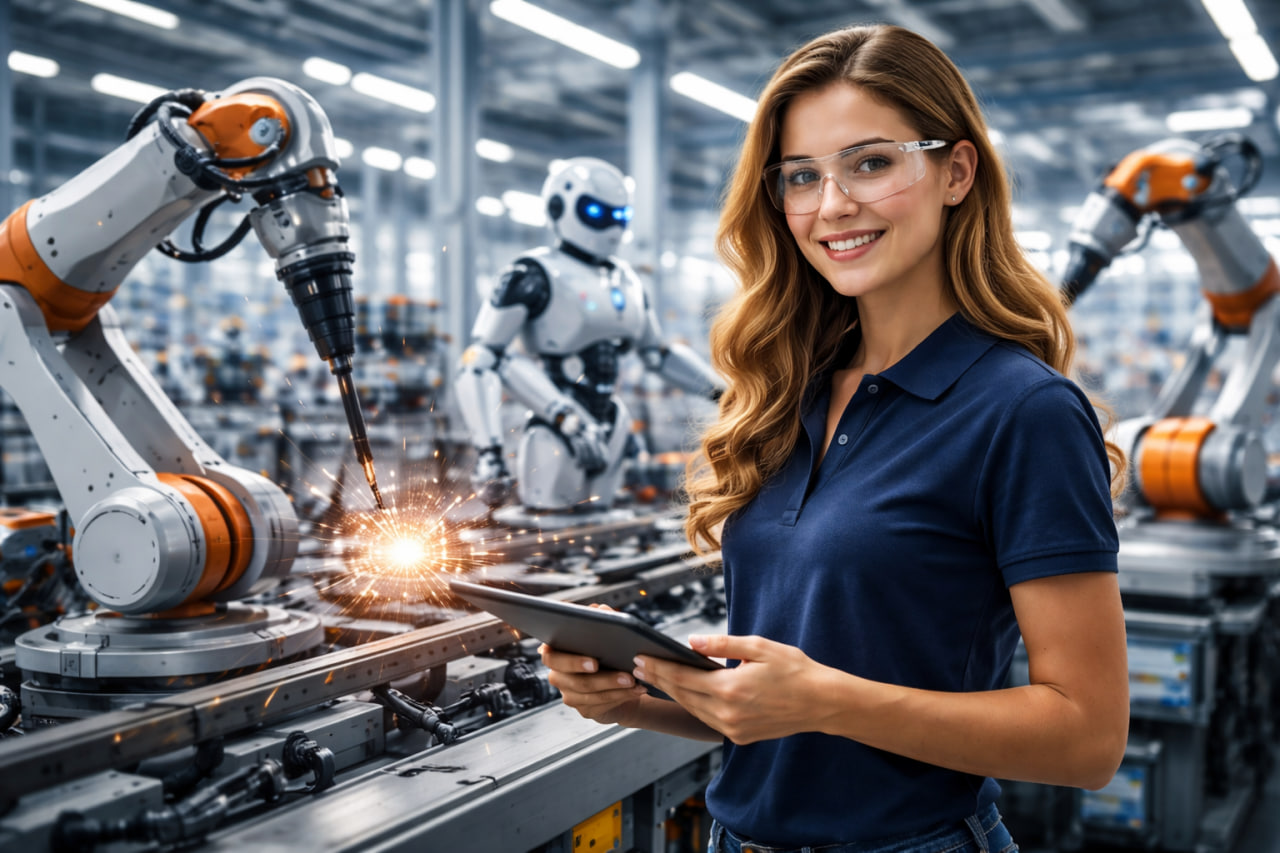
Industrial production has undergone several technological revolutions, from mechanization and electrification to automation and digitalization. Today, the integration of robotics and artificial intelligence (AI) marks the next major shift, often referred to as Industry 4.0. Unlike traditional automation, which follows fixed programmed instructions, AI-powered systems can analyze data, learn from patterns, and adapt to changing conditions. This combination of intelligent software and advanced robotics is redefining efficiency, safety, and productivity across global manufacturing sectors.
Artificial intelligence is rapidly transforming the legal profession, particularly in the areas of document analysis and case law research. Traditionally, lawyers spent countless hours reviewing contracts, scanning precedents, and preparing legal arguments manually. Today, AI-powered tools significantly reduce research time, improve accuracy, and uncover insights that may otherwise remain hidden. While AI does not replace legal expertise, it enhances efficiency and supports more informed legal decision-making.