AI for Content Creators

Creative Professions and AI: A Threat or a New Tool?
Skills and development Creative Arts AI in Media Production

Creative Professions and AI: A Threat or a New Tool?

The rapid development of artificial intelligence has sparked intense debate across creative industries. Designers, writers, musicians, filmmakers, and illustrators increasingly encounter AI systems capable of generating images, composing music, editing videos, and producing written content within seconds. This technological shift raises a fundamental question: is AI a threat to creative professions, or does it represent a powerful new instrument that expands human potential? The answer lies not in extremes, but in understanding how creativity, technology, and human originality interact.

Tools for Speech Recognition and Speech Synthesis: How Modern Voice Technologies Work
Skills and development Creative Arts AI in Media Production

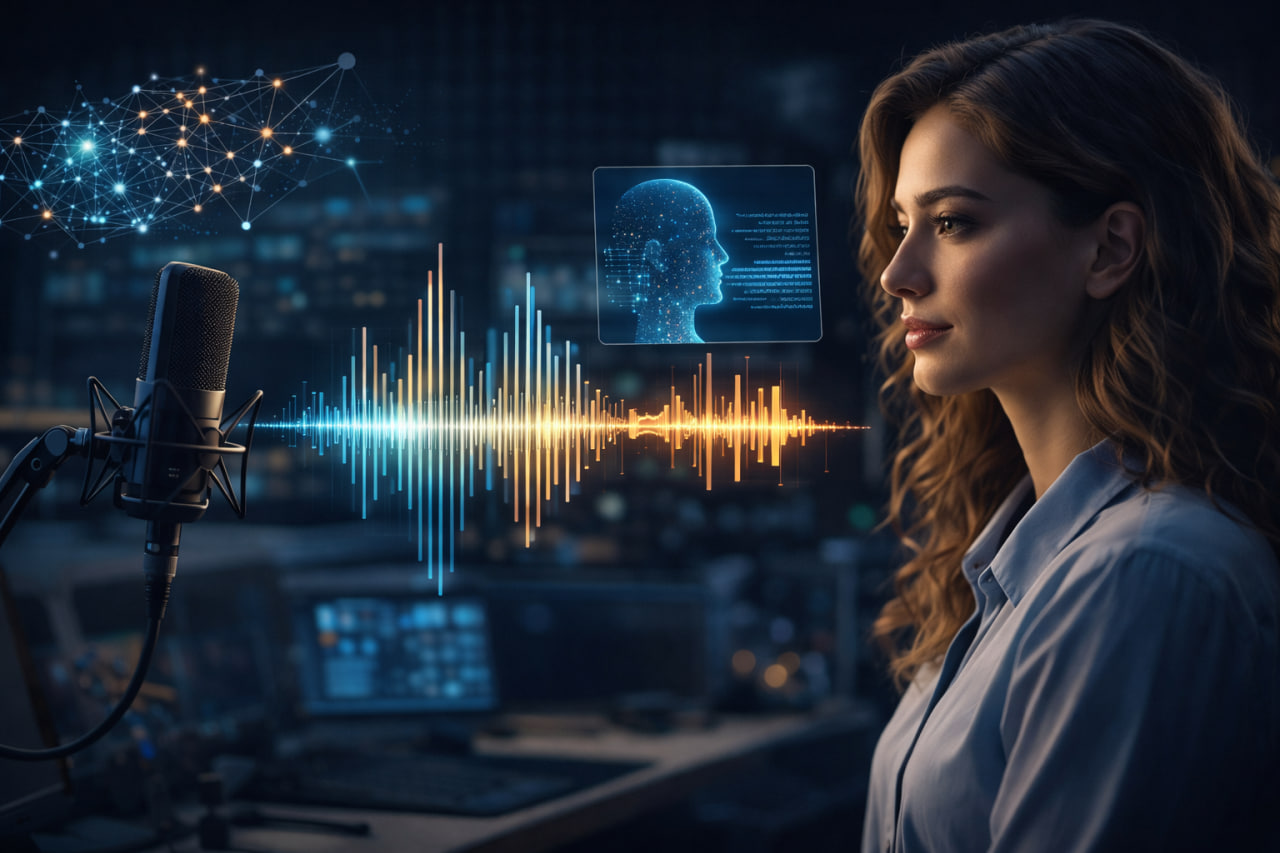
Tools for Speech Recognition and Speech Synthesis: How Modern Voice Technologies Work

Speech technologies have become a fundamental part of everyday digital interaction, enabling humans to communicate naturally with machines. From voice assistants and automated customer support to accessibility tools and content creation, speech recognition and speech synthesis are transforming how information is processed and delivered. These technologies rely on artificial intelligence to convert spoken language into text and generate natural-sounding speech from written content. Understanding the tools behind these systems helps explain their capabilities, limitations, and real-world value.

FinTech and AI: Fighting Fraud, Algorithmic Trading, and Intelligent Scoring
Smart Technologies Business Growth AI for Content Creators

FinTech and AI: Fighting Fraud, Algorithmic Trading, and Intelligent Scoring

The financial technology sector has been transformed by artificial intelligence, reshaping how money is moved, protected, and invested. FinTech companies operate in an environment where speed, accuracy, and trust are critical, and traditional manual processes are no longer sufficient. AI enables financial systems to analyze massive volumes of data in real time, detect anomalies, and make complex decisions with minimal delay. As a result, artificial intelligence has become a core engine behind fraud prevention, algorithmic trading, and modern credit scoring.

Low-Code and No-Code AI Platforms: Creating Models Without Programming
Skills and development Applications AI in Media Production

Low-Code and No-Code AI Platforms: Creating Models Without Programming

Artificial intelligence is no longer reserved exclusively for programmers, data scientists, or large technology companies. In recent years, low-code and no-code AI platforms have dramatically lowered the barrier to entry, allowing non-technical users to build, train, and deploy AI models without writing traditional code. These platforms are changing how businesses, educators, and creators approach AI—shifting the focus from algorithms to problems, data, and outcomes. Low-code and no-code AI does not eliminate complexity entirely, but it hides it behind intuitive interfaces, visual workflows, and automated processes. As a result, AI development becomes more accessible, faster, and more aligned with real-world business needs.

Midjourney vs Stable Diffusion: Which Image Generator Should You Choose?
Education and training Applications AI in Media Production

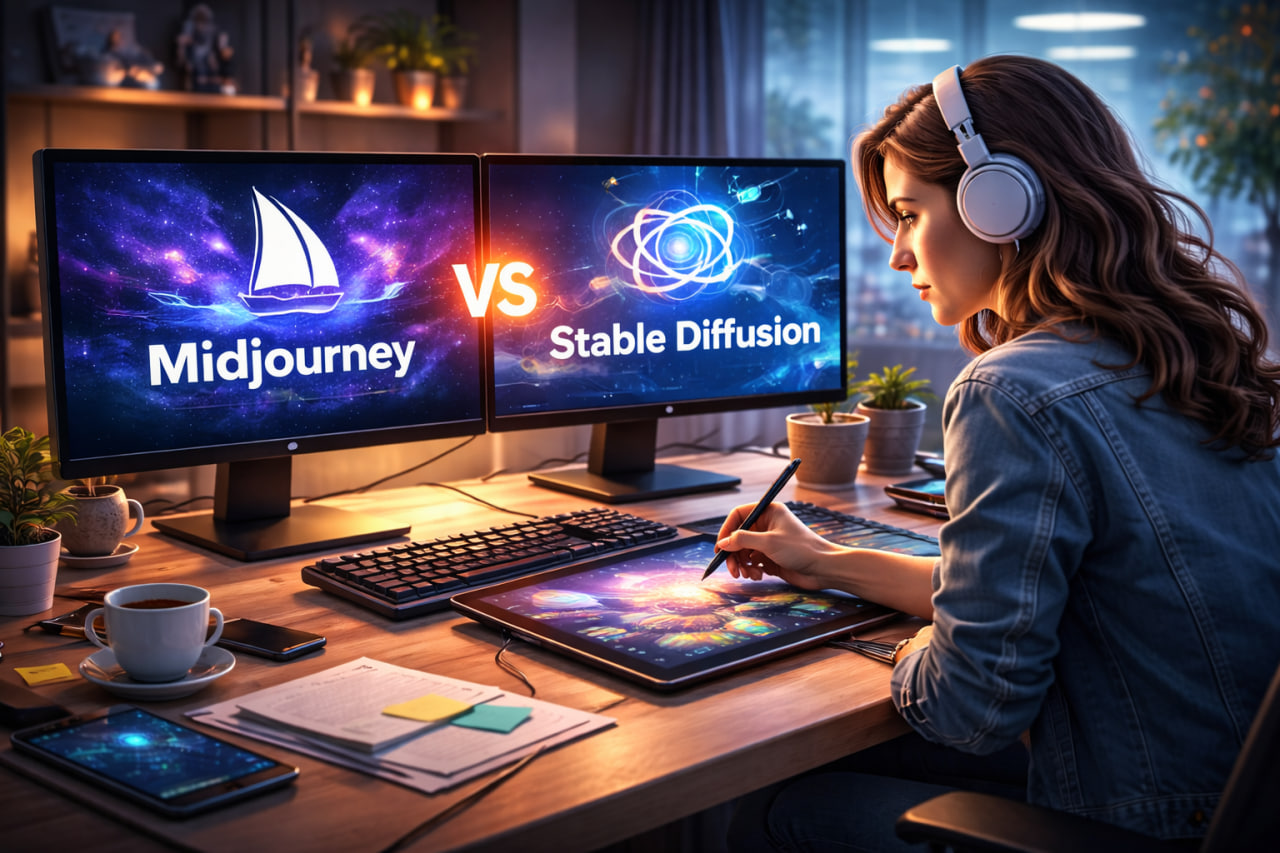
Midjourney vs Stable Diffusion: Which Image Generator Should You Choose?

AI image generation has rapidly evolved from experimental tools into professional-grade systems used in design, marketing, media, and product development. Among the most discussed platforms today are Midjourney and Stable Diffusion, two generators that share similar foundations but differ radically in philosophy, control, and use cases. Choosing between them is not about which is “better” overall, but about which aligns with your creative goals, technical comfort level, and workflow requirements. To make a meaningful comparison, it is important to look beyond surface-level image quality and examine how these systems are built and used in practice.

How to Automate Routine Tasks with ChatGPT and Similar AI Tools
Automation AI for Content Creators AI for Everyday Life

How to Automate Routine Tasks with ChatGPT and Similar AI Tools

Routine work consumes a surprising amount of human time and attention. Writing repetitive emails, summarizing documents, preparing reports, searching for information, formatting data, and answering similar questions day after day all drain cognitive energy without adding proportional value. Tools like ChatGPT and its analogs are changing this reality by acting as flexible, language-driven automation layers. They do not replace traditional software automation; instead, they complement it by handling tasks that were previously difficult to formalize with rules alone.

GPT, Claude, Alice, and Gemini: Comparing the AI Giants
Applications Creative Arts AI in Media Production

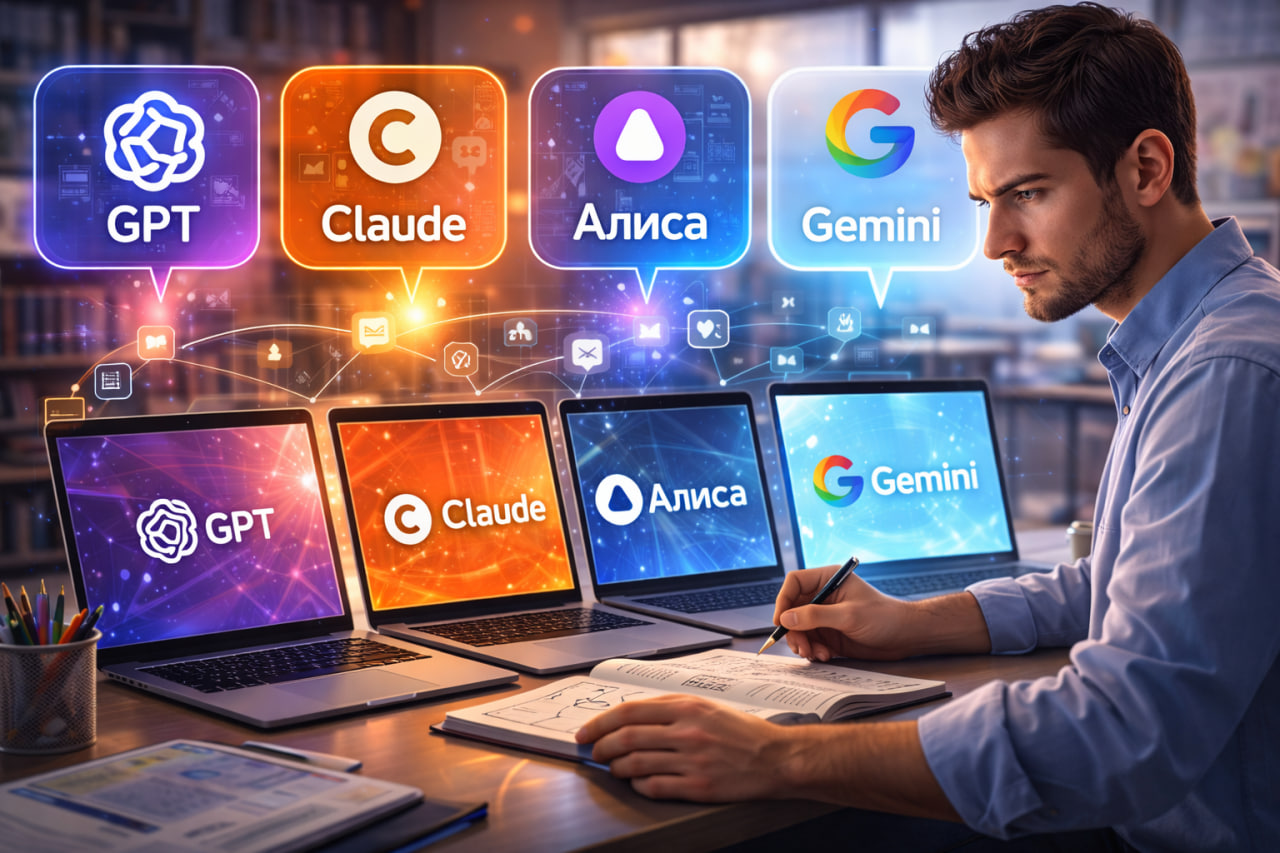
GPT, Claude, Alice, and Gemini: Comparing the AI Giants

Large language models have rapidly become central interfaces between humans and digital systems. What started as experimental chatbots has evolved into powerful platforms capable of writing, reasoning, coding, summarizing, and assisting across industries. GPT, Claude, Alice, and Gemini represent four different philosophies of how conversational AI should be designed, trained, and deployed. Comparing them is not about declaring a single winner, but about understanding how priorities such as reasoning depth, safety, ecosystem integration, and cultural context shape each system’s strengths and limitations.

Google Colab Review: An Ideal Platform for AI Experiments
Skills and development Business Growth AI for Content Creators

Google Colab Review: An Ideal Platform for AI Experiments

Artificial intelligence experimentation often fails not because of weak ideas, but because of limited access to computing resources and complex setup requirements. Google Colab solves this problem by providing a ready-to-use, cloud-based environment where anyone can run AI and machine learning experiments directly in the browser. It removes friction at the earliest stage of learning and prototyping, allowing users to focus on models, data, and ideas rather than infrastructure. This combination of accessibility, power, and simplicity has made Colab one of the most popular tools in modern AI education and experimentation.

What Is Python and What Is It Used For?
Smart Technologies AI for Content Creators AI for Everyday Life

What Is Python and What Is It Used For?

Python is one of the most popular programming languages in the world, yet it is often misunderstood as either “too simple” or “only for beginners.” In reality, Python is a powerful, versatile, and mature language used in everything from web applications and automation to artificial intelligence and scientific research. Its strength lies not in complexity, but in clarity: Python is designed to be readable, expressive, and efficient for humans, not just machines. Understanding what Python is “eaten with” means understanding how it fits into real-world technology stacks and why it has become a foundational tool across industries.

Supervised vs Unsupervised Learning: Key Concepts Explained
AI in Media Production AI for Content Creators AI in Cybersecurity

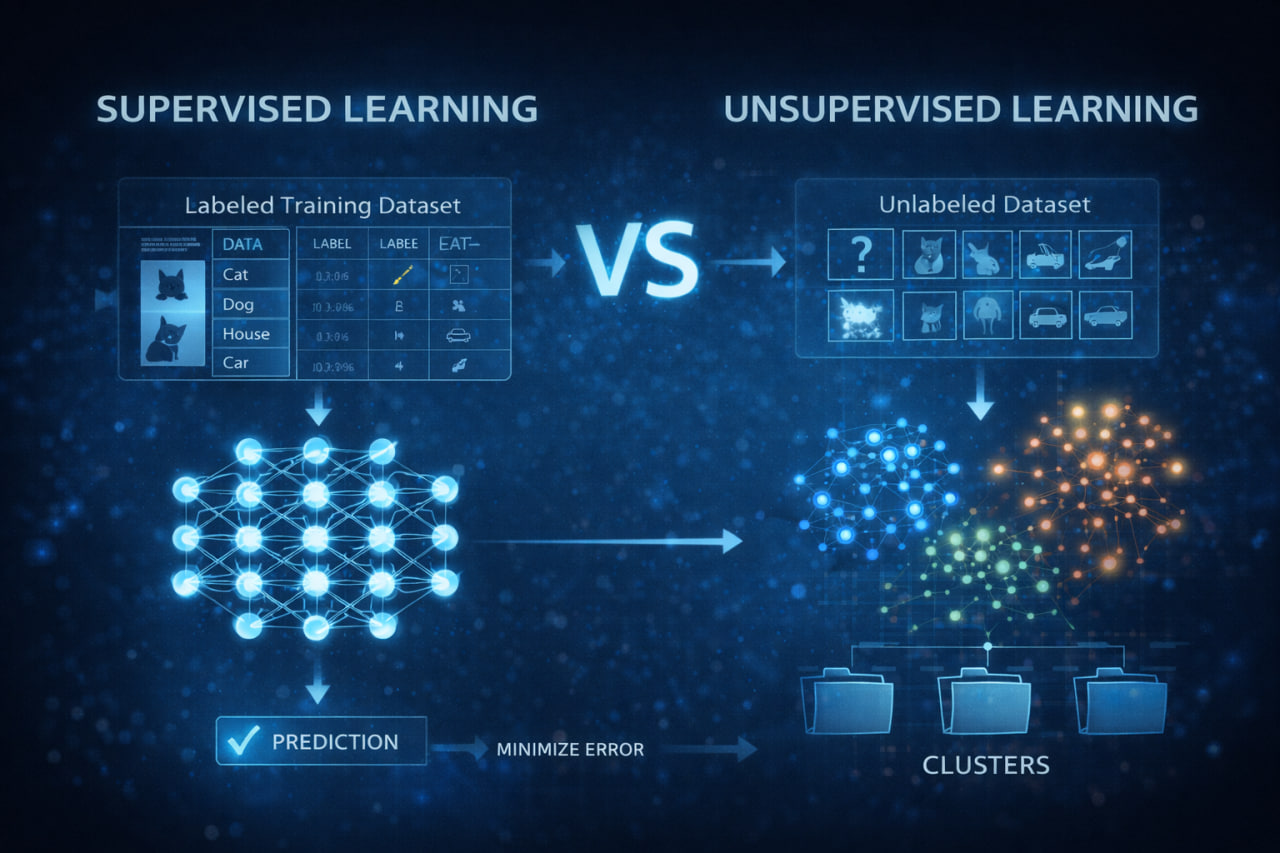
Supervised vs Unsupervised Learning: Key Concepts Explained

Machine learning systems learn from data, but how they learn depends on the structure of that data and the goals defined by humans. Two foundational approaches dominate this landscape: supervised learning and unsupervised learning. While both aim to uncover patterns and generate useful insights, they differ fundamentally in data requirements, learning mechanisms, and real-world applications. Understanding these approaches is essential for grasping how modern AI systems are built, evaluated, and deployed across industries.