AI for Content Creators

What Is RAG and Why It Is a Major Trend in AI
Education and training Smart Technologies AI in Media Production

What Is RAG and Why It Is a Major Trend in AI

As artificial intelligence systems become more capable, one of the key challenges remains reliability and accuracy of information. Large language models (LLMs) are powerful, but they have a well-known limitation: they generate responses based on patterns learned during training, not from real-time or verified data sources. This can lead to outdated information or so-called “hallucinations.” To address this, a new architectural approach has gained rapid popularity: Retrieval-Augmented Generation (RAG). It is now considered one of the most important trends in modern AI, especially for enterprise applications.
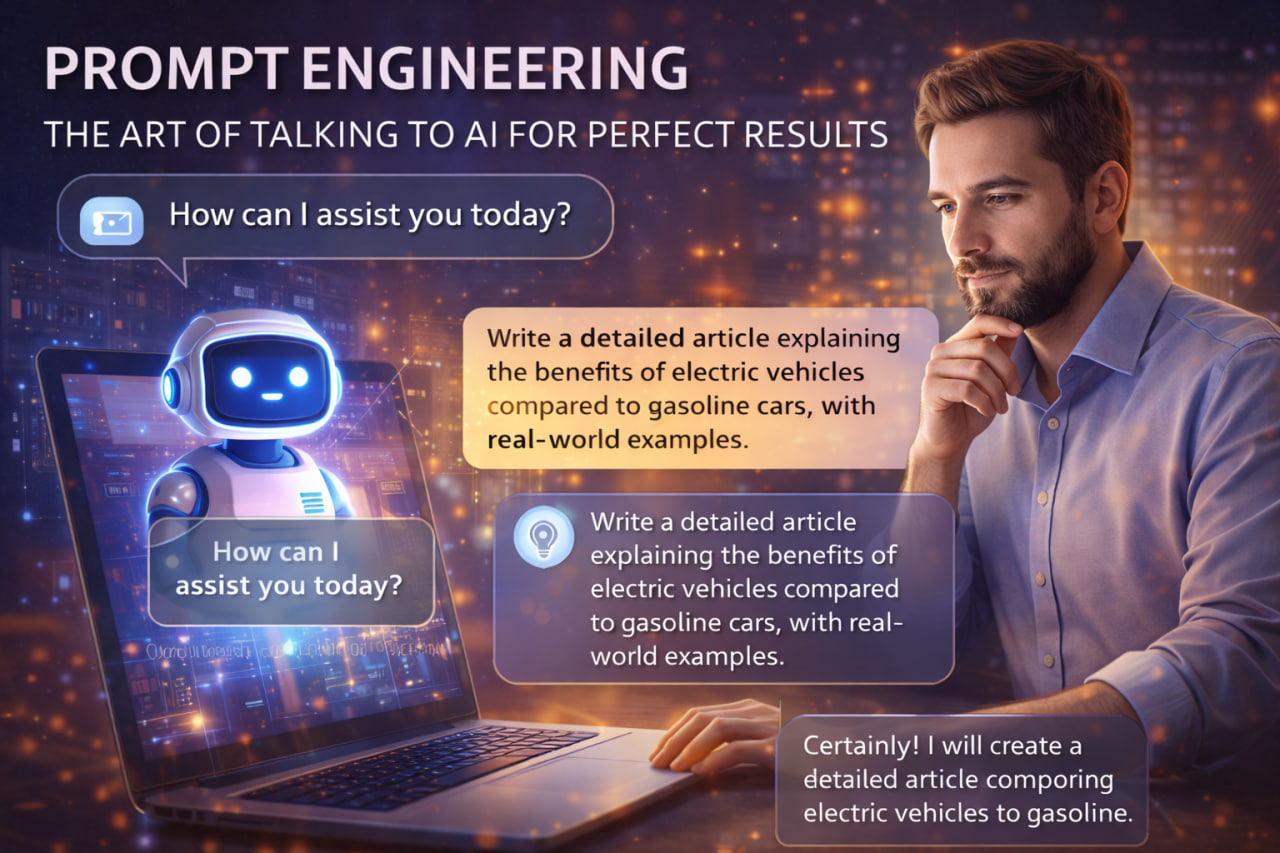

Prompt Engineering: The Art of Talking to AI for Perfect Results
Everyday Life Automation AI in Media Production

Prompt Engineering: The Art of Talking to AI for Perfect Results

As artificial intelligence becomes more powerful, a new skill is emerging as essential: prompt engineering. It is the ability to communicate effectively with AI systems—especially large language models—to get accurate, useful, and high-quality results. While AI models are trained on massive datasets, the quality of the output often depends directly on how the request is formulated. In simple terms: better prompts lead to better answers.

Vector Databases and Semantic Search: How AI Finds Meaning, Not Just Words
Applications Smart Technologies Automation

Vector Databases and Semantic Search: How AI Finds Meaning, Not Just Words

Traditional search systems are built on keyword matching — they look for exact words or phrases in text. However, human language is far more complex: the same idea can be expressed in many different ways. This limitation led to the development of semantic search, a technology that allows AI to understand the meaning behind queries rather than just matching words. At the core of this approach are vector databases, specialized systems designed to store and search high-dimensional data representations known as vectors. Together, they form the backbone of modern AI-powered search, recommendation systems, and intelligent assistants.

Quantization of AI Models: How to Make Large Models Faster and Lighter
Education and training Applications Smart Technologies

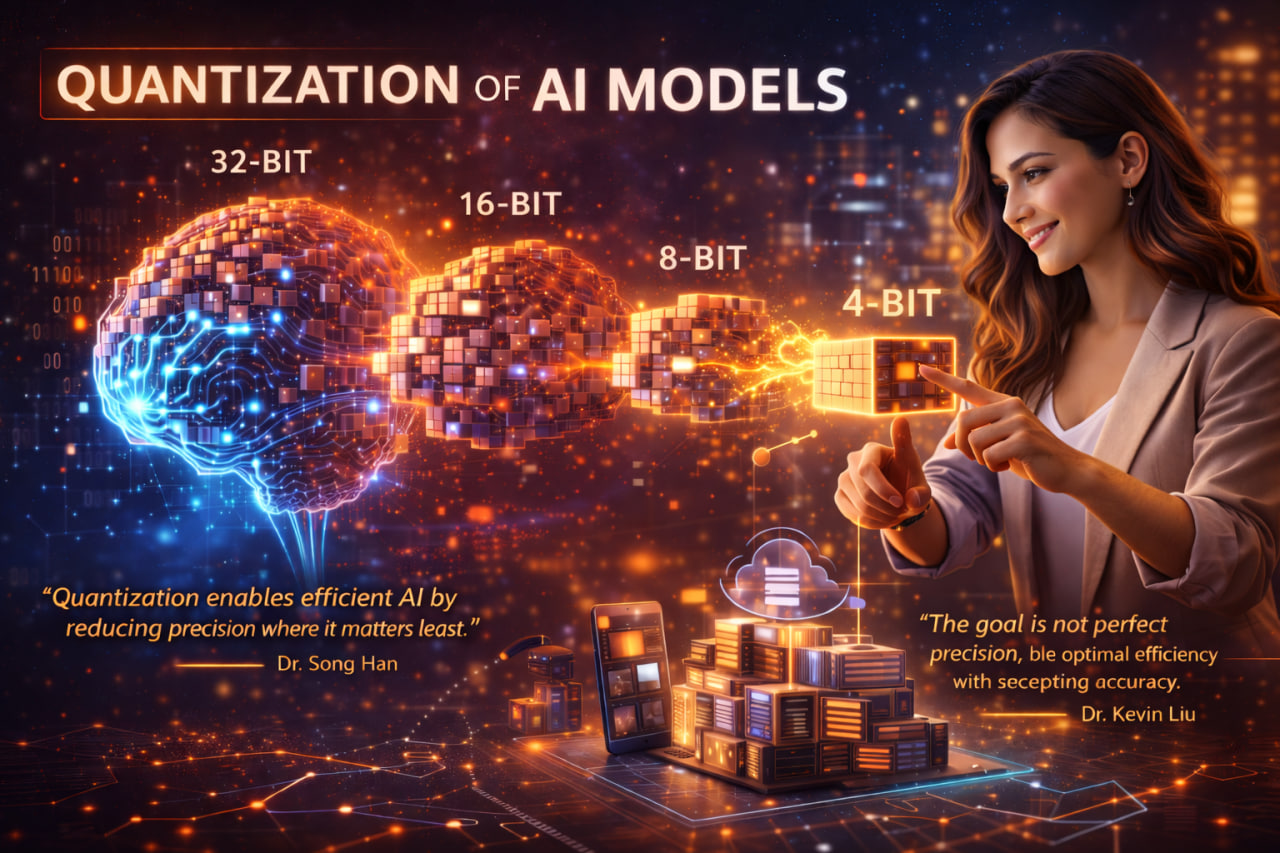
Quantization of AI Models: How to Make Large Models Faster and Lighter

As artificial intelligence models grow in size and complexity, they become more powerful—but also more demanding in terms of memory, computation, and energy consumption. Large language models, computer vision systems, and multimodal AI often require massive hardware resources to run efficiently. This creates a challenge: how can we make these models faster, cheaper, and more accessible without sacrificing too much performance? One of the most effective solutions is quantization — a technique that reduces the precision of model parameters to improve efficiency.

GAN: How Two Neural Networks Compete to Create Photorealistic Images
Creative Arts AI in Media Production AI for Content Creators

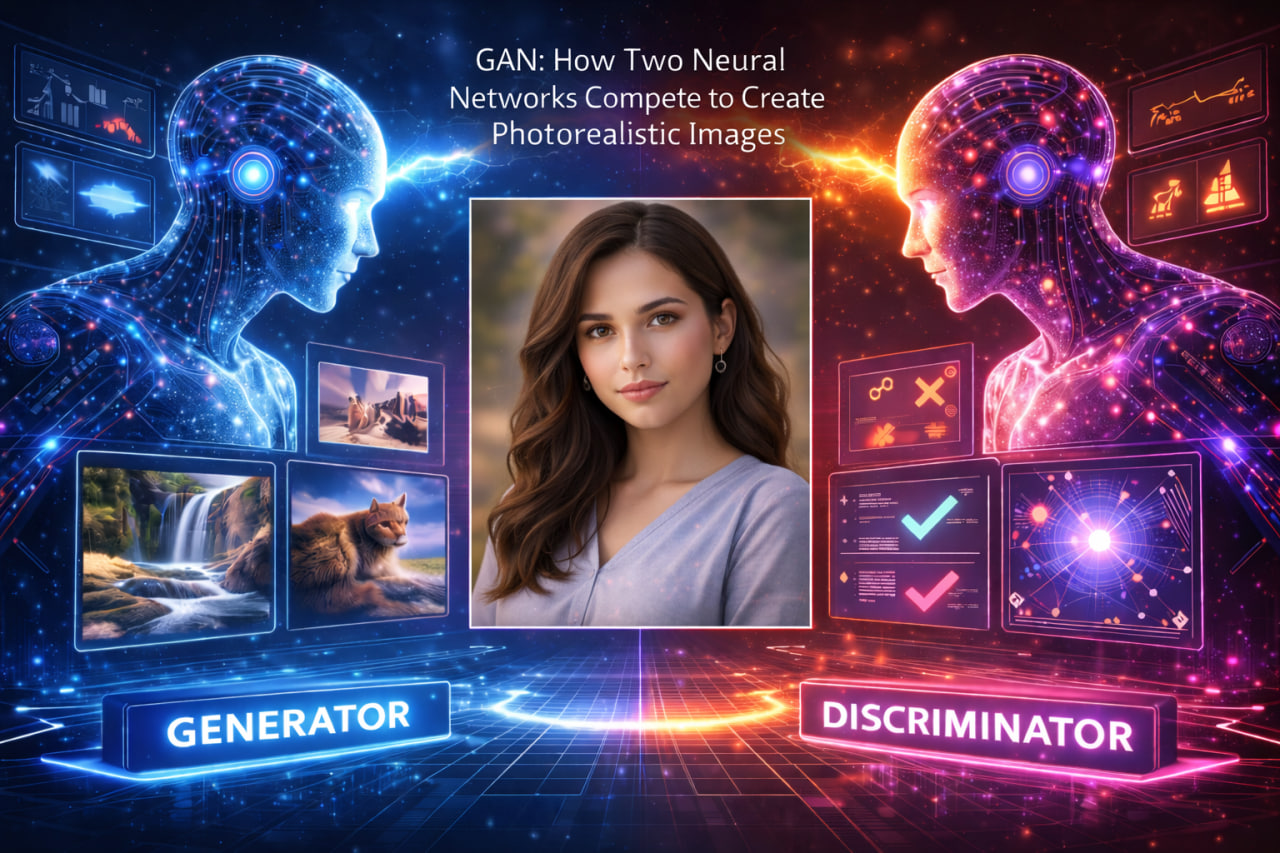
GAN: How Two Neural Networks Compete to Create Photorealistic Images

Artificial intelligence has reached a point where machines can generate images that are nearly indistinguishable from real photographs. One of the key technologies behind this breakthrough is Generative Adversarial Networks (GANs) — a powerful framework in machine learning where two neural networks compete against each other to improve results. This adversarial process allows AI to learn how to generate highly realistic images, videos, and even synthetic human faces. GANs have revolutionized fields such as digital art, media production, gaming, and data simulation.

Multimodal AI: Models That Understand Text, Images, and Sound Together
Smart Technologies Creative Arts AI in Media Production

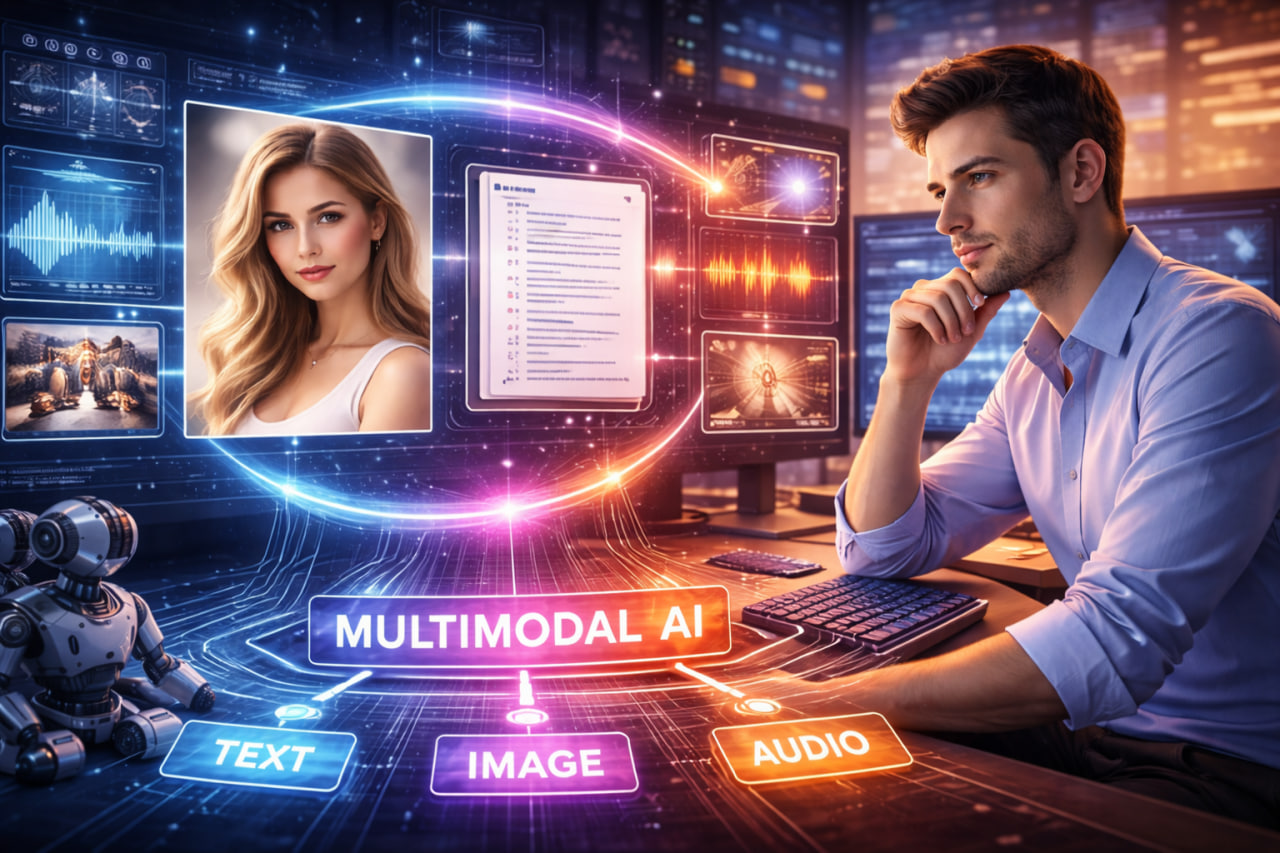
Multimodal AI: Models That Understand Text, Images, and Sound Together

Artificial intelligence is evolving beyond systems that process a single type of data. Today, one of the most important breakthroughs is multimodal AI — models capable of understanding and generating information across multiple data types simultaneously, such as text, images, and audio. This shift represents a major step toward more human-like intelligence, as people naturally interpret the world through multiple senses at once. Multimodal systems enable richer interactions, deeper understanding, and more powerful applications across industries.

Fine-Tuning: How to Adapt Pretrained Models to Your Tasks
Applications AI in Media Production AI for Content Creators

Fine-Tuning: How to Adapt Pretrained Models to Your Tasks

Modern artificial intelligence systems are rarely built from scratch. Instead, most high-performing models are first trained on massive datasets and then adapted to specific tasks using a process known as fine-tuning. This approach has become a cornerstone of modern machine learning, especially in fields such as natural language processing (NLP), computer vision, and speech recognition. Fine-tuning allows developers to take powerful pretrained models and specialize them for real-world applications with significantly less data, time, and computational cost.

Can AI Be Creative? A Philosophical Perspective
Applications Creative Arts AI for Content Creators

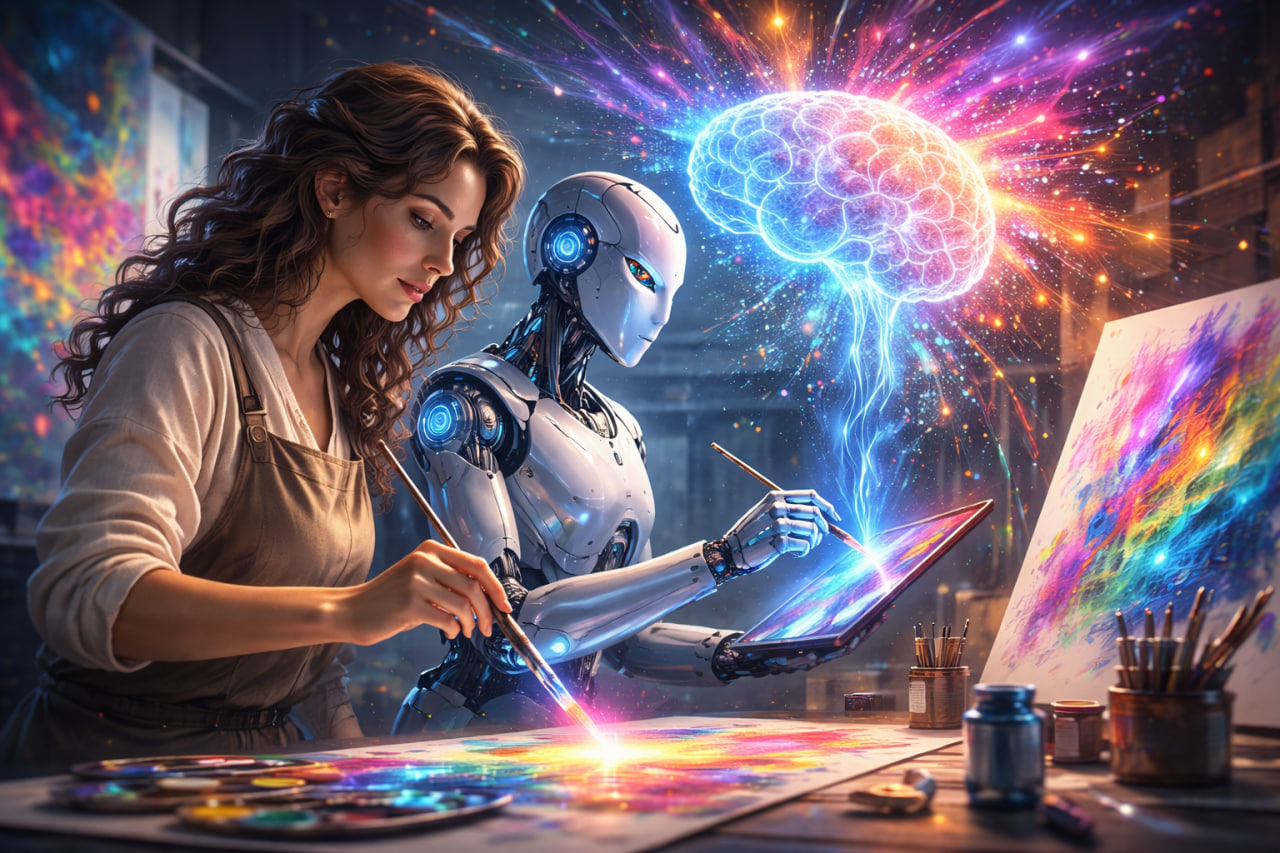
Can AI Be Creative? A Philosophical Perspective

The question of whether artificial intelligence can truly be creative lies at the intersection of technology, philosophy, and human identity. As AI systems begin to generate art, music, writing, and even scientific ideas, they challenge long-standing assumptions about creativity being an exclusively human trait. At first glance, the outputs of AI can appear original and expressive, raising a fundamental question: is creativity defined by the process, the result, or the intention behind it? Exploring this issue requires a deeper understanding of what creativity actually means and how AI operates in comparison to the human mind.

The AI Black Box Problem: Why Explainability Matters
Smart Technologies Ethics Customer Experience

The AI Black Box Problem: Why Explainability Matters

Artificial intelligence systems are increasingly responsible for decisions that affect finance, healthcare, transportation, and public safety. While these systems often achieve impressive accuracy, they can also operate in ways that are difficult for humans to understand. This challenge is known as the “AI black box problem.” The term refers to situations where an algorithm produces a decision or prediction without clearly explaining how that result was reached. As AI becomes more integrated into critical systems, understanding and interpreting these decisions has become one of the most important challenges in modern technology.

Copyright for AI-Generated Content: Who Owns the Rights?
Creative Arts AI in Media Production AI for Content Creators

Copyright for AI-Generated Content: Who Owns the Rights?

Artificial intelligence is increasingly capable of producing text, images, music, and video that closely resemble human-created works. As these technologies become more widely used in creative industries, an important legal question arises: who owns the rights to content generated by artificial intelligence? Traditional copyright law was designed around human authorship, where a person creates an original work and receives legal protection for it. AI systems complicate this framework because the creative output is generated by algorithms rather than a single identifiable human author. As a result, lawmakers, courts, and technology experts around the world are debating how intellectual property rules should apply to AI-generated works.