Education and training

How AI Helps in Data Analysis and Forecasting
Education and training Applications Automation

How AI Helps in Data Analysis and Forecasting

Artificial intelligence has become one of the most powerful tools for working with large volumes of data, transforming how companies, researchers, and governments make decisions. Traditional data analysis relies heavily on predefined rules and human interpretation, which limits speed and scalability. AI systems, by contrast, can process massive datasets, detect hidden patterns, and generate forecasts that would be impossible to produce manually. As data continues to grow exponentially, AI-driven analysis is becoming a core foundation of modern forecasting.
Midjourney vs Stable Diffusion: Which Image Generator Should You Choose?
Education and training Applications AI in Media Production

Midjourney vs Stable Diffusion: Which Image Generator Should You Choose?

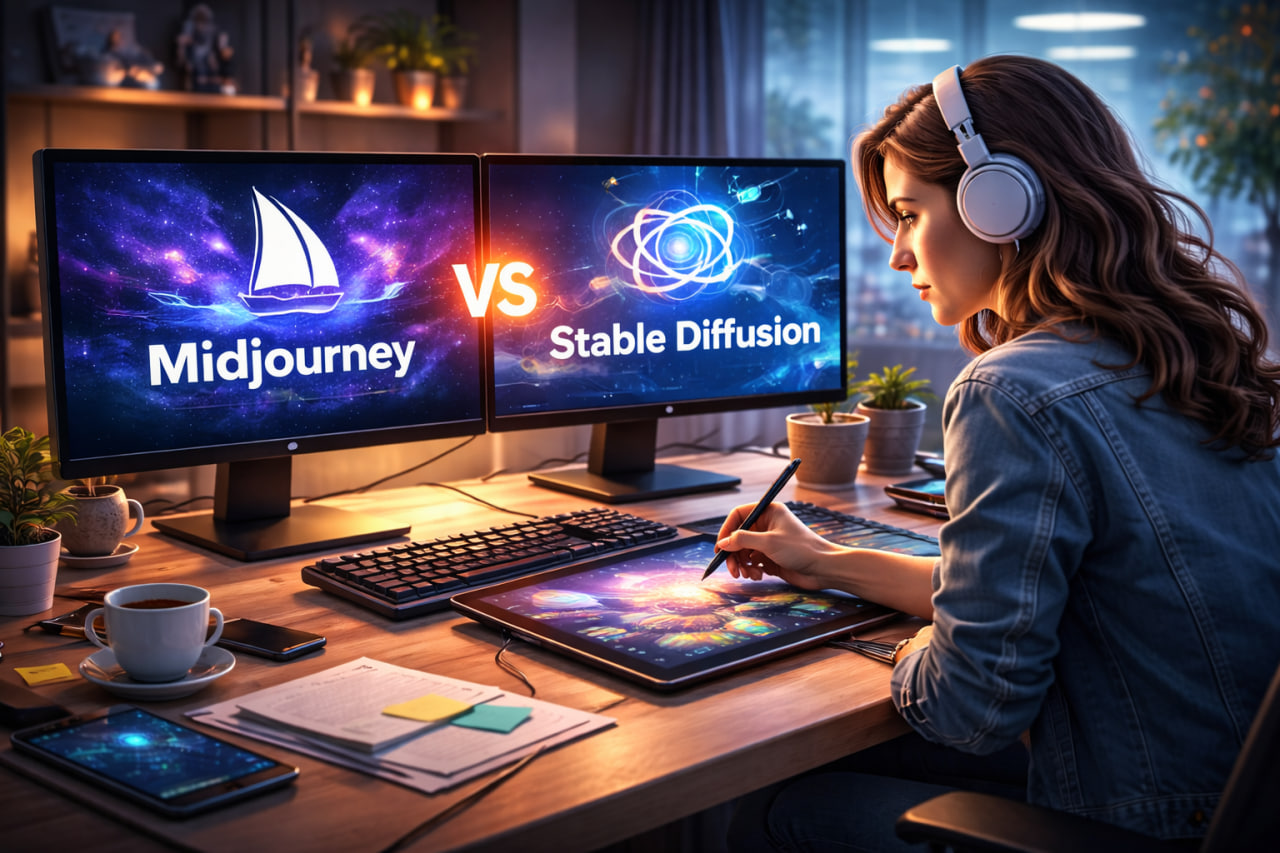
AI image generation has rapidly evolved from experimental tools into professional-grade systems used in design, marketing, media, and product development. Among the most discussed platforms today are Midjourney and Stable Diffusion, two generators that share similar foundations but differ radically in philosophy, control, and use cases. Choosing between them is not about which is “better” overall, but about which aligns with your creative goals, technical comfort level, and workflow requirements. To make a meaningful comparison, it is important to look beyond surface-level image quality and examine how these systems are built and used in practice.

Best Free AI and Machine Learning Courses for Beginners
Education and training Skills and development AI for Everyday Life

Best Free AI and Machine Learning Courses for Beginners

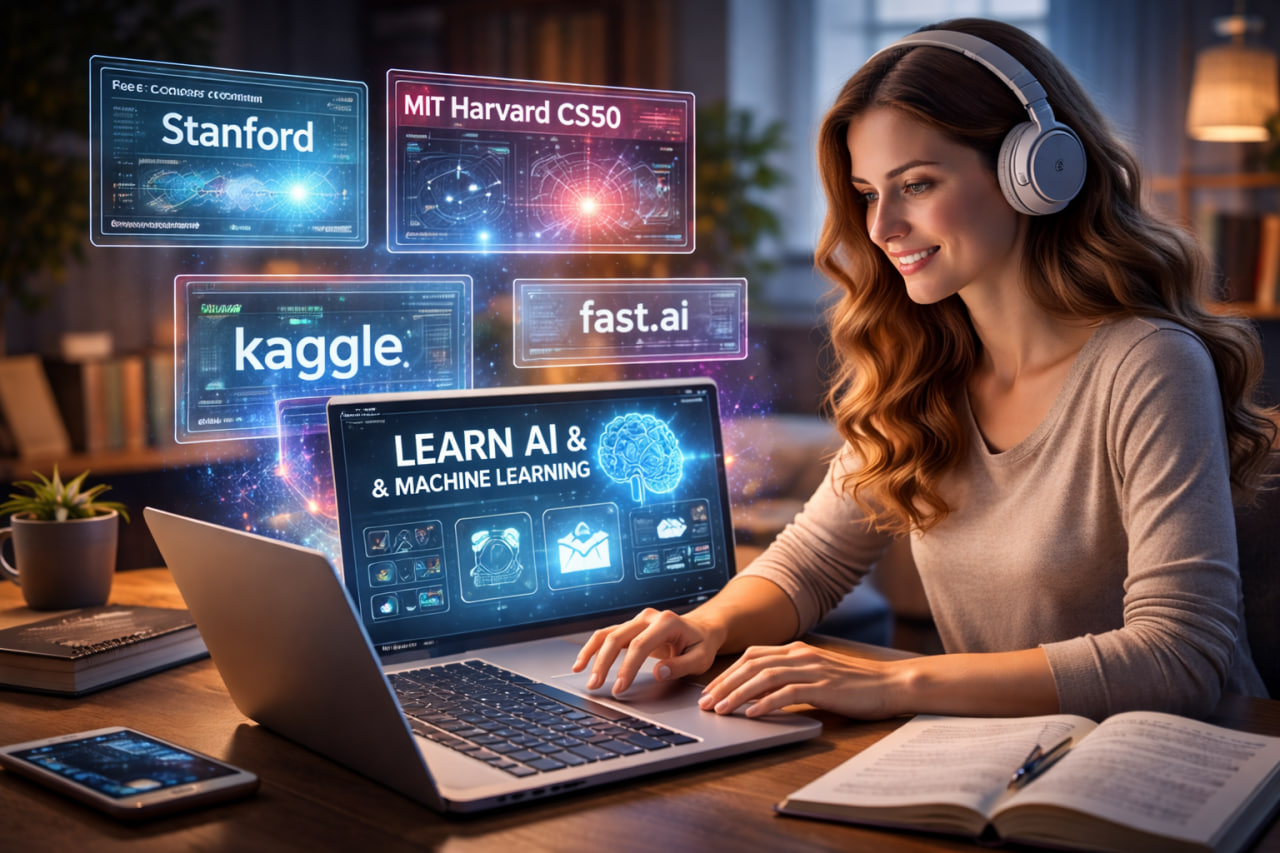
Artificial intelligence and machine learning have moved from niche academic fields into core technologies shaping business, science, and everyday life. For beginners, the biggest challenge is not motivation but knowing where to start without wasting time or money. Fortunately, many world-class universities and technology companies offer free, high-quality courses that teach AI and ML fundamentals in a structured, beginner-friendly way. Choosing the right learning path early helps build strong foundations and avoids confusion caused by fragmented or overly advanced materials.

Computer Vision: How AI Understands and Analyzes Images
Education and training Skills and development Smart Technologies

Computer Vision: How AI Understands and Analyzes Images

Computer vision is one of the most powerful and fast-evolving branches of artificial intelligence, enabling machines to extract meaning from images and video. At its core, computer vision allows AI systems to transform raw pixels into structured information that can be interpreted, classified, and acted upon. This capability underpins technologies such as facial recognition, medical imaging, autonomous driving, quality control in manufacturing, and visual search. While humans perceive images almost instantly, AI must learn to see through layers of mathematical abstraction, data representation, and probabilistic reasoning.

Generative Models: How AI Creates Text, Images, and Music
Education and training Smart Technologies Automation

Generative Models: How AI Creates Text, Images, and Music

Generative models represent one of the most transformative developments in artificial intelligence, shifting AI from systems that only analyze or classify data to systems that can create entirely new content. Text written by AI, images generated from prompts, and music composed by algorithms are no longer experimental curiosities—they are practical tools used in media, design, software, science, and entertainment. At a technical level, generative AI does not “imagine” in a human sense; instead, it learns the statistical structure of existing data and produces new outputs that follow those learned patterns. Understanding how generative models work requires examining how they learn representations, model probability, and transform randomness into coherent results.

How AI Understands Natural Language: NLP Explained
Education and training Everyday Life Smart Technologies

How AI Understands Natural Language: NLP Explained

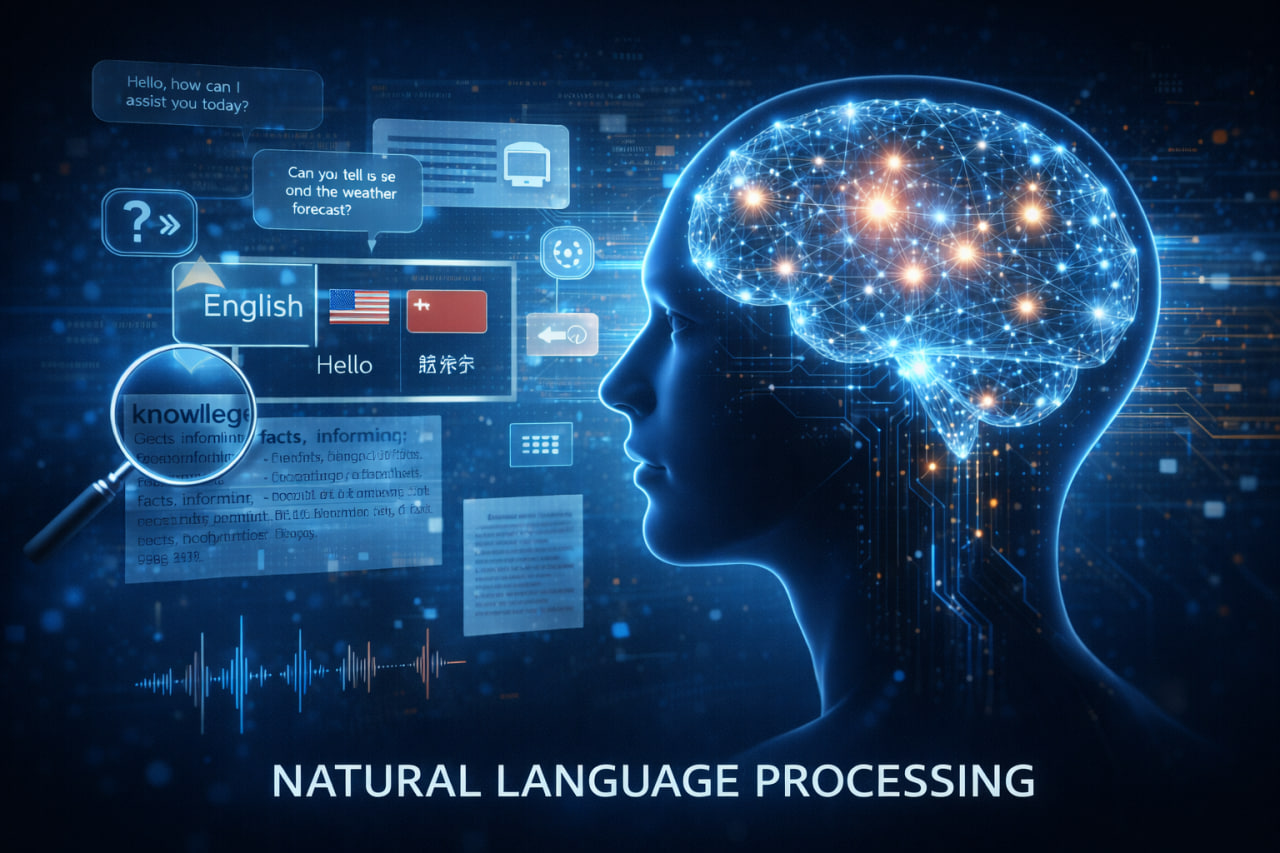
Natural language is messy, ambiguous, and deeply dependent on context, which is exactly why teaching machines to work with human language is one of the hardest problems in artificial intelligence. Natural Language Processing (NLP) is the field that enables computers to analyze, interpret, and generate human language in ways that feel useful in real life—whether that means translating text, answering questions, summarizing documents, or detecting sentiment. When people say “AI understands language,” they usually mean it can map words and sentences to patterns it has learned from data, then produce outputs that match those patterns. This is not the same as human understanding, because today’s AI does not experience meaning the way people do, but it can still perform remarkably well on many language tasks. To see why, you need to understand how modern NLP represents words, handles context, and learns from large-scale text.

Guardians of the Wild: How GPT Can Supercharge Conservation—Without Replacing Rangers
Education and training Applications Smart Technologies

Guardians of the Wild: How GPT Can Supercharge Conservation—Without Replacing Rangers

Artificial intelligence is edging into rainforests, savannas, and coastal waters—not as a sci-fi savior, but as a force multiplier for the people already protecting life on Earth. This article explores how GPT-class models and allied AI tools can monitor wildlife, deter poaching, and safeguard biodiversity, while staying grounded in ethics, local knowledge, and ecological reality. The promise is huge; the pitfalls are real. Used well, AI helps rangers act earlier, scientists learn faster, and communities lead the work. 🐾

GPT and Accessibility: Making Digital Spaces Inclusive for All
Education and training Applications Smart Technologies

GPT and Accessibility: Making Digital Spaces Inclusive for All

Accessibility is not a niche feature—it’s table stakes for a humane internet. GPT-class models can transform how people with disabilities access information, communicate, learn, and work. But to make digital spaces truly inclusive, we need to combine AI’s speed with thoughtful design, strong guardrails, and accountability. This playbook explains where GPT helps, where it must be handled carefully, and how to ship experiences that broaden participation instead of erecting new barriers.

The Intersection of AI and Quantum Computing: What’s Next for GPT?
Education and training Applications Smart Technologies

The Intersection of AI and Quantum Computing: What’s Next for GPT?

Quantum computing and large language models (LLMs) like GPT are on converging trajectories. One promises exponential state spaces and new algorithmic primitives; the other devours compute to learn structure from oceans of data. This article maps where quantum could realistically accelerate GPT training and inference, where today’s limits bite, and how hybrid “quantum-classical” workflows might reshape the next decade of intelligent systems.

From Patterns to Principles: Can GPT Help Us Discover New Laws of Nature?
Education and training Applications Smart Technologies

From Patterns to Principles: Can GPT Help Us Discover New Laws of Nature?

Science advances when patterns become principles—when messy observations crystallize into equations, models, and mechanisms. GPT-class systems are astonishing at finding and articulating patterns across oceans of text and data. But can a language model really help uncover new laws of nature? This article explores where GPT meaningfully accelerates discovery, where it hits hard limits, and how human curiosity and judgment remain indispensable—even in an age of smart machines.