
AI in Cybersecurity

AI and Privacy: Where Is the Line Between Personalization and Surveillance?
Applications AI in Media Production AI in Cybersecurity

AI and Privacy: Where Is the Line Between Personalization and Surveillance?

Artificial intelligence has dramatically improved the ability of digital systems to understand user behavior and deliver personalized experiences. From recommendation algorithms in streaming services to targeted advertising and smart assistants, AI analyzes large volumes of data to predict user preferences and optimize services. While this level of personalization can make technology more convenient and efficient, it also raises important concerns about privacy and surveillance. As AI systems collect and process increasing amounts of personal data, society faces a critical question: where is the boundary between helpful personalization and intrusive monitoring?

Could the Events of The Terminator Ever Come True?
Ethics Automation AI in Cybersecurity

Could the Events of The Terminator Ever Come True?

The Terminator franchise popularized a powerful and unsettling idea: an artificial intelligence becomes self-aware, concludes that humans are a threat, and launches a global war to ensure its own survival. While this narrative is fictional, it raises serious questions about the future of artificial intelligence, autonomous weapons, and human control over complex systems. The real issue is not whether a movie scenario will repeat itself exactly, but whether the underlying risks it dramatizes could manifest in more realistic forms. To answer that, we must separate cinematic myth from technical reality.

Supervised vs Unsupervised Learning: Key Concepts Explained
AI in Media Production AI for Content Creators AI in Cybersecurity

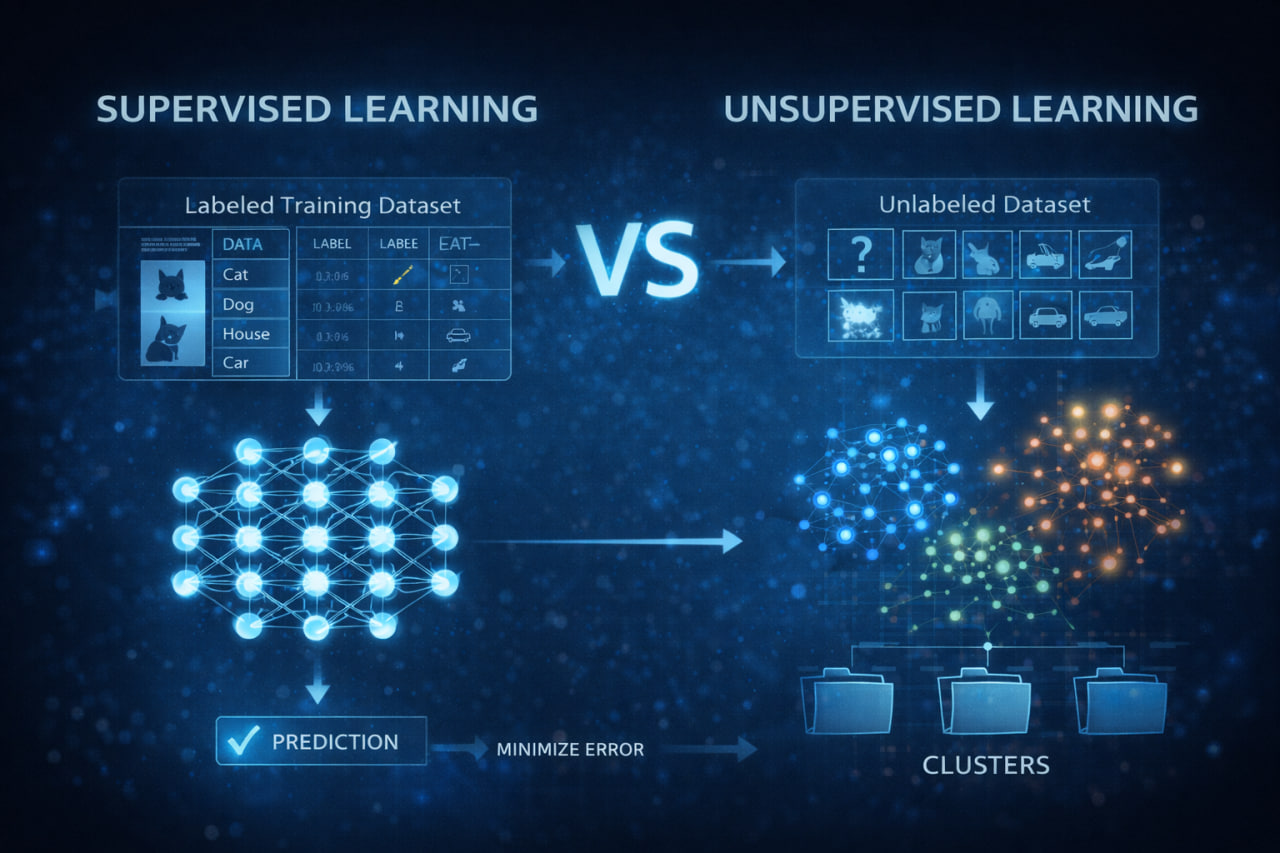
Supervised vs Unsupervised Learning: Key Concepts Explained

Machine learning systems learn from data, but how they learn depends on the structure of that data and the goals defined by humans. Two foundational approaches dominate this landscape: supervised learning and unsupervised learning. While both aim to uncover patterns and generate useful insights, they differ fundamentally in data requirements, learning mechanisms, and real-world applications. Understanding these approaches is essential for grasping how modern AI systems are built, evaluated, and deployed across industries.

Can We Create Skynet? A Realistic Look at Artificial Intelligence Fears
Ethics Automation AI in Cybersecurity

Can We Create Skynet? A Realistic Look at Artificial Intelligence Fears

The idea of Skynet has become one of the most powerful symbols of technological anxiety, representing a future where artificial intelligence surpasses human control and turns against its creators. Popular culture often presents this scenario as an inevitable consequence of advanced AI development. However, the real-world trajectory of artificial intelligence is far more complex, regulated, and limited than cinematic narratives suggest. To understand whether creating a Skynet-like system is possible, we must examine how modern AI actually works, what boundaries exist, and how human oversight shapes technological progress.

Beyond MFA: AI-Powered Fraud, Phishing & the New Cyber Defense Playbook
Education and training Applications Smart Technologies

Beyond MFA: AI-Powered Fraud, Phishing & the New Cyber Defense Playbook

Modern attackers don’t brute-force your door; they persuade it to open. Generative AI has turned social engineering into a high-throughput, high-precision operation: bespoke phishing at scale, deepfake voices that pass quick tests, and scripts that massage data until fraud looks legitimate. Multi-factor authentication still matters, but it’s no longer a finish line. This field guide explains how AI is breaking old defenses—and how to rebuild a security stack that holds up under machine-speed pressure.

The Dark Side of AI: How GPT Can Be Used for Fraud, Deepfakes, and Misinformation
Smart Technologies Ethics AI in Cybersecurity

The Dark Side of AI: How GPT Can Be Used for Fraud, Deepfakes, and Misinformation

Artificial intelligence (AI) has brought immense benefits to society, enabling automation, enhancing productivity, and revolutionizing industries such as healthcare, finance, and entertainment. However, like any powerful tool, AI also has a darker side. As language models like GPT become more advanced, they present significant risks, including their potential misuse in fraud, deepfake technology, and the spread of misinformation. While these concerns do not negate the benefits of AI, they highlight the importance of responsible AI development and regulatory measures.