GPT & AI tips — Page 14

Tips and news about GPT and AI

Electric Sage or Clever Mirror? Can GPT Reason About the Meaning of Life?
Education and training Smart Technologies Ethics

Electric Sage or Clever Mirror? Can GPT Reason About the Meaning of Life?

When people ask GPT about the “meaning of life,” they’re testing more than curiosity. They are probing whether a statistical machine can speak to what matters, weigh values, or offer the sort of grounded wisdom we expect from philosophers. This article unpacks how GPT actually works, why it can sound profound, where its limits show, and how to use it productively as a thinking partner without mistaking fluency for understanding.


Next-Gen Translators: Can GPT Save Dying Languages?
Education and training Applications Smart Technologies

Next-Gen Translators: Can GPT Save Dying Languages?

Thousands of the world’s languages are slipping toward silence as communities urbanize, migrate, and shift to majority tongues. GPT-class systems promise a different future: machine partners that translate, document, and teach at human speed. But can a neural model really help revive languages with little data, complex morphology, or fragile cultural contexts? This article examines where GPT helps, where it harms, and how to design community-first workflows that preserve both words and the worlds inside them.

Virtual Doctor or Second Opinion? When (and When Not) to Trust GPT with Your Health
Education and training Applications Smart Technologies

Virtual Doctor or Second Opinion? When (and When Not) to Trust GPT with Your Health

Large language models like GPT can read guidelines, summarize clinical papers, and turn symptom lists into plausible differentials in seconds. That can feel like magic—especially at 2 a.m., when you’re worried and searching for answers. But medicine isn’t just pattern matching; it’s responsibility, uncertainty, and consequences. This article lays out what GPT can do well in healthcare, where it fails, and how to use it safely as a supporting tool—never a substitute for a qualified clinician.

Govern or Be Governed: A Practical AI Ethics Playbook for Real-World Products
Education and training Applications Smart Technologies

Govern or Be Governed: A Practical AI Ethics Playbook for Real-World Products

Shiny models don’t ship responsible products—disciplined teams do. If you build with AI in the wild, ethics isn’t a manifesto; it’s a muscle memory of checklists, audits, and guardrails that consistently turn intent into behavior. This playbook is a pragmatic, product-centric guide for teams that deploy AI to real users under real constraints, helping you design processes that are fast enough for shipping and strong enough for scrutiny.

Beyond MFA: AI-Powered Fraud, Phishing & the New Cyber Defense Playbook
Education and training Applications Smart Technologies

Beyond MFA: AI-Powered Fraud, Phishing & the New Cyber Defense Playbook

Modern attackers don’t brute-force your door; they persuade it to open. Generative AI has turned social engineering into a high-throughput, high-precision operation: bespoke phishing at scale, deepfake voices that pass quick tests, and scripts that massage data until fraud looks legitimate. Multi-factor authentication still matters, but it’s no longer a finish line. This field guide explains how AI is breaking old defenses—and how to rebuild a security stack that holds up under machine-speed pressure.

Tabletop to AAA: Procedural Worlds and Living NPCs with GPT
Applications Smart Technologies Gaming

Tabletop to AAA: Procedural Worlds and Living NPCs with GPT

Games have always chased the dream of worlds that feel alive. With GPT-class models, that dream moves from scripted illusion to responsive simulation: characters that converse, remember, and change; quests that adapt to the state of the world; and tabletop sessions where an AI can co-GM without stealing the spotlight. This guide shows how to use GPT to build procedural worlds and believable NPCs across the spectrum—from indie tabletop tools to large-scale AAA pipelines—while keeping performance, safety, and player agency front and center.

Career Moats in the Age of AI: Skills That Compound Instead of Commoditize
Career Education and training Skills and development

Career Moats in the Age of AI: Skills That Compound Instead of Commoditize

AI supercharges average output, which means average is no longer a strategy. The people who thrive build career moats—hard-to-copy capabilities that compound with each project, tool, and connection. This playbook shows which skills actually compound in an AI-saturated market, how to cultivate them deliberately, and how to weave AI into your processes without becoming interchangeable with it.

A Quietly Smart Home: Practical AI from Meals to Maintenance
Applications Smart Technologies Sustainability

A Quietly Smart Home: Practical AI from Meals to Maintenance

Smart homes promised magic, but many of us ended up with isolated gadgets and too many apps. The difference between novelty and real leverage is a simple system: a few reliable workflows where AI collaborates with your appliances, calendars, and preferences to remove everyday friction. This playbook shows how to make AI genuinely useful at home—from food and family logistics to energy, safety, and seasonal maintenance—without turning your living room into a server rack.

Orbital Intelligence: How AI Guides Satellites, Rovers, and the Future of Space Operations
Applications Smart Technologies Ethics

Orbital Intelligence: How AI Guides Satellites, Rovers, and the Future of Space Operations

Artificial intelligence has quietly become mission-critical infrastructure for space. What began as ground-based analytics that tagged clouds or stitched images has evolved into onboard autonomy that decides what to observe, how to navigate, when to talk to Earth, and how to keep hardware alive millions of kilometers away. From swarms of Earth-observation satellites to exploratory rovers on hostile terrain, AI is reshaping how we plan, fly, and sustain missions under extreme constraints.

The Quiet UI: Voice & Chat Interfaces That Redesign Everyday Apps
Applications Smart Technologies Customer Experience

The Quiet UI: Voice & Chat Interfaces That Redesign Everyday Apps

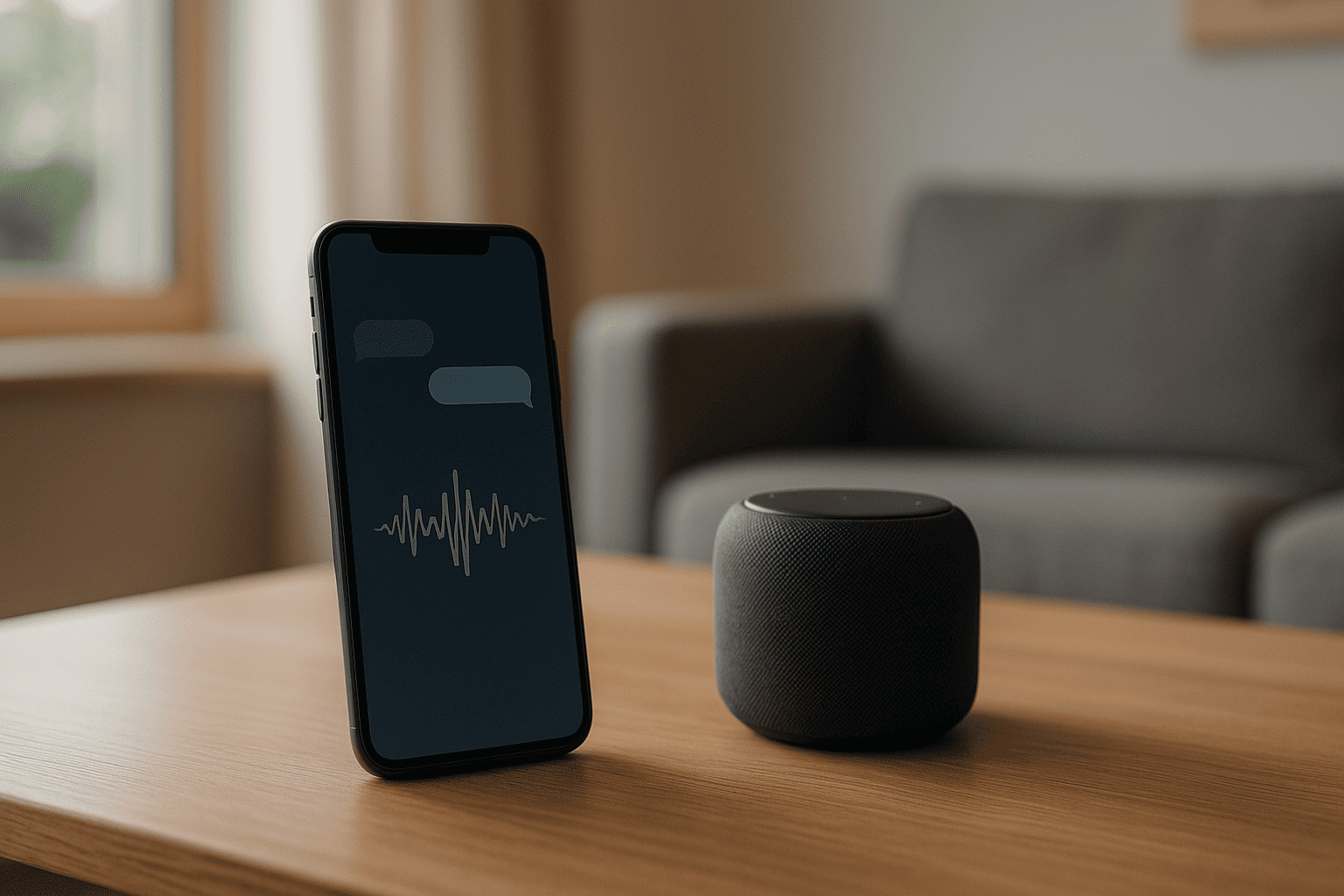
Quiet UI is not about removing interfaces—it’s about removing friction. Voice and chat move interaction out of noisy screens and into simple exchanges that feel human: ask, clarify, confirm, done. When designed well, these interfaces reduce cognitive load, increase accessibility, and make everyday apps feel calm instead of cluttered. This article explores how to rethink products around voice and chat—from interaction patterns and system architecture to accessibility, privacy, and measurement—so your app gets quieter while users get more done.