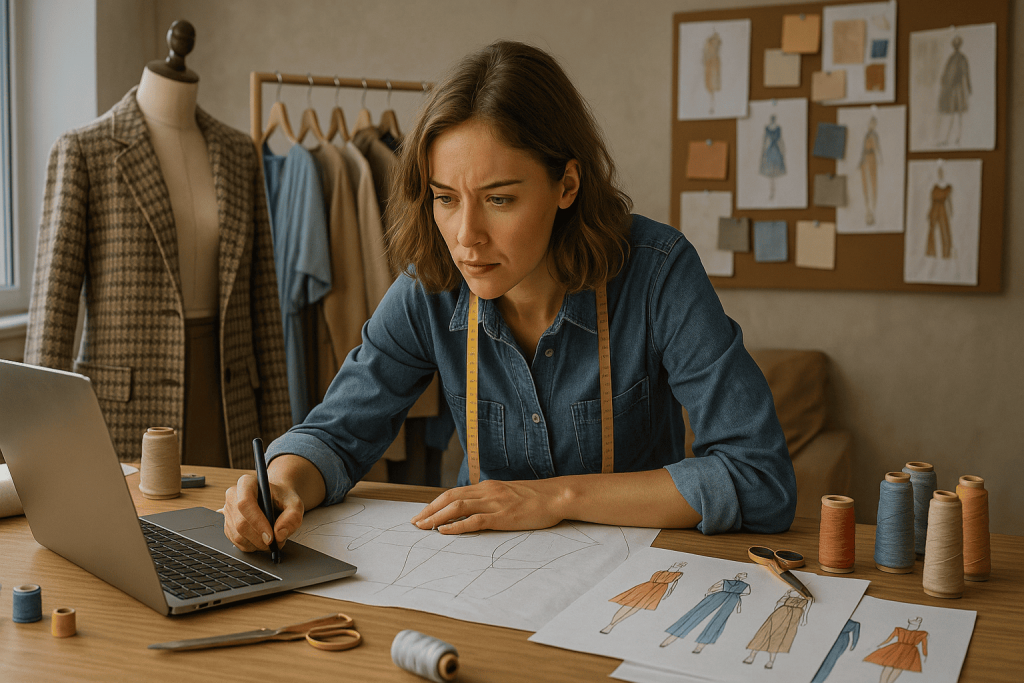
Fashion has always been a conversation between culture, craft, and commerce. GPT-class models add a new voice to that dialogue: a fast, collaborative partner that can sketch ideas in words, patterns, palettes, and plans—then translate them into production briefs. From generative textile concepts and style forecasting to supply-chain orchestration and sustainability audits, here’s how AI is already reshaping the runway and the factory floor—and how to use it without losing the human touch.
From Moodboard to Material: Generating Novel Textile Concepts
Design teams can brief GPT with moodboards, seasonal narratives, fiber constraints, and target price points. The model returns structured textile directions: weave/knit constructions, thread counts, yarn blends, finishings (enzyme wash, mercerization), and drape/hand descriptors. It can propose repeat patterns (scale, rapport size), colorways tied to Pantone equivalents, and technical notes for looms or jacquards. Crucially, it outputs spec sheets: GSM ranges, shrinkage tolerance, colorfastness tests, and care labels—so ideas don’t stall at “pretty.”
Color Stories and Palette Science
GPT can harmonize palettes across silhouettes and accessories by referencing color theory (complementary, split-complementary, triads) and regional preferences. Feed sales histories and climate data and it suggests cool/warm distributions per market, daypart, or channel (retail vs. e-com). It also adds manufacturability notes—e.g., flagging dye lots that risk metamerism under retail LEDs vs. daylight.
Style Forecasting: Beyond Vibes to Signals
Classic forecasting blends runway reads, street style, and macroculture. GPT levels this up by synthesizing multi-source signals: search trends, resale velocity, UGC silhouettes, weather anomalies, and fabric availability. It clusters micro-trends (e.g., “structured knit blazers,” “engineered mesh runners”) and estimates half-life, seasonality, and crossover potential with existing SKUs. Designers still decide what feels right; GPT makes the hunt sharper and faster.
3D Design, Fit, and Digital Sampling
Pair GPT with 3D tools to turn sketches into parametric garments. The model writes “pattern logic” (ease allowances, seam allowances, dart rotations) and suggests grading rules for size runs. It generates shot lists for virtual try-ons (poses, body types, motion ranges) and critiques drape artifacts (“tension at princess seam under armhole”). Fewer physical samples mean less waste, quicker iteration, and earlier buy-in from merchants and marketing.
Bill of Materials (BOM) That Merchants Trust
Handing off to production often breaks on detail. GPT outputs production-ready BOMs: fabric codes, trims (zips, snaps, interlinings), stitch types, SPI, seam constructions, and packaging guidelines. It includes alternative materials ranked by cost/lead time/impact, plus substitution rules if a mill misses MOQ. This reduces email ping-pong and keeps calendars on track.
Supply Chain Orchestration and Critical Path
Complex calendars juggle fabric greige, dyehouse capacity, factory lines, QC windows, and vessel schedules. GPT builds critical paths with buffers, models “what-ifs” (port delays, dye recalls), and proposes mitigation (split POs, color drops, air-freight only for top-decile SKUs). It drafts vendor scorecards and call agendas, translating ops jargon into clear actions for design and merchandising.
Demand Shaping and Buy Depth
Buying too deep traps cash; buying too shallow forfeits sales. Using historical sell-through, price elasticity, and trend signals, GPT proposes buy curves by size and region, plus laddered markdown plans. It identifies “hero” styles vs. long-tail fillers and recommends capsule pairings for visual merchandising that raise outfit attachment rates.
Sustainability as a Design Input, Not an Afterthought
Ask GPT to score materials on water use, chemical load, traceability, micro-shedding, and end-of-life options. It can propose lower-impact swaps (TENCEL™ for viscose, recycled nylon for virgin), printable pattern layouts that minimize cutting waste, and modular construction for repairability. It also drafts supplier questionnaires (Higg, ZDHC) and turns answers into easy-to-read compliance dashboards. 🌱
Ethical Sourcing and Transparency
GPT consolidates audits, lab tests, and certifications into supplier profiles. It flags inconsistencies (e.g., organic claim without transaction certificates) and produces consumer-facing provenance copy without greenwashing. When issues arise, it drafts corrective action plans with realistic timelines—supporting improvement over blame.
Merchandising Narratives and Channel-Native Content
Once a line is locked, GPT generates product narratives tuned to channel and audience: minimal SKU bullets for PDPs, editorial copy for lookbooks, UGC prompts for social, and retail associate cheat-sheets. It keeps language consistent with the brand story and season’s ethos, while surfacing fabric science and care notes that build trust.
Mass Customization and On-Demand
With parametric patterns and digital print/laser cutting, GPT can power build-to-order flows: gather user inputs (inseam, rise, climate), suggest fits, and generate production-safe specs. It warns when a request breaks manufacturability, proposes closest alternatives, and estimates delivery windows—bridging desire and feasibility.
Quality, Returns, and Fit Intelligence
Returns are costly. GPT mines feedback to find root causes (neckline stretch, zipper wave, color crocking) and recommends design or process fixes. It writes QA protocols—AQL levels, sample sizes, stress tests—and analyzes failure photos to cluster defects by factory or line. This turns pain into learning loops for the next season.
Pricing, Margin, and Risk
Fashion is a business. GPT simulates landed cost under FX swings, duty changes, and fuel surcharges, then suggests pricing ladders and bundle strategies. It proposes pre-buy vs. chase ratios and monitors risk exposure (e.g., overreliance on a single dyehouse for key color families).
IP, Plagiarism, and Originality
Generative tools can drift toward look-alikes. Set guardrails: GPT checks outputs against a style archive and public references, flags near-matches, and prompts for transformative changes (necklines, seam maps, textures). It drafts originality memos linking design choices to the season’s concept—useful in disputes and line reviews.
Small Brand, Big Tools: A Practical Starter Stack
Begin with a style bible (voice, palette, fabrics), a PLM or organized spreadsheet, and a 3D tool. Use GPT to: create seasonal briefs, generate textile directions, draft BOMs, and build content kits. Add a simple vendor scorecard and a trend scan every two weeks. Keep a “decision log” to capture why choices were made—future you will thank you.
Enterprise Play: Scaling Without Losing Taste
At scale, codify prompts as templates with acceptance criteria. Bind GPT to trusted corpora (PLM, lab tests, sales, returns) and enforce schemas for outputs (BOM, QA plan, vendor brief). Schedule red-team sessions to catch bias (size ranges, skin tones in imagery) and ensure inclusive design. Taste—the editorial sense of what’s next—still lives with human leads; AI simply widens the option set and compresses iteration time.
Where AI Fails (and How to Prevent It)
Hallucinated specs, unmakeable patterns, or “trend soup” can waste time. Counter with feasibility checklists, factory confirmation before calendar lock, and “ban lists” (materials or finishes you will not ship). Make the model say “unknown” when data is thin, and route edge calls to humans. Guardrails make speed safe.
The Creative Core Remains Human
Great fashion feels inevitable only after someone brave committed to a point of view. GPT can draft, test, and simulate, but taste, ethics, and cultural sensitivity are human work. Use the model to free hours for the hard parts: fit, fabric hand, storytelling, and building teams that reflect the people you dress.
Conclusion: Design Faster, Decide Better—Keep the Soul
GPT won’t replace designers, developers, or buyers. It will elevate them—reducing admin, revealing patterns, and translating ideas into production-safe plans. Fashion houses that pair human taste with AI discipline will ship more coherent lines, cut waste, and tell richer stories across channels. The future isn’t man vs. machine; it’s craft plus computation, working in concert to make garments people love and keep.


Honestly one of the clearest explanations I’ve seen — makes winter range loss feel way more about habits than the car itself
mannn the companies just tryna make stuff even cheaper thats it! 😂