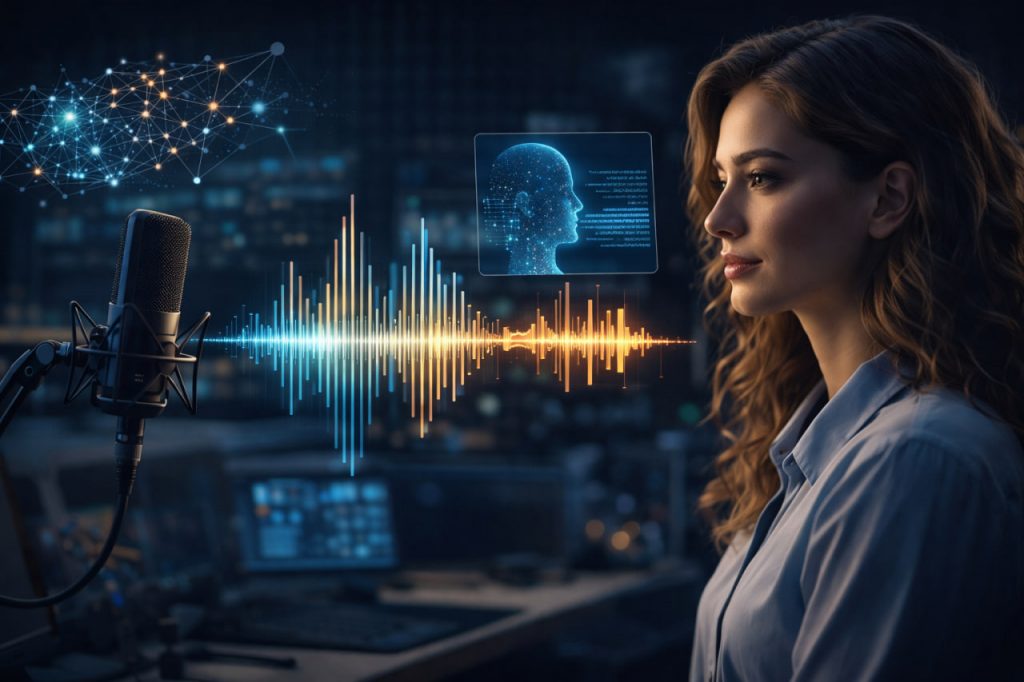
Speech technologies have become a fundamental part of everyday digital interaction, enabling humans to communicate naturally with machines. From voice assistants and automated customer support to accessibility tools and content creation, speech recognition and speech synthesis are transforming how information is processed and delivered. These technologies rely on artificial intelligence to convert spoken language into text and generate natural-sounding speech from written content. Understanding the tools behind these systems helps explain their capabilities, limitations, and real-world value.
What Speech Recognition Is and How It Works
Speech recognition, also known as automatic speech recognition (ASR), is the technology that converts spoken language into written text. Modern ASR systems are powered by machine learning and neural networks, which analyze audio signals, identify phonetic patterns, and map them to words and sentences. Unlike early rule-based systems, today’s speech recognition models adapt to accents, speaking speed, and contextual meaning. These systems continuously improve as they are trained on vast datasets containing diverse voices and languages.
“Modern speech recognition is driven by probability and context rather than rigid linguistic rules,” — Dr. Andrew Collins, computational linguistics researcher.
Key Tools and Platforms for Speech Recognition
There are many widely used tools for speech recognition, ranging from cloud-based services to open-source frameworks. Popular platforms include cloud APIs that offer high accuracy, multilingual support, and real-time transcription. These tools are commonly used in call centers, transcription services, and voice-controlled applications. Open-source alternatives allow developers to customize models for specific industries, such as healthcare or legal documentation, where terminology accuracy is critical.
“The choice of ASR tool depends less on accuracy alone and more on domain adaptation and scalability,” — Maria Lopez, AI product architect.
What Speech Synthesis Means
Speech synthesis, often called text-to-speech (TTS), is the reverse process: converting written text into spoken language. Early TTS systems sounded robotic because they relied on concatenated audio fragments. Modern systems use deep learning and neural text-to-speech models to generate speech that closely resembles natural human voices. These models control intonation, rhythm, and emotional tone, making synthetic speech more engaging and intelligible.
“Neural speech synthesis has closed much of the gap between artificial and human speech,” — Dr. Helen Moore, speech technology specialist.
Leading Tools for Speech Synthesis
Speech synthesis tools are widely used in navigation systems, audiobooks, virtual assistants, and accessibility applications. Many platforms offer customizable voices, language selection, and control over speech speed and pitch. Some advanced tools allow the creation of voice clones, where a synthetic voice is modeled after a real speaker with proper authorization. These capabilities are especially valuable in media production and assistive technologies.
Real-Time Speech Processing and Multimodal Systems
Modern voice tools often combine speech recognition and speech synthesis into integrated systems. For example, voice assistants listen to a user’s request, convert speech to text, process the intent, and respond using synthesized speech. These multimodal systems operate in real time and rely on low-latency processing to maintain natural interaction. Performance depends on audio quality, network speed, and model efficiency.
Accuracy, Bias, and Ethical Considerations
Despite major advances, speech technologies still face challenges related to accuracy, bias, and privacy. Recognition systems may perform better for certain accents or languages depending on training data. Speech synthesis raises ethical questions around misuse, impersonation, and consent. Responsible development includes transparency, secure data handling, and safeguards against abuse.
“Voice technologies must be developed with the same ethical rigor as any other form of AI,” — Dr. Samuel Wright, AI ethics researcher.
Use Cases Across Industries
Speech recognition and synthesis tools are used across many sectors. In healthcare, they support clinical documentation and patient interaction. In education, they enable language learning and accessibility for visually impaired users. In business, they power virtual assistants, meeting transcription, and customer support automation. These applications demonstrate how voice technologies increase efficiency while improving user experience.
Limitations and the Role of Human Oversight
While voice tools are powerful, they are not perfect. Background noise, ambiguous language, and emotional nuance can still challenge AI systems. Human oversight remains essential for quality control, especially in sensitive contexts. Voice technologies are most effective when used as assistive tools, augmenting human capabilities rather than replacing them.
Conclusion
Tools for speech recognition and speech synthesis represent one of the most practical and human-centered applications of artificial intelligence. By converting speech into text and text into natural-sounding voice, these technologies enable seamless communication between humans and machines. As models continue to improve in accuracy, expressiveness, and ethical design, voice-based interaction will become an even more integral part of digital life.